One of the 5 albatrosses on WAnimals
Birds · Procellariiformes · Diomedeidae
Grey-Headed Albatross
Thalassarche chrysostoma
It faces a very high risk of extinction in the wild in the near future. See full glossary
The grey-headed albatross is a medium-sized albatross of the Southern Ocean, with an ash-grey head and a black bill striped with yellow along the upper and lower edges. It breeds every two years on subantarctic islands and feeds mainly on squid. It is the bird with the fastest recorded sustained horizontal flight, and its populations are declining through accidental capture on longlines and predation by mice introduced to the colonies.
Weight
2.8 kg – 4.4 kg
Size
70 cm – 85 cm
Lifespan
45 years
Diet
Carnivore
Feeds mainly on other animals.
Activity
Diurnal
Active mainly during the day.
Social structure
Colony
Lives in large concentrations, often for breeding reasons.
Sighting difficulty
Hard
Fun facts
- It holds the record for sustained horizontal speed of any bird: a satellite-tracked individual maintained 127 kilometres an hour for more than eight hours straight ahead of an Antarctic storm.
- Individuals have been documented circling the globe across the Southern Ocean in little more than a month, riding the westerlies.
Life cycle & biology
- Skeleton type
- Vertebrate - internal bony skeleton (bird)
- Habitat & environment
- The Southern Ocean; it breeds on the cliffs of subantarctic islands such as South Georgia and Kerguelen
- Sexual maturity
- 12 years
- Gestation / incubation
- 72 days of incubation
- Litter / clutch size
- 1 egg
Sources consulted: https://es.wikipedia.org/wiki/Thalassarche_chrysostoma
Where to find it
See its range on the interactive mapWhere to watch it
Parques y spots de buceo donde se ha documentado esta especie — se muestran 10 de 11 documentados.
Related species
Other species in the catalogue with the most in common with Grey-Headed Albatross — same habitat, park, country, tags or family.
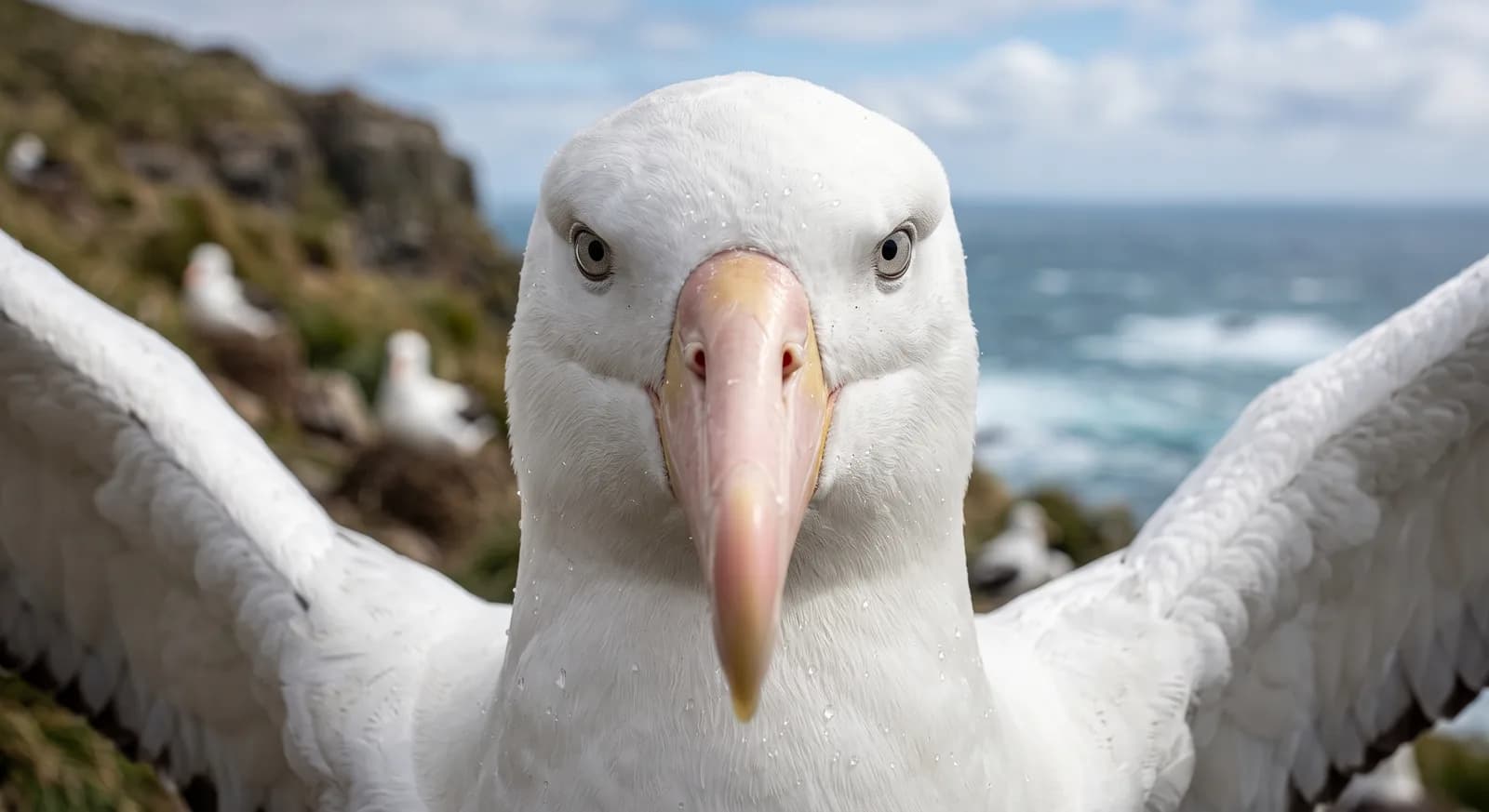
Wandering Albatross
Diomedea exulans
 Least Concern
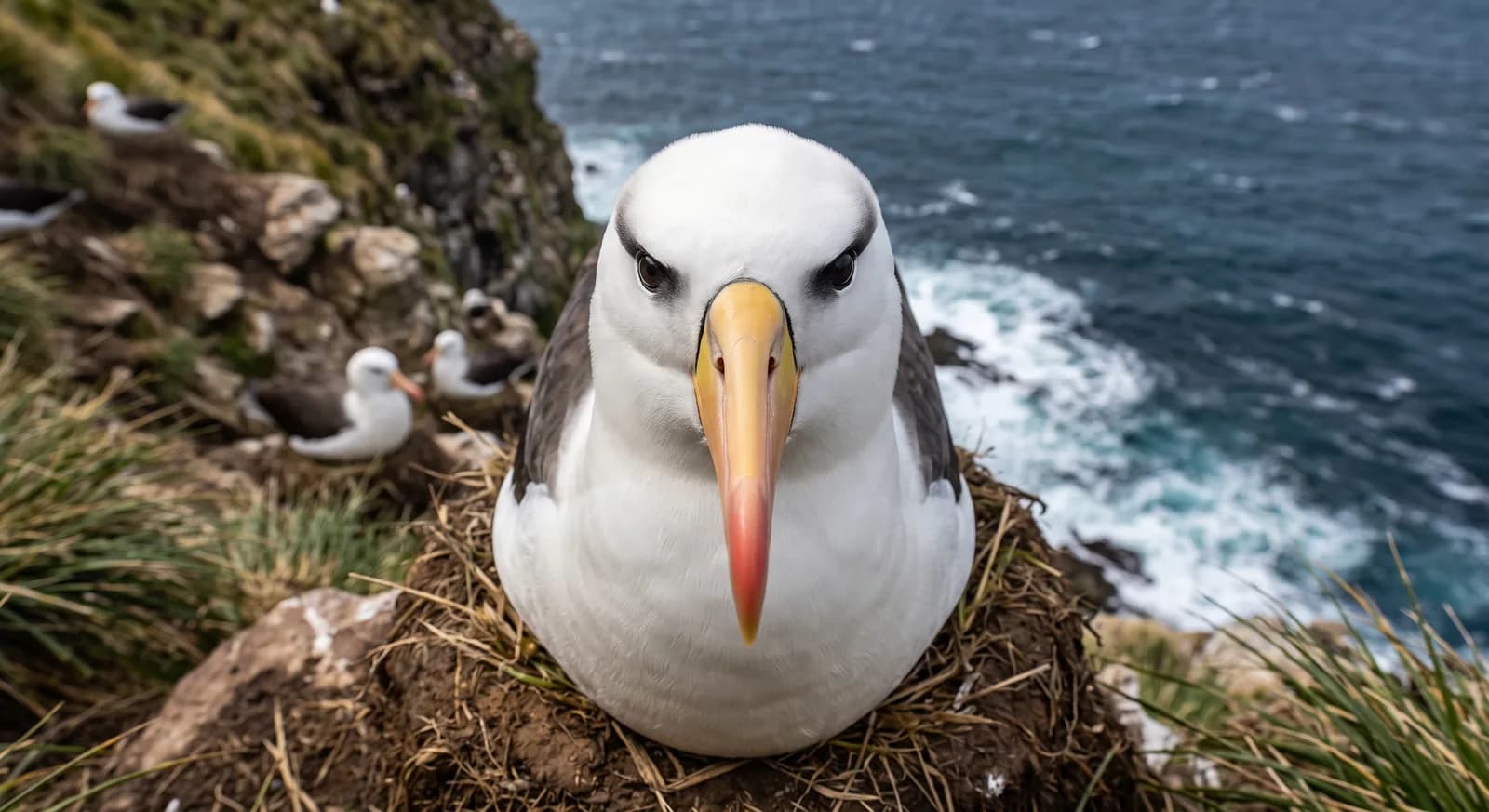
Black-browed Albatross
Thalassarche melanophris
 Vulnerable
Southern Royal Albatross
Diomedea epomophora
 Endangered
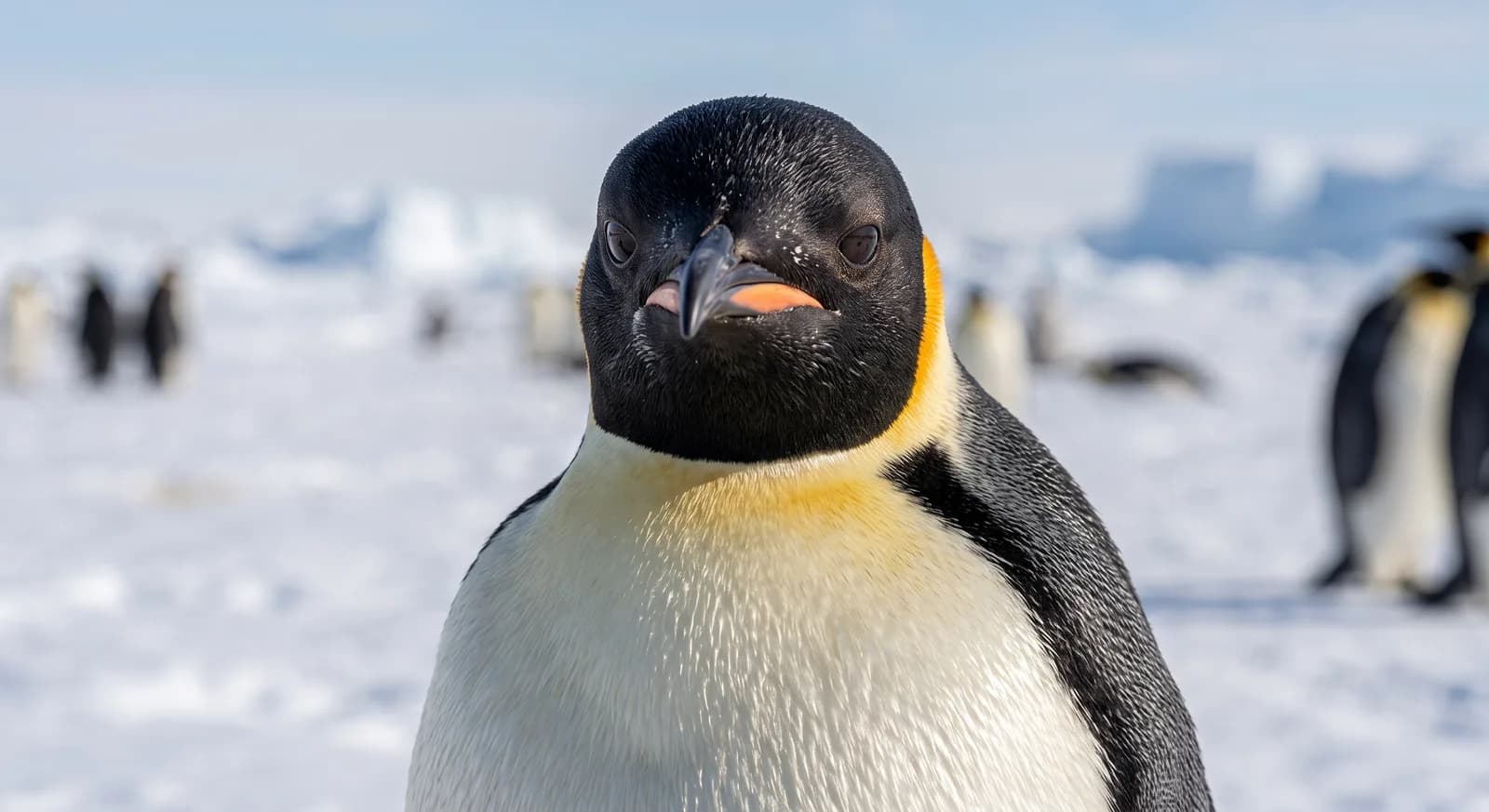
Emperor Penguin
Aptenodytes forsteri
Yellow-eyed Penguin
Megadyptes antipodes
 Endangered
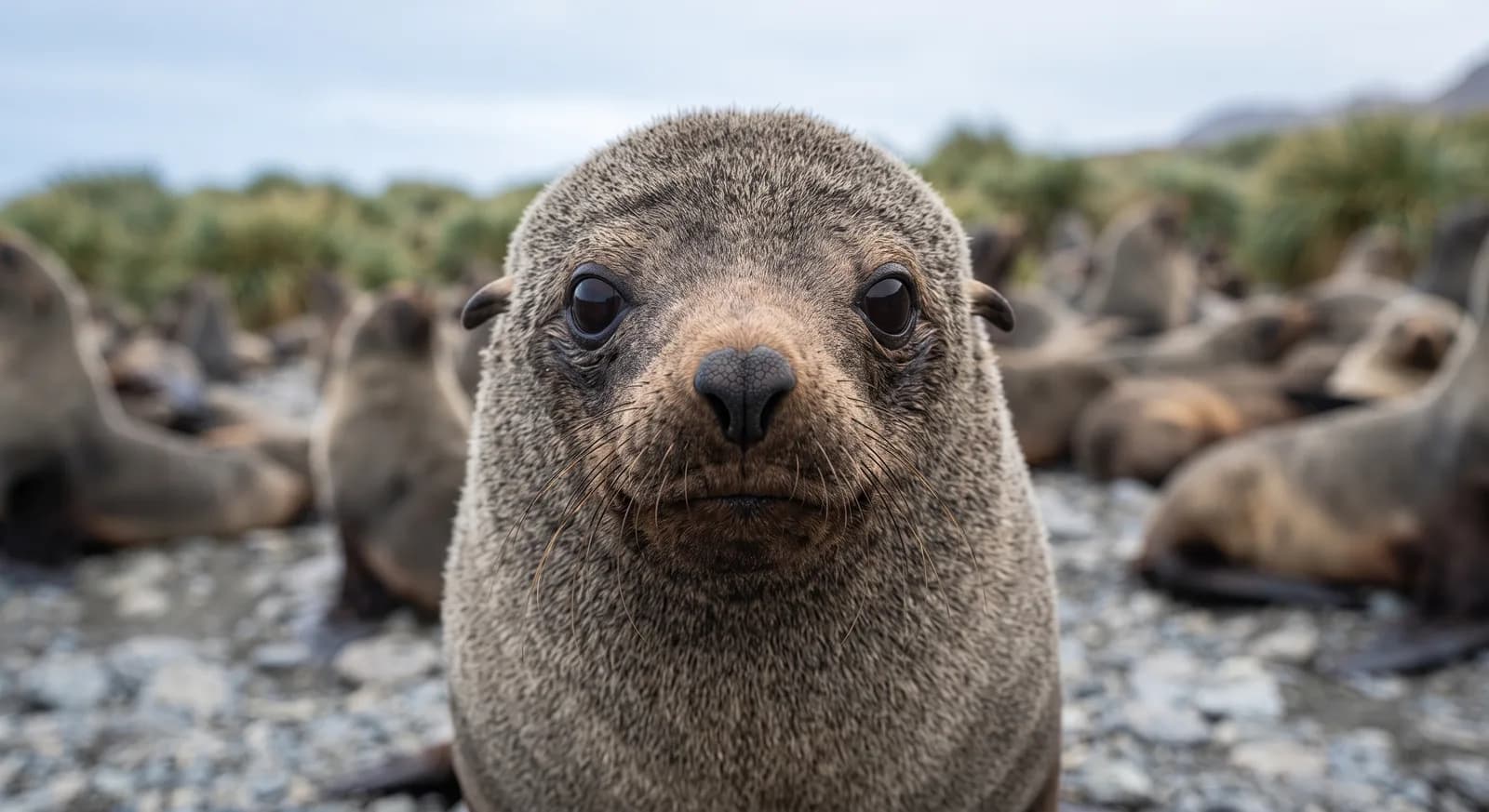
Antarctic Fur Seal
Arctocephalus gazella
How to help
The grey-headed albatross is classified as endangered. Organizations such as UICN, WWF y Wildlife Conservation Society work specifically on its conservation and that of its habitat; looking into their programs is a good starting point if you want to get involved.
It's documented in 5 real protected areas — part of why protecting these places matters for its conservation.
Keep exploring
Based on what we already know about grey-headed albatross.
Comments
Share an experience, a fun fact or a tip for seeing the grey-headed albatross.
Be the first to comment.