One of the 5 albatrosses on WAnimals
Birds · Procellariiformes · Diomedeidae
Wandering Albatross
Diomedea exulans
It faces a high risk of extinction in the wild over the medium term. See full glossary
It has the largest wingspan of any living bird, up to 3.5 metres, which lets it glide for hours over the ocean with barely a wingbeat.
Weight
5.9 kg – 12.7 kg
Size
1.1 m – 1.4 m
Lifespan
40 years
Diet
Carnivore
Feeds mainly on other animals.
Activity
Diurnal
Active mainly during the day.
Social structure
In pairs
Usually lives in pairs, sometimes for life.
Sighting difficulty
Moderate
Estimated population
Around 20,000 mature individuals, split between South Georgia, Crozet, Kerguelen, Prince Edward and Macquarie.
Fun facts
- It pairs monogamously for life and can cover more than 10,000 km a year without ever returning to land outside the breeding season.
- It eats cephalopods — squid above all — along with small fish and crustaceans taken at the surface.
- It breeds every other year rather than annually, laying a single egg.
- anatomíaIt has the largest wingspan of any living bird, over 3 metres, and can cover thousands of kilometres with barely a wingbeat.
Life cycle & biology
- Skeleton type
- Vertebrate - pneumatised bony skeleton (bird), the largest wingspan in the world
- Habitat & environment
- Southern and subantarctic oceans across the southern hemisphere; nests on remote subantarctic islands
- Birth weight
- Weight at hatching not found as a precise figure
- Size at birth
- Downy on hatching and wholly dependent
- Sexual maturity
- ~10 years (female sexual maturity given as ~3,671 days)
- Gestation / incubation
- 56-80 days depending on the source
- Litter / clutch size
- 1 egg per clutch, breeding every 2 years rather than every year
Sources consulted: Dimensions.com; A-Z Animals; AnAge (genomics.senescence.info); Birds.com; Animal Diversity Web; South Dakota Birds; Birds in Backyards; Birds of the World; PMC (partner foraging coordination study, oxidative stress study)
Where to find it
See its range on the interactive mapBest time: From December to March at the subantarctic colonies; on the open sea it can be seen all year round following the wake of ships.
Where to watch it
Parks and dive sites where this species has been documented.
Related species
Other species in the catalogue with the most in common with Wandering Albatross — same habitat, park, country, tags or family.
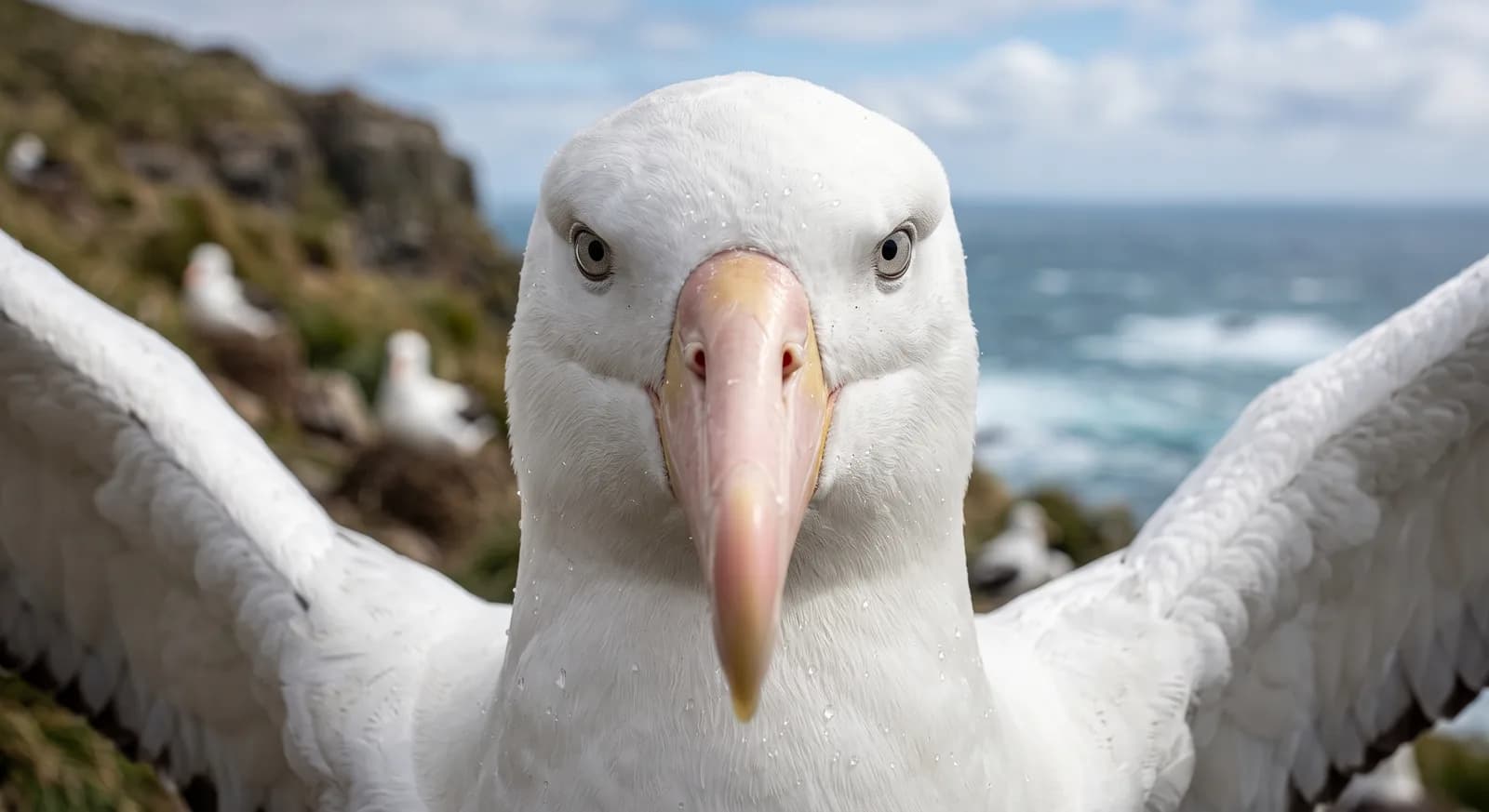 Vulnerable
Southern Royal Albatross
Diomedea epomophora
Grey-Headed Albatross
Thalassarche chrysostoma
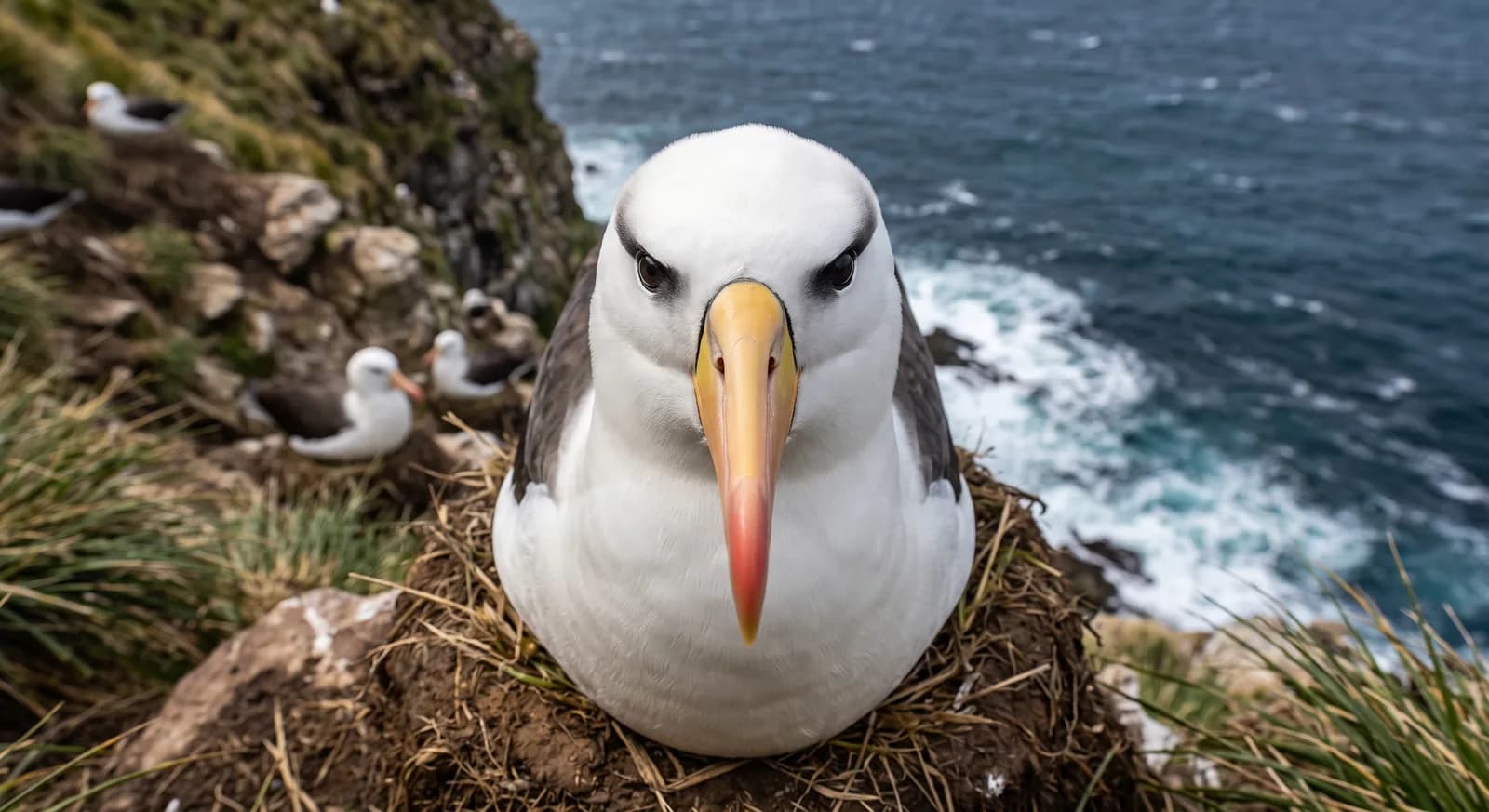 Least Concern
Black-browed Albatross
Thalassarche melanophris
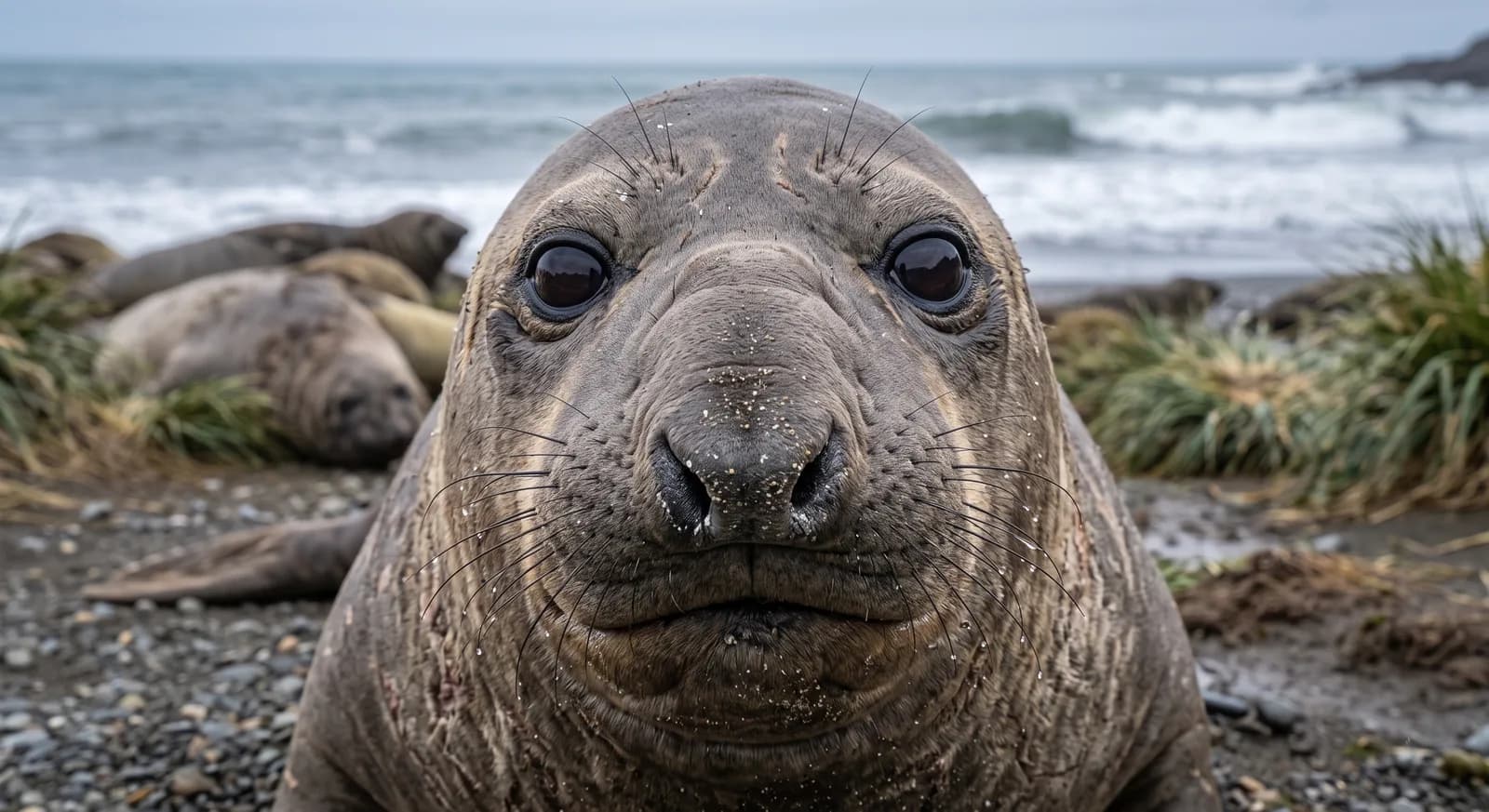 Vulnerable
Southern Elephant Seal
Mirounga leonina
Southern Rockhopper Penguin
Eudyptes chrysocome
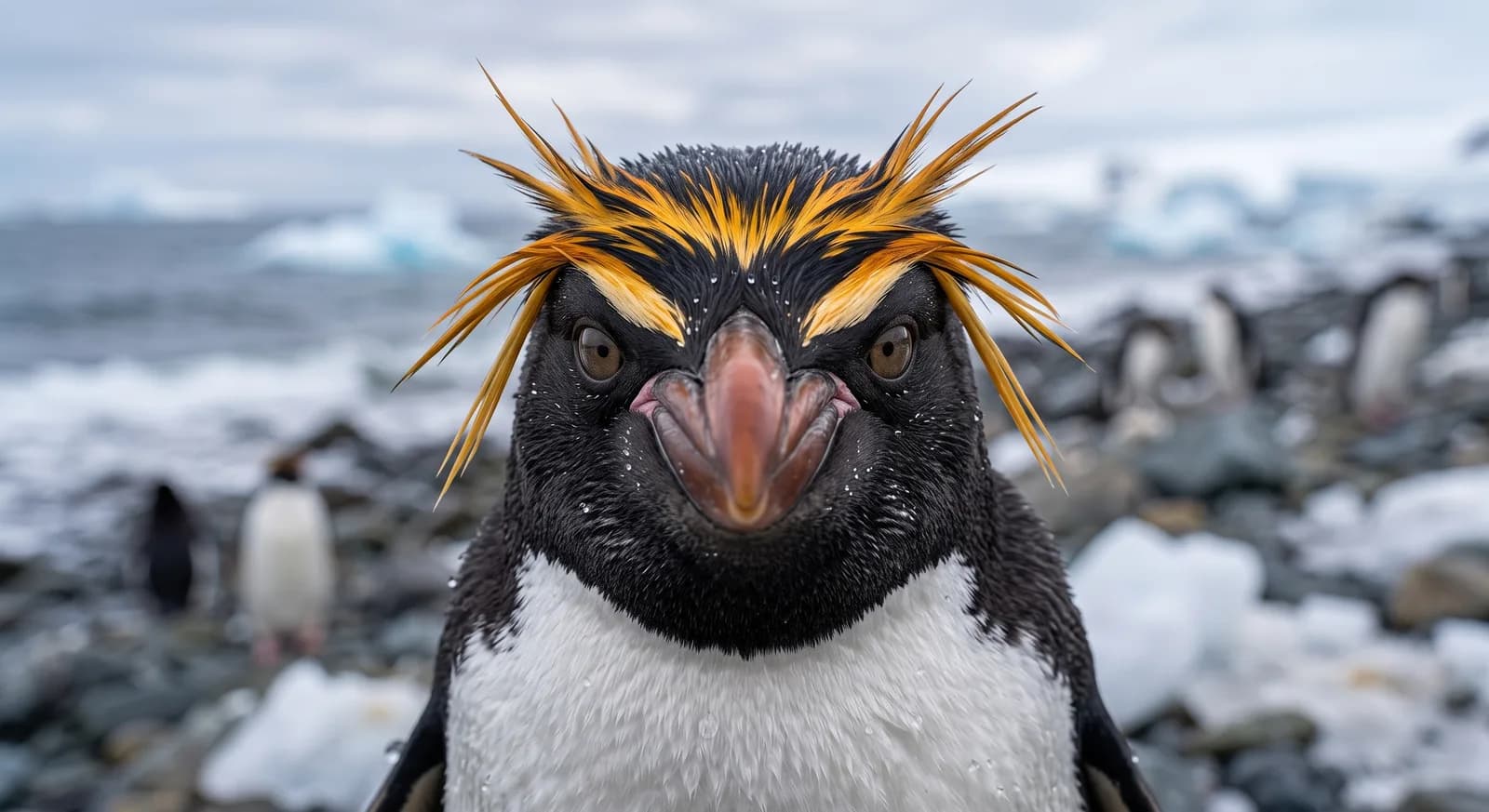 Vulnerable
Macaroni Penguin
Eudyptes chrysolophus
How to help
The wandering albatross is classified as vulnerable. Organizations such as UICN, WWF y Wildlife Conservation Society work specifically on its conservation and that of its habitat; looking into their programs is a good starting point if you want to get involved.
It's documented in 4 real protected areas — part of why protecting these places matters for its conservation.
Keep exploring
Based on what we already know about wandering albatross.
Comments
Share an experience, a fun fact or a tip for seeing the wandering albatross.
Be the first to comment.