One of the 2 frigatebirds on WAnimals
Birds · Suliformes · Fregatidae
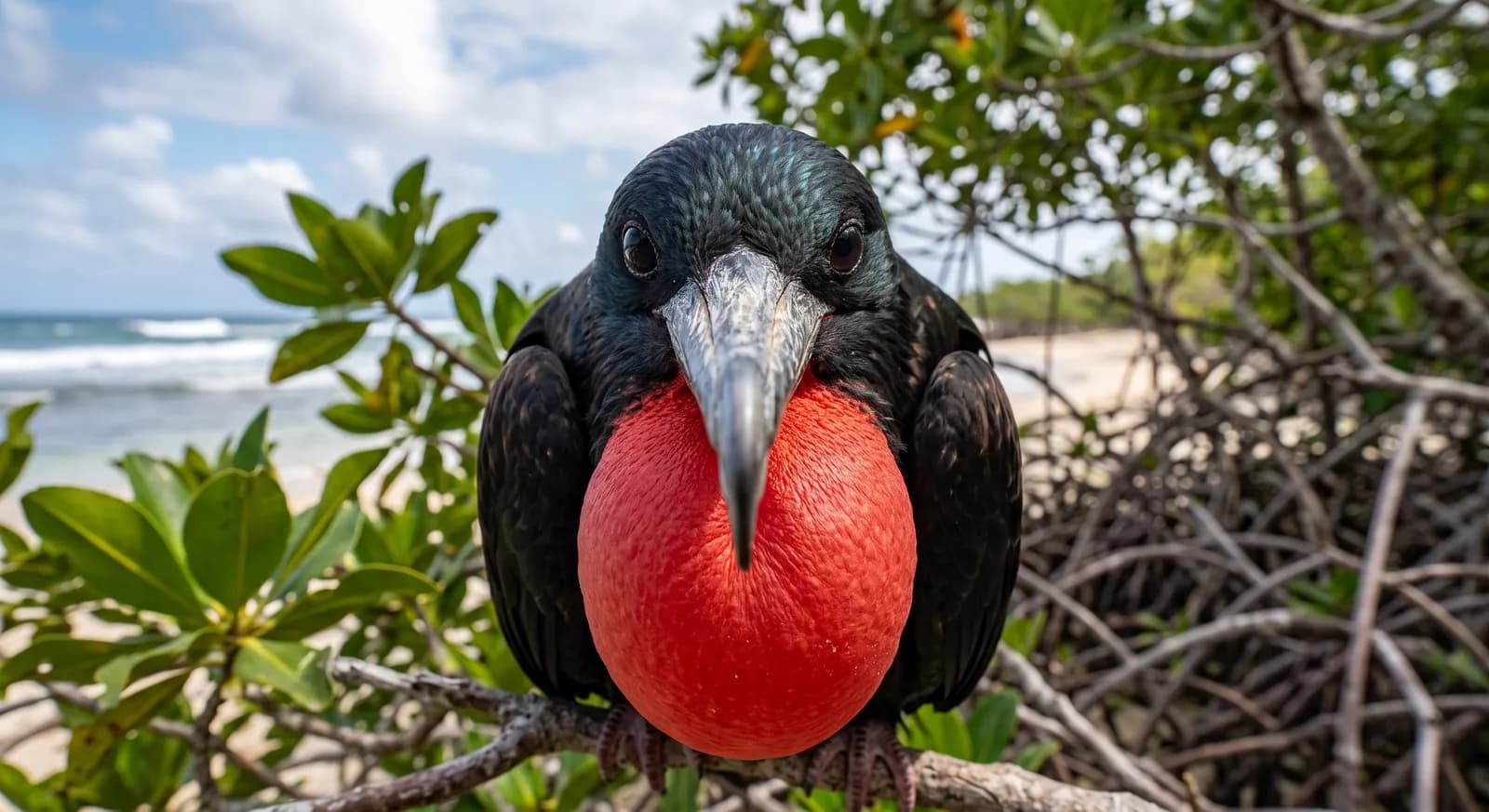
Magnificent Frigatebird
Fregata magnificens
The species is abundant and widely distributed; it faces no significant short-term risk. See full glossary
It has the most efficient wing-area-to-body-weight ratio of any bird, which lets it stay airborne for days on end without settling on the water — its feathers are not waterproof.
Weight
1 kg – 1.9 kg
Size
89 cm – 1.1 m
Lifespan
30 years
Diet
Carnivore
Feeds mainly on other animals.
Activity
Diurnal
Active mainly during the day.
Social structure
Colony
Lives in large concentrations, often for breeding reasons.
Sighting difficulty
Easy
Fun facts
- The male inflates his striking red throat pouch like a balloon in courtship.
- It feeds on fish, squid, jellyfish and crustaceans, often robbed in mid-air from other seabirds.
- Raising a single chick can take a whole year, one of the longest breeding cycles of any bird.
- reproducciónMales inflate the red pouch beneath their throat into a gleaming balloon to attract females in the breeding season.
Life cycle & biology
- Skeleton type
- Vertebrate - pneumatised bony skeleton (bird), proportionally the lightest skeleton of any bird relative to its wingspan
- Habitat & environment
- Tropical and subtropical coasts of the Americas, from Mexico and Florida to Brazil and Peru, the Galápagos and Cape Verde included
- Birth weight
- Weight at hatching not found as a precise figure
- Sexual maturity
- ~5 years
- Gestation / incubation
- 50-56 days
- Litter / clutch size
- 1 egg per clutch
Sources consulted: AnAge (genomics.senescence.info); Dimensions.com; Animal Diversity Web; NHPBS NatureWorks; Birds of the World; All About Birds (Cornell Lab); Animalia.bio; Wikipedia (Magnificent frigatebird); Audubon Field Guide
Where to find it
See its range on the interactive mapWhere to watch it
Parques y spots de buceo donde se ha documentado esta especie — se muestran 12 de 15 documentados.
Related species
Other species in the catalogue with the most in common with Magnificent Frigatebird — same habitat, park, country, tags or family.
Lesser Frigatebird
Fregata ariel
 Least Concern
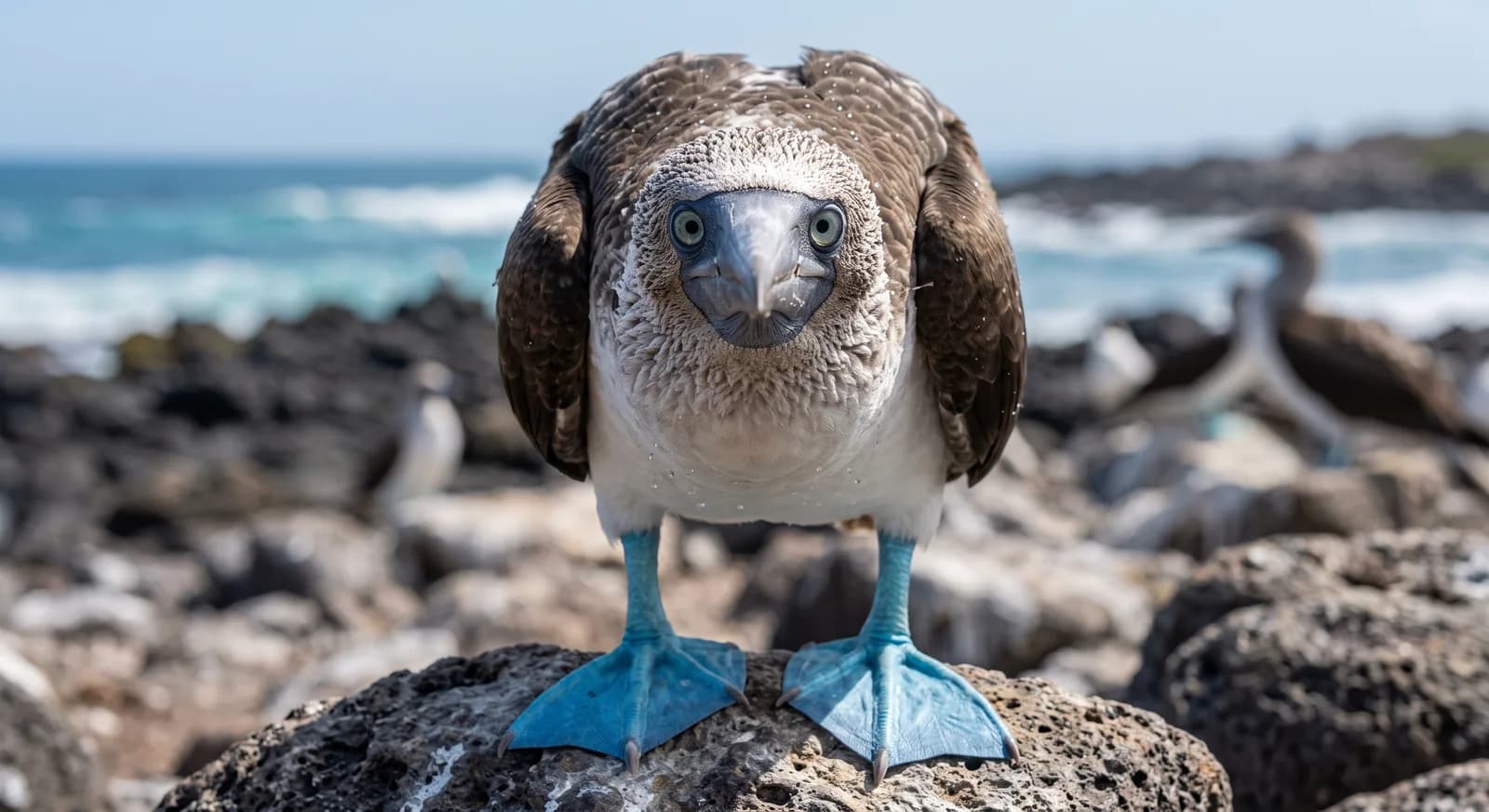
Blue-footed Booby
Sula nebouxii
Skipjack
Katsuwonus pelamis
Queen Parrotfish
Scarus vetula
Grey Snapper
Lutjanus griseus
Atlantic Spadefish
Chaetodipterus faber
Keep exploring
Based on what we already know about magnificent frigatebird.
Comments
Share an experience, a fun fact or a tip for seeing the magnificent frigatebird.
Be the first to comment.