Species group · Birds
Frigatebirds
WAnimals has 2 species of frigatebird, all in the family Fregatidae.
- 2 species
- 1 family
- 63 countries
- 18 parks
- Weight
- 754 g – 1.9 kg
- Length
- 75 cm – 1.1 m
- Lifespan
- 25 – 30 years
Ranges calculated from the entries that record the figure, not from all 2.
All 2 species of frigatebirds on WAnimals
Each one has its own full entry. This group does not replace them: it brings them together.
Conservation status
No species documented in this group is genuinely at risk according to the IUCN, with the data available today.
See the global conservation statusWhere they live
Recorded in 63 countries. The ones with the most species in the group:
Where to see them
- Parque Nacional Galápagos2 species
- Aldabra1 species
- Dry Tortugas1 species
- Fakarava1 species
- Fernando de Noronha1 species
- Islas Fénix1 species
- Islas Rocosas de Palau1 species
- Los Haitises1 species
- Los Roques1 species
- Machalilla1 species
- Manglares Churute1 species
- Marino Ballena1 species
- Isla Contoydiving
- Kicker Rock (León Dormido)diving
Did you know…
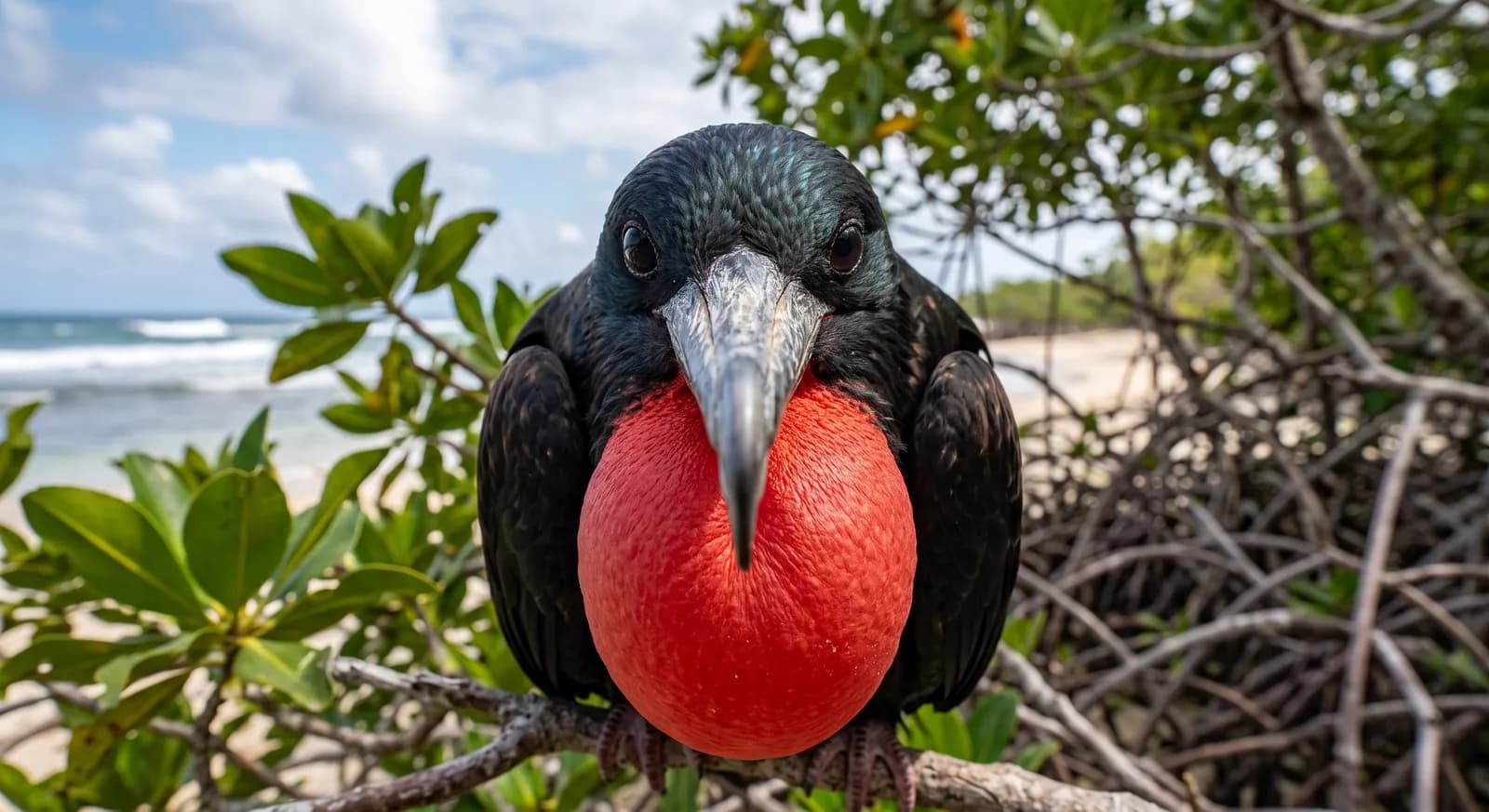
The male inflates his striking red throat pouch like a balloon in courtship.
It feeds on fish, squid, jellyfish and crustaceans, often robbed in mid-air from other seabirds.
Raising a single chick can take a whole year, one of the longest breeding cycles of any bird.
It is the smallest of the five frigatebirds, at about 75 cm against the well over a metre of the great frigatebird.
From Lesser Frigatebird
Like all frigatebirds, it takes fish in flight from the surface of the sea, often flying fish, without ever settling on the water.
From Lesser Frigatebird
It was described in 1845 from a specimen collected on Raine Island, in Queensland, under the original name Atagen ariel.
From Lesser Frigatebird