Bony fish · Perciformes · Ephippidae
Atlantic Spadefish
Chaetodipterus faber
The species is abundant and widely distributed; it faces no significant short-term risk. See full glossary
The Atlantic spadefish — known in Spanish as paguara, paguala del Atlántico or paguala común — is a ray-finned marine fish of the family Ephippidae. It is the symbol of the North Carolina Aquariums.
Size
30 cm – 91 cm
Lifespan
10 years
Diet
Omnivore
Combines animal and plant food depending on availability.
Activity
Diurnal
Active mainly during the day.
Social structure
Colony
Lives in large concentrations, often for breeding reasons.
Sighting difficulty
Easy
Fun facts
- The juveniles are black and float on their side at the surface close inshore, mimicking a dead leaf carried on the current with astonishing accuracy.
- The adults form schools of hundreds that circle slowly above wrecks, a classic sight of Caribbean diving.
- Juveniles mimic a dead leaf: they are black, they let the current carry them along on their side in shallow water, and so they pass unnoticed among floating plant debris.
- Adults, by contrast, are silvery with dark vertical bands and form dense schools around wrecks and structures.
- Its body is almost circular and strongly compressed, with the dorsal and anal fins drawn out into points, which gives it the disc-like silhouette behind its name.
- It feeds mainly on benthic invertebrates, jellyfish and small crustaceans, and it has been seen picking parasites off other fish.
Life cycle & biology
- Skeleton type
- Vertebrate - internal bony skeleton (fish)
- Habitat & environment
- Reefs, wrecks, mangroves and estuaries of the western Atlantic
Sources consulted: https://es.wikipedia.org/wiki/Chaetodipterus_faber
Where to find it
See its range on the interactive mapWhere to watch it
Parques y spots de buceo donde se ha documentado esta especie — se muestran 20 de 110 documentados.
Related species
Other species in the catalogue with the most in common with Atlantic Spadefish — same habitat, park, country, tags or family.
Queen Parrotfish
Scarus vetula
 Least Concern
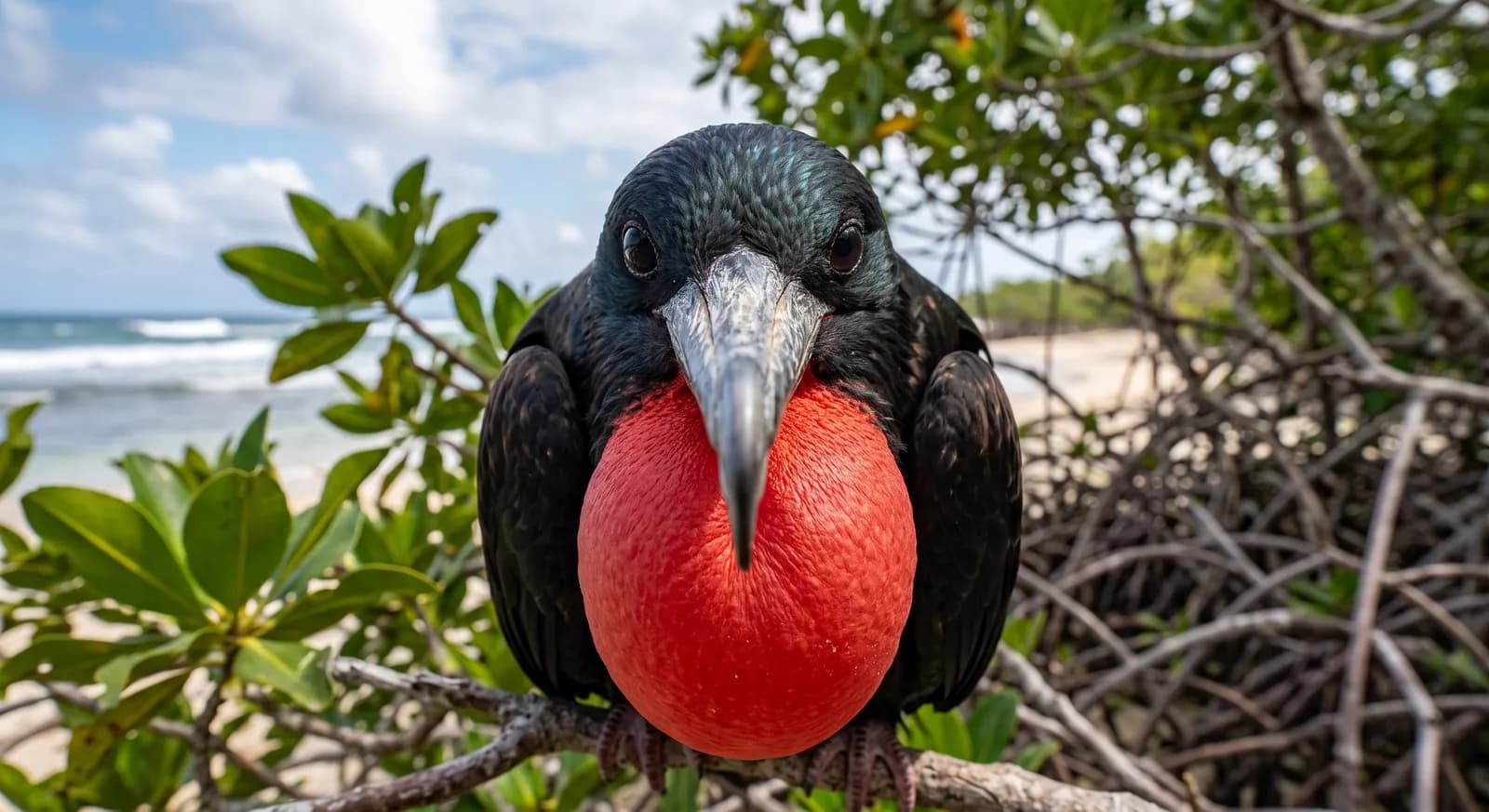
Magnificent Frigatebird
Fregata magnificens
Grey Snapper
Lutjanus griseus
Man-of-war Fish
Nomeus gronovii
Foureye Butterflyfish
Chaetodon capistratus
Red-footed Booby
Sula sula
Keep exploring
Based on what we already know about atlantic spadefish.
Comments
Share an experience, a fun fact or a tip for seeing the atlantic spadefish.
Be the first to comment.