One of the 9 antelopes on WAnimals
Mammals · Artiodactyla · Bovidae
Blackbuck
Antilope cervicapra
The species is abundant and widely distributed; it faces no significant short-term risk. See full glossary
The blackbuck is the most characteristic antelope of the plains of India. Adult males develop an intense black coat with a white belly, legs and eye rings, and spiral horns that can make four turns and exceed sixty centimetres; the females are tawny and hornless. It lives in herds on open ground and relies on speed to escape. It came close to disappearing in the mid-twentieth century and has recovered thanks to legal protection and to the religious respect of several communities.
Weight
20 kg – 57 kg
Size
1 m – 1.5 m
Lifespan
24 years
Diet
Herbivore
Feeds mainly on plants.
Activity
Diurnal
Active mainly during the day.
Social structure
Herd
Lives in large groups as a strategy against predators.
Sighting difficulty
Easy
Fun facts
- It is one of the fastest antelopes in the world: it can hold 80 kilometres an hour over open ground for long distances, not just in a sprint.
- The Bishnoi communities of Rajasthan have protected it on religious grounds for centuries, to the point that the herds graze calmly alongside their crops.
Life cycle & biology
- Skeleton type
- Vertebrate - internal bony skeleton (mammal)
- Habitat & environment
- Open grassy plains, dry scrub and farmland of the Indian subcontinent
- Size at birth
- Precocial: on its feet within a few hours, although it stays hidden in the grass for the first few weeks
- Sexual maturity
- 15.3 months
- Gestation / incubation
- 5.5 months
- Litter / clutch size
- 1
Sources consulted: https://es.wikipedia.org/wiki/Antilope_cervicapra
Where to find it
See its range on the interactive mapBest time: All year round on the plains of India, by day; between March and May the males, by then black, defend their leks and are very conspicuous.
Where to watch it
Parks and dive sites where this species has been documented.
Related species
Other species in the catalogue with the most in common with Blackbuck — same habitat, park, country, tags or family.
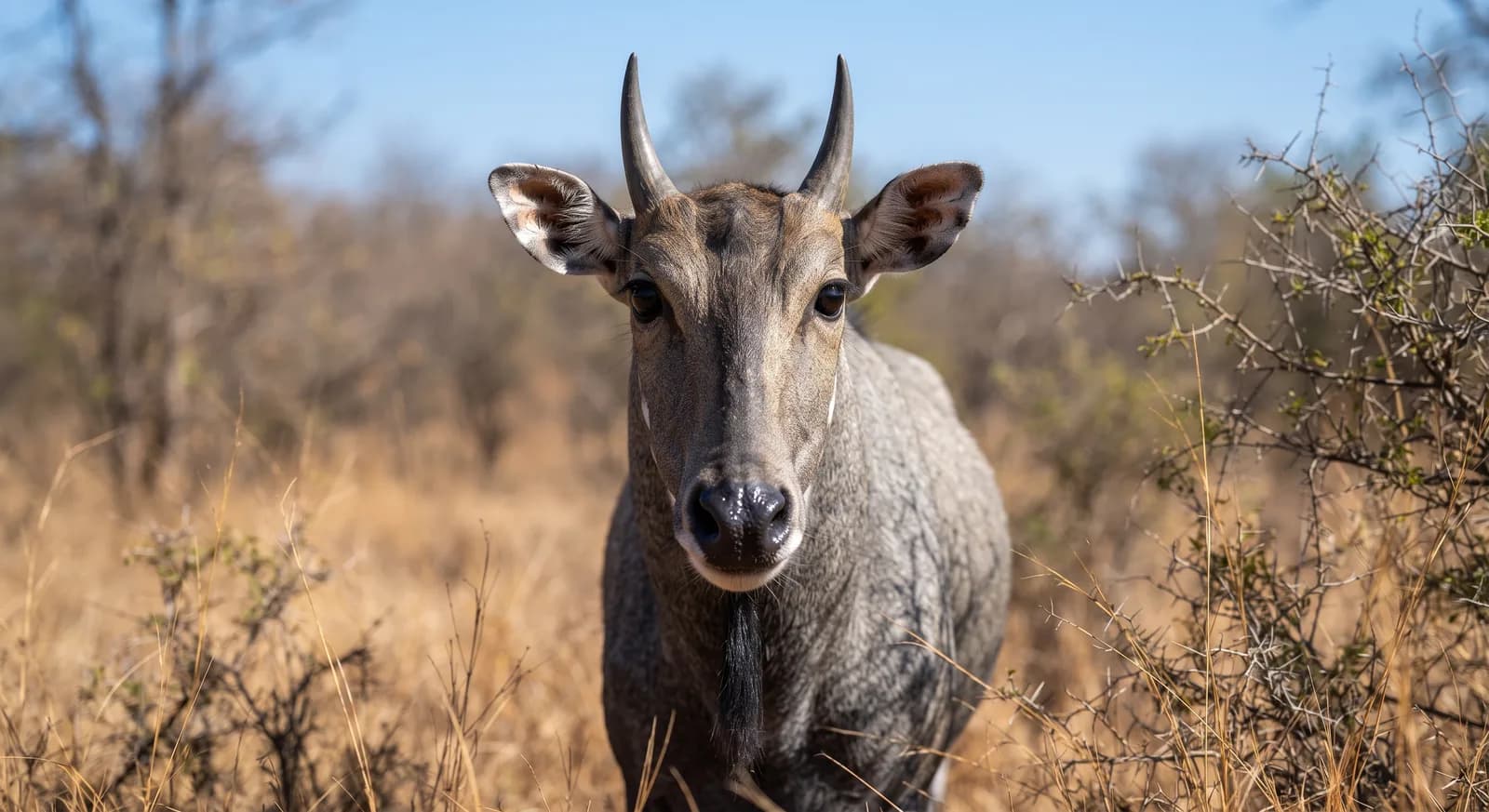 Least Concern
Nilgai
Boselaphus tragocamelus
Four-horned Antelope
Tetracerus quadricornis
Bighorn Sheep
Ovis canadensis
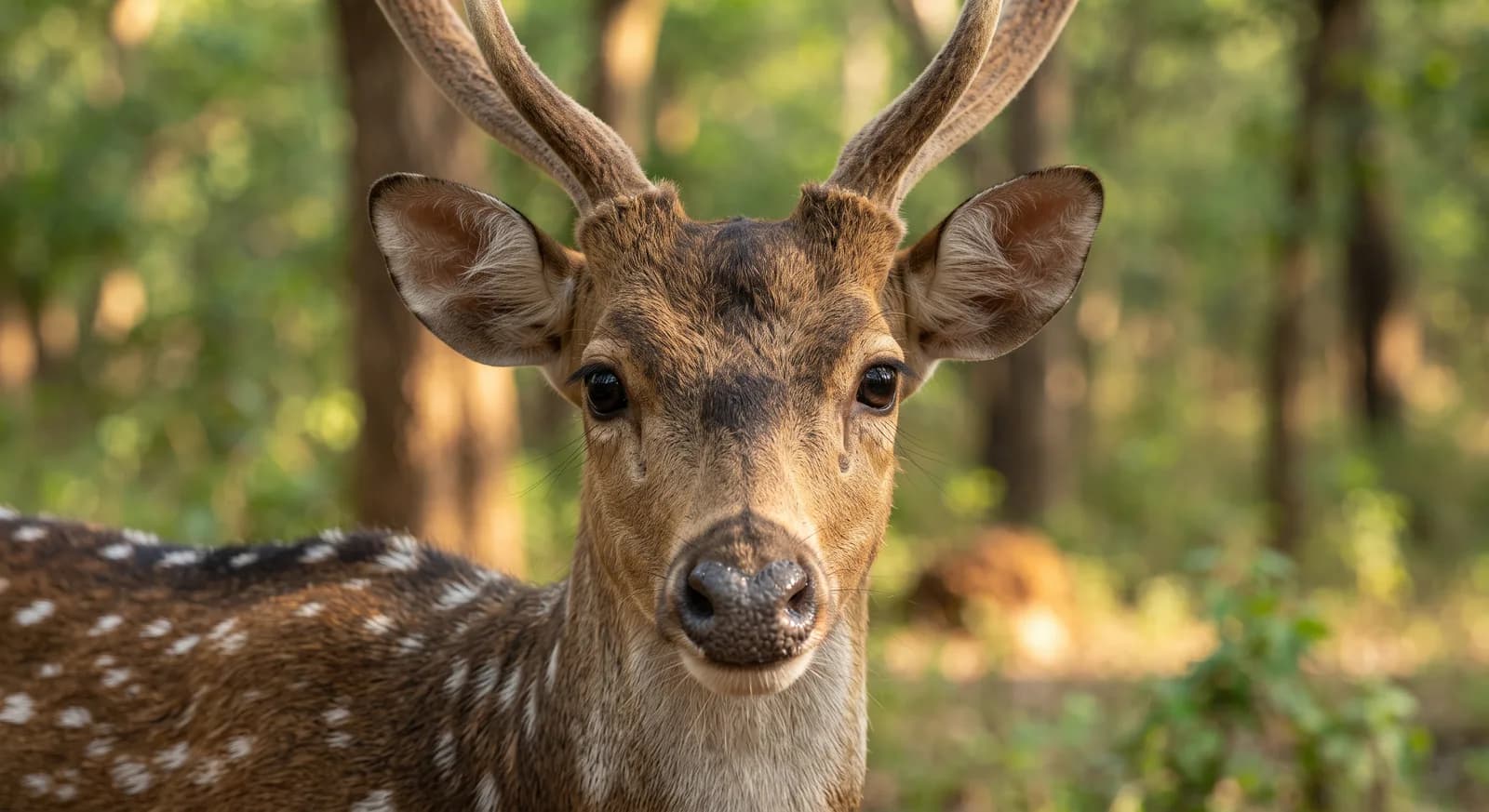 Least Concern
Chital
Axis axis
Indian Crested Porcupine
Hystrix indica
Saiga
Saiga tatarica
Keep exploring
Based on what we already know about blackbuck.
Comments
Share an experience, a fun fact or a tip for seeing the blackbuck.
Be the first to comment.