One of the 26 spiders on WAnimals
Arachnids · Araneae · Pholcidae
Cobweb Spider
Pholcus phalangioides
It has not yet been assessed against the IUCN criteria. See full glossary
Pholcus phalangioides, the daddy long-legs spider, is a spider of the family Pholcidae. The females have a body length of 9 mm; the males are slightly smaller. Their legs are 5 to 6 times the length of their body. It usually lives on the ceilings of rooms, in caves, garages and cellars. They are considered beneficial in some parts of the world because they eat troublesome insects and arachnids inside houses. This is the only spider species described by the Swiss entomologist Johann Kaspar Füssli, who recorded it in 1775. Its Spanish name is sometimes confused with that of the tiger spider.
Size
up to 7 cm
Lifespan
3 years
Diet
Carnivore
Feeds mainly on other animals.
Activity
Nocturnal
Active mainly at night.
Social structure
Solitary
Lives and hunts alone, joining others only to breed.
Sighting difficulty
Unknown
Fun facts
- When it feels threatened it grips its web and vibrates at speed until it becomes a blur no predator can focus on.
- It attacks and devours other spiders, including far larger and more dangerous species, by invading their webs and mimicking the vibrations of trapped prey.
- The legend that it has the most potent venom in the world but cannot bite people is false: its venom is weak and its fangs can indeed pierce human skin, to no ill effect.
- It hunts other spiders. It leaves its own web, finds a neighbour's and plucks it to mimic trapped prey; when the owner comes, it eats her. It can kill spiders far larger than itself.
- Its defence is curious: when threatened it shakes its web violently until its own outline blurs.
- The female holds her eggs in her chelicerae until they hatch and barely eats in the meantime.
- Its legs are five or six times the length of its body.
- It is harmless: its fangs are too weak to pierce human skin, and it is in fact beneficial, since it eats flies, mosquitoes and other household spiders.
Life cycle & biology
- Habitat & environment
- Ceilings, corners and cellars of buildings worldwide
- Gestation / incubation
- The eggs hatch in two or three weeks
- Litter / clutch size
- From 20 to 30 eggs per clutch, up to three clutches per female
Sources consulted: https://es.wikipedia.org/wiki/Pholcus_phalangioides
Where to find it
See its range on the interactive mapWhere to watch it
Parks and dive sites where this species has been documented.
Related species
Other species in the catalogue with the most in common with Cobweb Spider — same habitat, park, country, tags or family.
Great Horned Owl
Bubo virginianus
 Least Concern
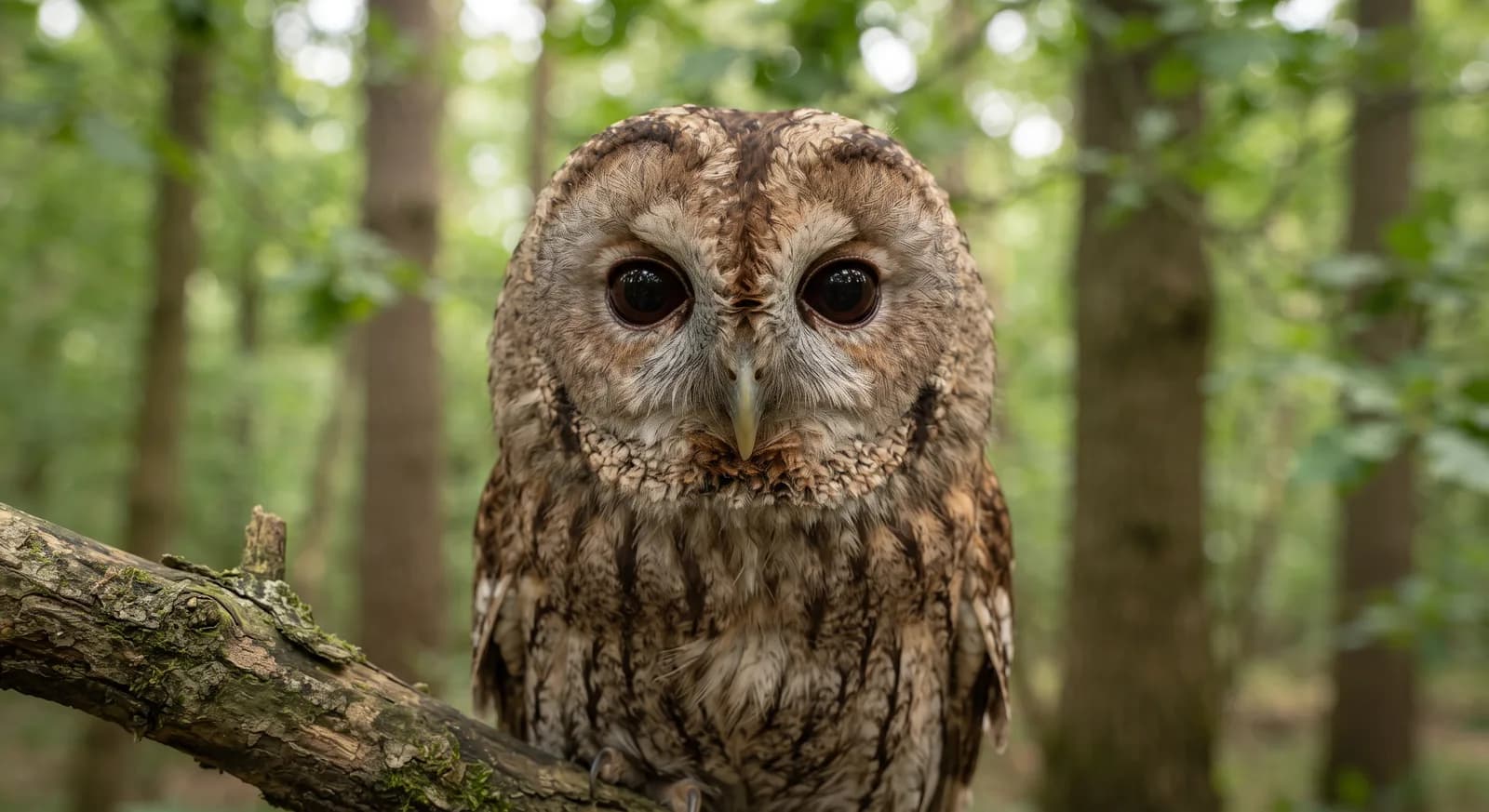
Tawny Owl
Strix aluco
Long-eared Owl
Asio otus
Common Toad
Bufo bufo
Eastern Tiger Salamander
Ambystoma tigrinum
Southern Black Widow
Latrodectus mactans
Keep exploring
Based on what we already know about cobweb spider.
Comments
Share an experience, a fun fact or a tip for seeing the cobweb spider.
Be the first to comment.