Bony fish · Polypteriformes · Polypteridae
Gray Bichir
Polypterus senegalus
The species is abundant and widely distributed; it faces no significant short-term risk. See full glossary
The Senegal bichir is a fish of the genus Polypterus, also called the grey bichir or Cuvier's bichir. It is wrongly called the "dinosaur eel" because of the hardness of its scales, although it is not an eel.
Diet
Carnivore
Feeds mainly on other animals.
Activity
Nocturnal
Active mainly at night.
Sighting difficulty
Easy
Fun facts
- GeneralIt breathes air with primitive lungs; its lineage is over 350 million years old.
- evoluciónIt keeps very primitive features, working lungs alongside its gills among them, which makes it a study model for the evolutionary step from fish to four-limbed animals.
- It is a facultative air breather: it surfaces to take in air with a modified swim bladder and survives in water almost devoid of oxygen.
- The larvae keep feathery external gills and look much like a salamander's; they swim in a shoal alongside the male.
Life cycle & biology
- Skeleton type
- Vertebrate - internal bony skeleton (bony fish)
- Habitat & environment
- Slow rivers, swamps and floodplains
- Lifespan in captivity
- 34 years or more recorded in captivity
Sources consulted: https://es.wikipedia.org/wiki/Polypterus_senegalus
Where to find it
See its range on the interactive mapWhere to watch it
Parks and dive sites where this species has been documented.
Related species
Other species in the catalogue with the most in common with Gray Bichir — same habitat, park, country, tags or family.
African Electric Catfish
Malapterurus electricus
Elephantnose Fish
Gnathonemus petersii
African Catfish
Clarias gariepinus
African Lungfish
Protopterus annectens
 Least Concern
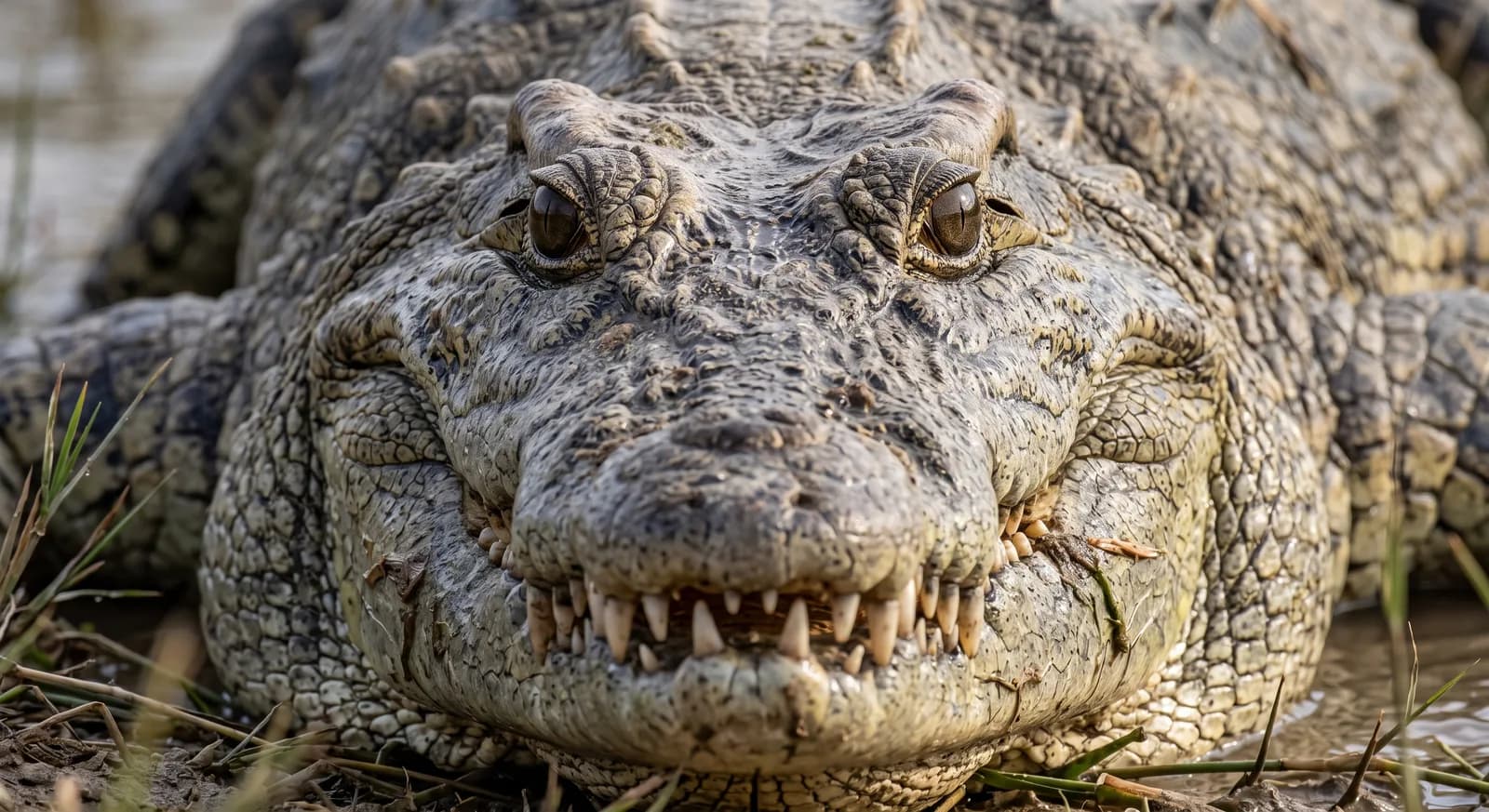
Nile Crocodile
Crocodylus niloticus
Little Egret
Egretta garzetta
Keep exploring
Based on what we already know about gray bichir.
Comments
Share an experience, a fun fact or a tip for seeing the gray bichir.
Be the first to comment.