One of the 4 wheatears on WAnimals
Birds · Passeriformes · Muscicapidae
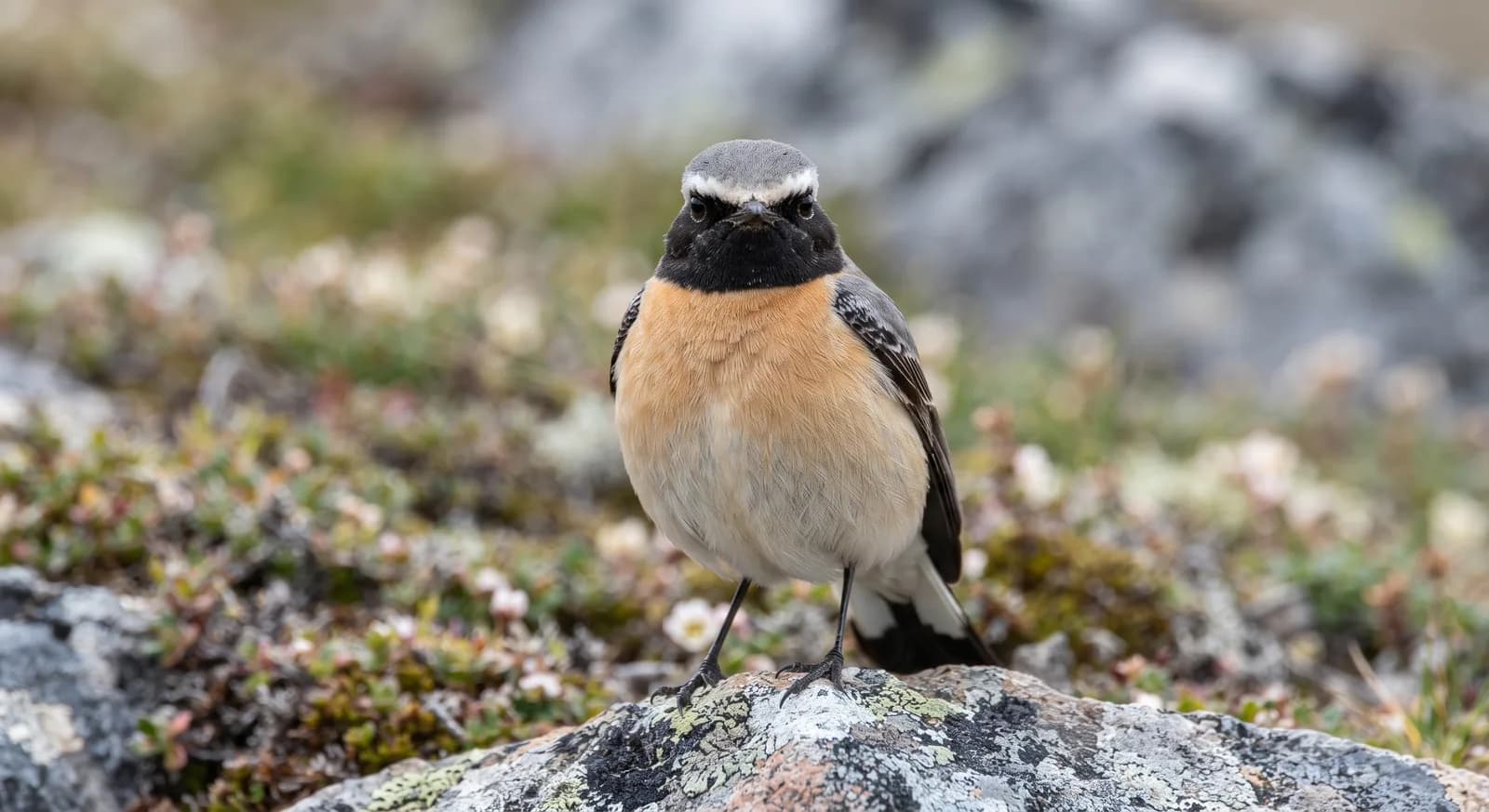
Cyprus Wheatear
Oenanthe cypriaca
The species is abundant and widely distributed; it faces no significant short-term risk. See full glossary
The Cypriot wheatear or Cyprus wheatear is a species of passerine bird of the family Muscicapidae endemic to Cyprus. This small passerine, 14-15 cm long, used to be treated as a subspecies of the pied wheatear, but Sluys and van den Berg argued in 1892 that it deserved full species status, on the basis of differences in biometrics and especially in song, and the lack of sexual dimorphism in the plumage of cypriaca. The number of individuals is around 12,000.
Weight
14 g – 20 g
Size
13 cm – 15 cm
Lifespan
7 years
Diet
Insectivore
Feeds mainly on insects and other invertebrates.
Activity
Diurnal
Active mainly during the day.
Social structure
In pairs
Usually lives in pairs, sometimes for life.
Sighting difficulty
Easy
Fun facts
- It breeds only on Cyprus, an island of less than 10,000 square kilometres, and the entire world population winters in a narrow strip of north-east Africa: two tiny areas connected by a journey of thousands of kilometres.
- It was split from the pied wheatear as a species of its own in the 1990s, on the basis of differences in song, plumage and genetics.
- It is one of the species affected by the illegal trapping of birds with nets and limesticks in Cyprus, a traditional practice that has become industrialised and that kills millions of migratory birds every year.
Life cycle & biology
- Skeleton type
- Vertebrate - internal bony skeleton (bird)
- Habitat & environment
- Stony slopes, open scrub, vineyards and field edges of Cyprus; winters in Ethiopia and Sudan
- Sexual maturity
- 12 months
- Gestation / incubation
- 13 days of incubation
- Litter / clutch size
- 5 eggs
Sources consulted: https://es.wikipedia.org/wiki/Oenanthe_cypriaca
Where to find it
See its range on the interactive mapWhere to watch it
Parks and dive sites where this species has been documented.
Related species
Other species in the catalogue with the most in common with Cyprus Wheatear — same habitat, park, country, tags or family.
Black Redstart
Phoenicurus ochruros
Isabelline Wheatear
Oenanthe isabellina
Blue Rock Thrush
Monticola solitarius
Collared Flycatcher
Ficedula albicollis
 Least Concern
Northern Wheatear
Oenanthe oenanthe
Common Nightingale
Luscinia megarhynchos
Keep exploring
Based on what we already know about cyprus wheatear.
Comments
Share an experience, a fun fact or a tip for seeing the cyprus wheatear.
Be the first to comment.