One of the 4 wheatears on WAnimals
Birds · Passeriformes · Muscicapidae
Northern Wheatear
Oenanthe oenanthe
The species is abundant and widely distributed; it faces no significant short-term risk. See full glossary
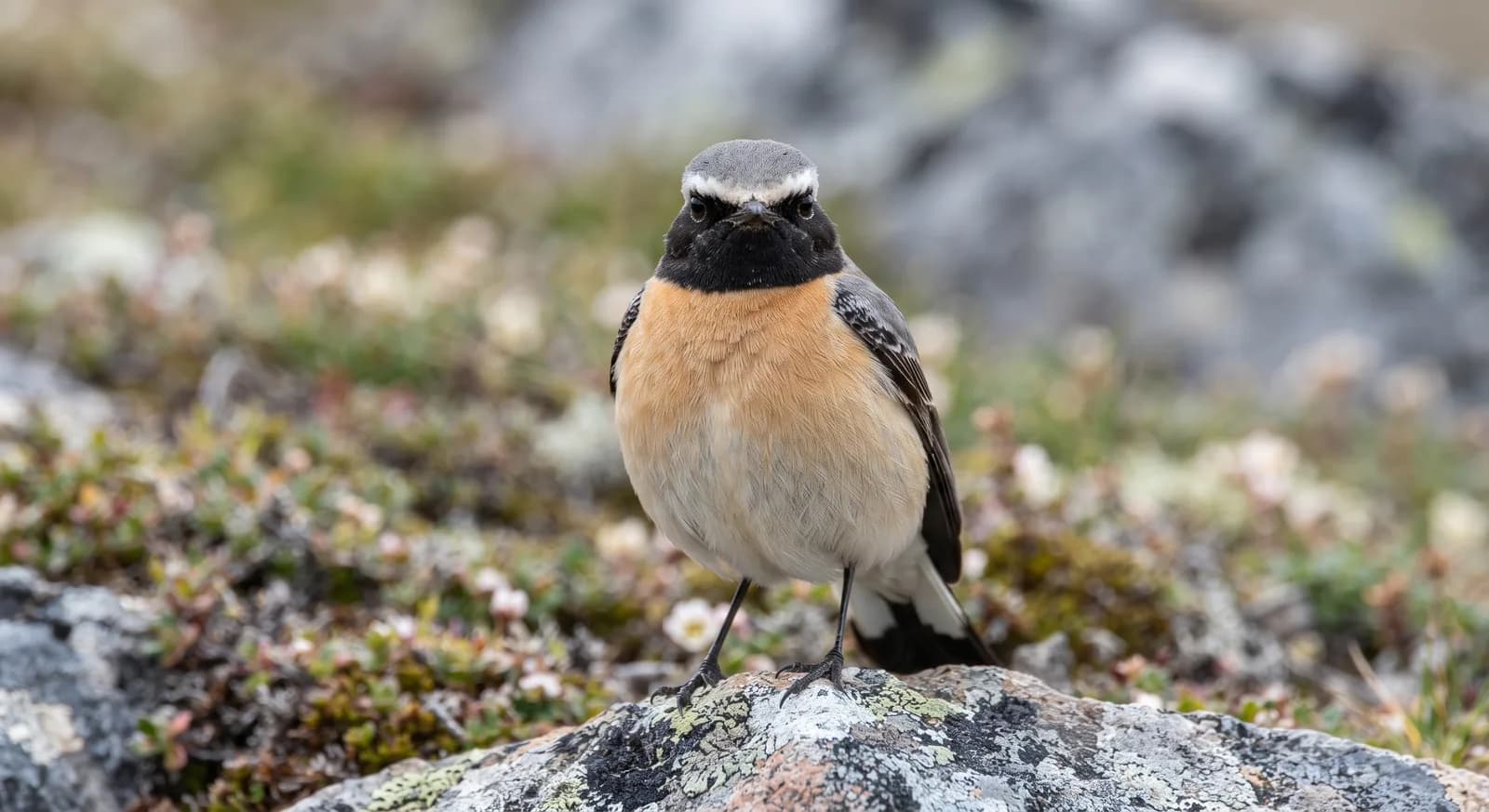
An upright, ground-dwelling bird that moves by walking and hopping over the ground, always out in the open on stones and rises. Its unmistakable feature is the pattern of the tail: white, finished off with the inverted black T common to all wheatears.
Weight
18 g – 32 g
Size
14 cm – 16 cm
Lifespan
5 years
Diet
Insectivore
Feeds mainly on insects and other invertebrates.
Activity
Diurnal
Active mainly during the day.
Social structure
In pairs
Usually lives in pairs, sometimes for life.
Sighting difficulty
Easy
Estimated population
Estimated by BirdLife International at some 2.9 million individuals across the Old World and the Americas as a whole
Fun facts
- GeneralThe Alaskan population crosses the whole of Asia to reach Africa: as much as 15,000 km each way.
- Its Spanish name comes from the white of its tail: 'colla' plus 'alba'.
- The populations that breed in Alaska and Greenland cross half the planet to winter in sub-Saharan Africa, like the rest of the species.
- It nests in holes among rocks and also inside abandoned rabbit burrows.
Life cycle & biology
- Skeleton type
- Vertebrate - internal bony skeleton (bird)
- Habitat & environment
- Open stony ground, short grass and tundra
- Size at birth
- The chicks hatch partly covered in dark grey down
- Gestation / incubation
- 10-16 days, mainly by the female
- Litter / clutch size
- 2-9 eggs, with up to two clutches a year between April and July. The chicks fledge at 15 days and become independent at a month
Sources consulted: SEO/BirdLife (ficha y III Atlas de las aves en época de reproducción en España); IUCN Red List; Asturnatura; Animalia.bio; Tellería, Asensio y Díaz 1999, Aves Ibéricas II
Where to find it
See its range on the interactive mapBest time: From April to July in Spain, when it is a summer visitor; also on migration
Where to watch it
Parques y spots de buceo donde se ha documentado esta especie — se muestran 10 de 186 documentados.
Related species
Other species in the catalogue with the most in common with Northern Wheatear — same habitat, park, country, tags or family.
European Pied Flycatcher
Ficedula hypoleuca
Black Redstart
Phoenicurus ochruros
Rufous-tailed Rock Thrush
Monticola saxatilis
Black Wheatear
Oenanthe leucura
Cyprus Wheatear
Oenanthe cypriaca
Isabelline Wheatear
Oenanthe isabellina
Keep exploring
Based on what we already know about northern wheatear.
Comments
Share an experience, a fun fact or a tip for seeing the northern wheatear.
Be the first to comment.