One of the 6 colobuses on WAnimals
Mammals · Primates · Cercopithecidae
Black Colobus
Colobus satanas
It faces a high risk of extinction in the wild over the medium term. See full glossary
The black colobus is the only wholly black colobus, without a single white patch or fringe, and lives in the forests of Gabon, Cameroon, Equatorial Guinea and the north of the Republic of the Congo, including the island of Bioko. Unlike its relatives, which are largely leaf eaters, it bases much of its diet on the hard seeds of unripe fruit, which it opens with powerful jaws. It is highly sensitive to forest fragmentation and to hunting, and has disappeared from large parts of its former range.
Weight
6 kg – 11 kg
Size
50 cm – 70 cm
Lifespan
25 years
Diet
Herbivore
Feeds mainly on plants.
Activity
Diurnal
Active mainly during the day.
Sighting difficulty
Moderate
Fun facts
- It is the only entirely black colobus: the other members of the genus sport striking white mantles, fringes or tails.
- Its diet is based more on seeds than on leaves, an exception among colobus monkeys that makes it especially dependent on large mature trees.
Life cycle & biology
- Skeleton type
- Vertebrate - internal bony skeleton (mammal)
- Habitat & environment
- Lowland rainforest and coastal forest of west-central Africa
- Gestation / incubation
- 6 months
- Litter / clutch size
- 1
Sources consulted: https://www.iucnredlist.org/ | https://animaldiversity.org/ | https://es.wikipedia.org/
Where to find it
See its range on the interactive mapWhere to watch it
Parks and dive sites where this species has been documented.
Related species
Other species in the catalogue with the most in common with Black Colobus — same habitat, park, country, tags or family.
Grey-cheeked Mangabey
Lophocebus albigena
 Vulnerable
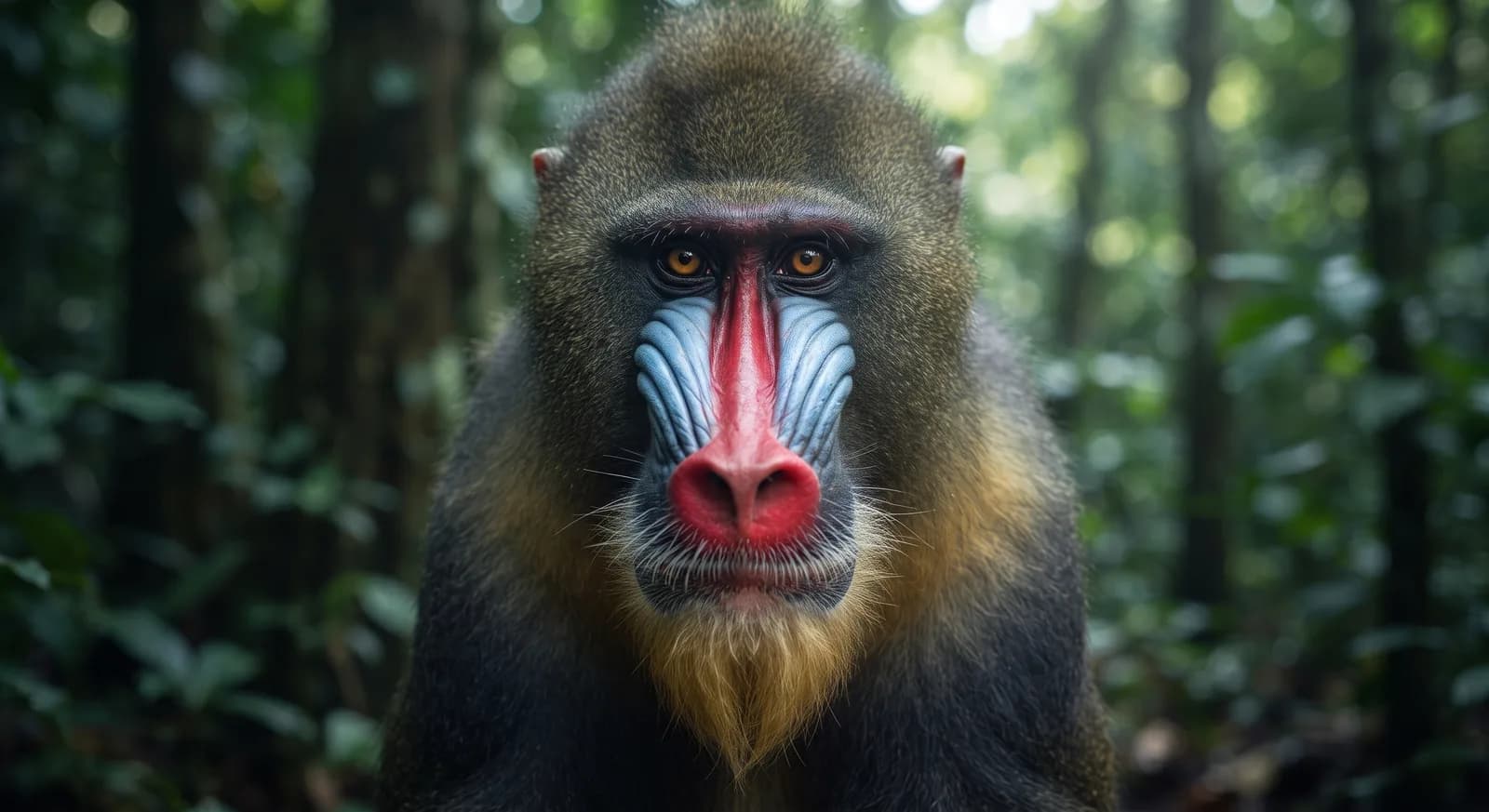
Mandrill
Mandrillus sphinx
Drill
Mandrillus leucophaeus
Preuss’s Red Colobus
Piliocolobus preussi
De Brazza’s Monkey
Cercopithecus neglectus
Mona Monkey
Cercopithecus mona
How to help
The black colobus is classified as vulnerable. Organizations such as UICN, WWF y Wildlife Conservation Society work specifically on its conservation and that of its habitat; looking into their programs is a good starting point if you want to get involved.
It's documented in 2 real protected areas — part of why protecting these places matters for its conservation.
Keep exploring
Based on what we already know about black colobus.
Comments
Share an experience, a fun fact or a tip for seeing the black colobus.
Be the first to comment.