Species group · Mammals
Colobuses
WAnimals has 6 species of colobus, all in the family Cercopithecidae.
- 6 species
- 1 family
- 26 countries
- 35 parks
- Weight
- 4 kg – 23 kg
- Length
- 45 cm – 75 cm
- Lifespan
- 20 – 25 years
Ranges calculated from the entries that record the figure, not from all 6.
All 6 species of colobuses on WAnimals
Each one has its own full entry. This group does not replace them: it brings them together.
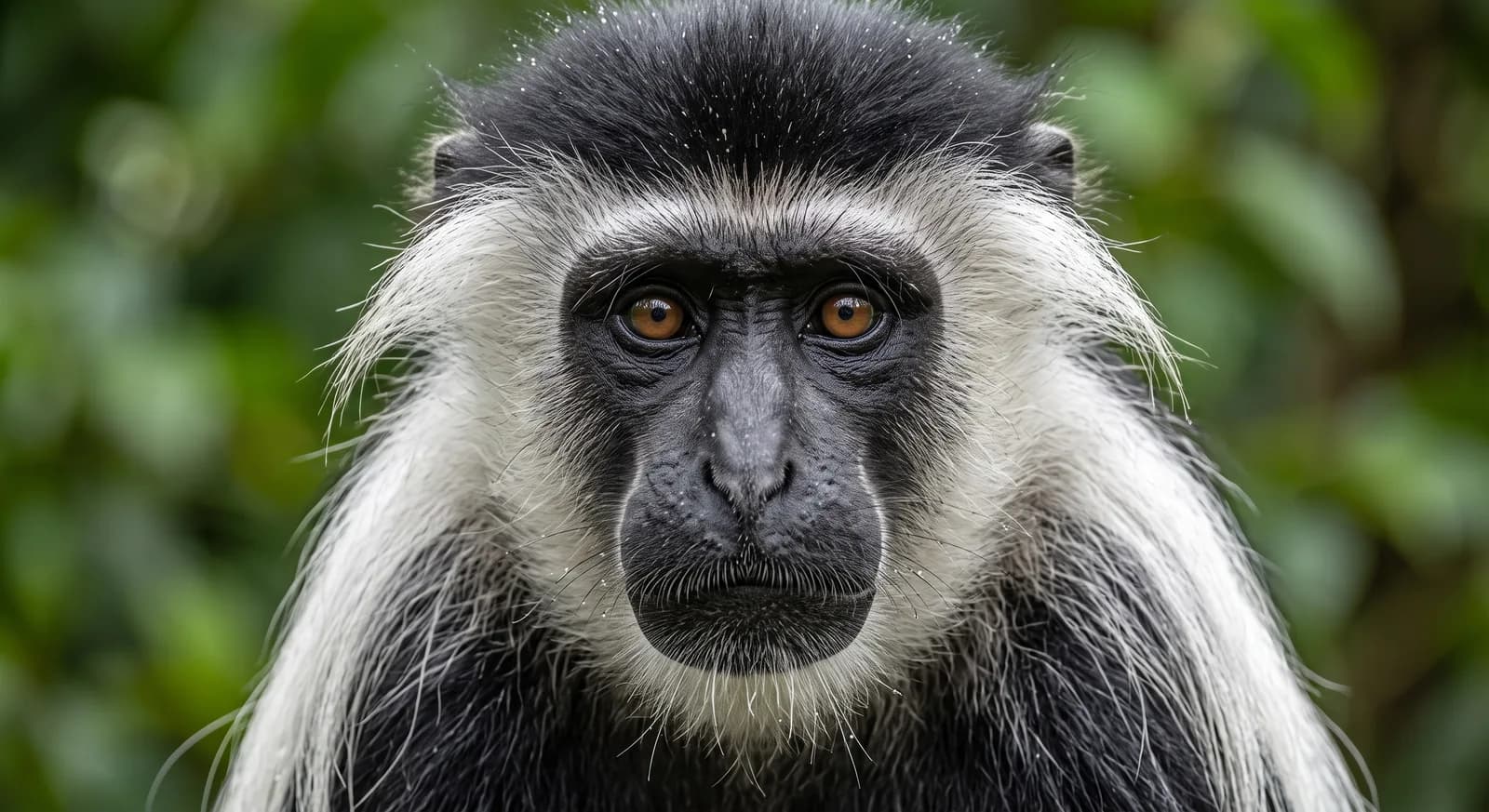 Least Concern
Guereza
Colobus guereza
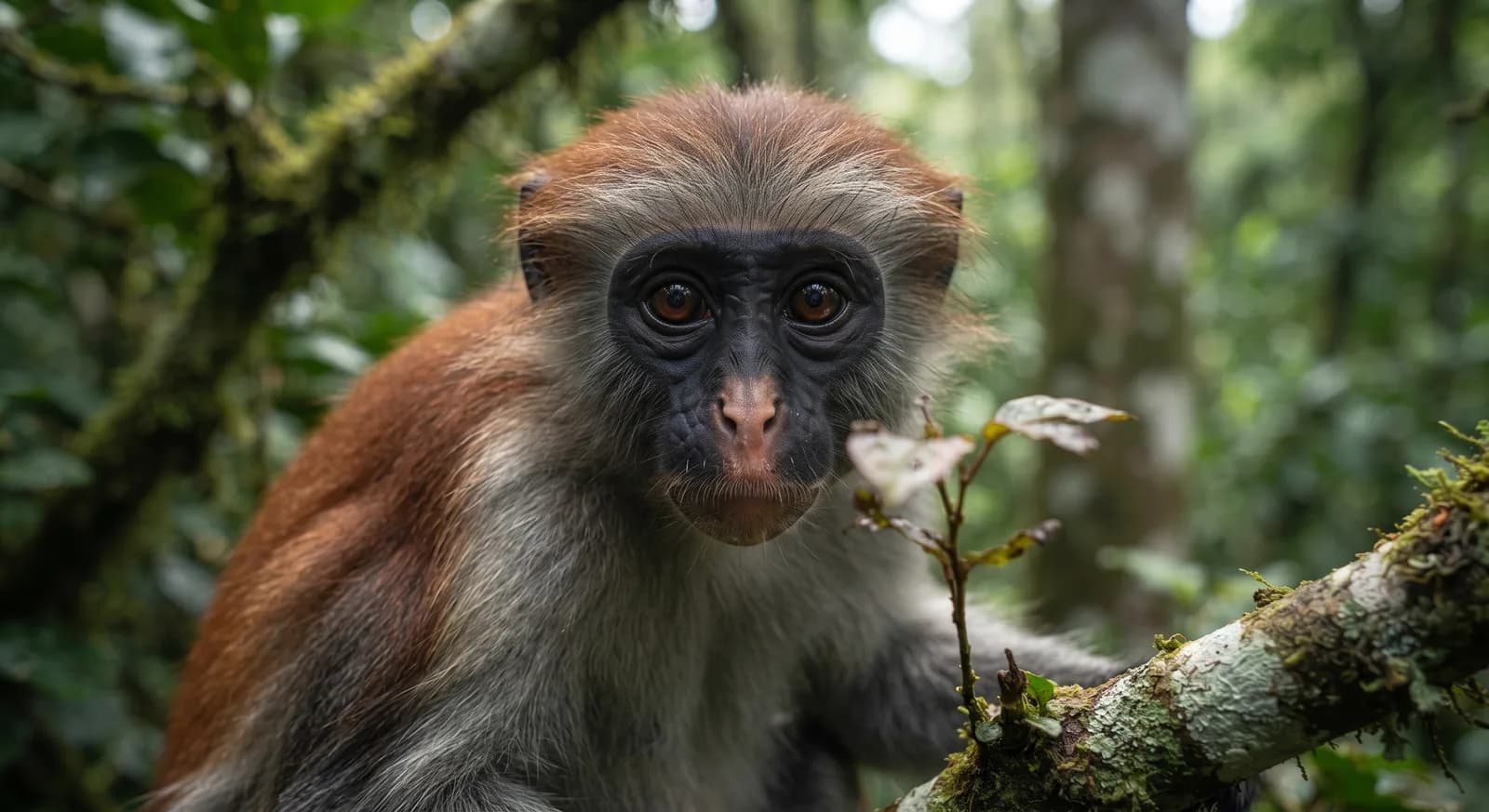 Endangered
Western Red Colobus
Piliocolobus badius
Angolan Colobus
Colobus angolensis
Black Colobus
Colobus satanas
Preuss’s Red Colobus
Piliocolobus preussi
Udzungwa Red Colobus
Piliocolobus gordonorum
Conservation status
5 especies in this group están en alguna categoría de riesgo real según la UICN.
See the global conservation statusWhere they live
Recorded in 26 countries. The ones with the most species in the group:
Where to see them
Did you know…
Its long white cape of fur works like a parachute during its spectacular leaps between trees.
From Guereza
It feeds mainly on young leaves, supplemented with fruit, flowers, shoots and bark.
From Guereza
It is the most arboreal monkey in Africa.
From Guereza
It is the chimpanzee's favourite prey, hunted by coordinated groups.
From Western Red Colobus
It is the main prey of chimpanzees in several West African forests, and hunting it gave rise to the first detailed descriptions of cooperative hunting in chimpanzees, with individuals taking on distinct roles of driver, blocker and ambusher.
From Western Red Colobus
The subspecies of Ghana and Côte d'Ivoire known as Miss Waldron's red colobus was declared extinct in 2000, the first primate extinction documented in the 20th century.
From Western Red Colobus
The white fringes on its shoulders work as a rudimentary parachute: as it launches itself between trees, the long hair increases air resistance and cushions leaps that can exceed fifteen metres.
From Angolan Colobus
Its skins were traded for centuries in East Africa as ceremonial ornament, and at the end of the nineteenth century hundreds of thousands of colobus skins were being exported to Europe.
From Angolan Colobus