One of the 6 colobuses on WAnimals
Mammals · Primates · Cercopithecidae
Udzungwa Red Colobus
Piliocolobus gordonorum
It faces a very high risk of extinction in the wild in the near future. See full glossary
The Udzungwa red colobus is a primate endemic to the Udzungwa Mountains, in Tanzania's Eastern Arc, one of the most important biodiversity hotspots in Africa. It lives in large groups in the canopy and feeds on young leaves, shoots and seeds. Like all colobus monkeys it has a compartmented stomach in which bacteria ferment cellulose, which lets it exploit an abundant but poor food. It depends entirely on forest fragments that farming is leaving ever more isolated.
Weight
8 kg – 11 kg
Size
45 cm – 70 cm
Lifespan
20 years
Diet
Herbivore
Feeds mainly on plants.
Activity
Diurnal
Active mainly during the day.
Sighting difficulty
Hard
Fun facts
- It has no thumb: its hand works as a hook that lets it swing rapidly through the branches, and that is where the name colobus comes from, from the Greek kolobos, maimed.
- It ferments leaves in a chambered stomach, a system analogous to a cow's that very few primates in the world have evolved.
Life cycle & biology
- Skeleton type
- Vertebrate - internal bony skeleton (mammal)
- Habitat & environment
- Humid montane forest and gallery forest of the Udzungwa Mountains, in Tanzania
- Gestation / incubation
- 6 months
- Litter / clutch size
- 1
Sources consulted: https://es.wikipedia.org/wiki/Piliocolobus_gordonorum
Where to watch it
Parks and dive sites where this species has been documented.
Related species
Other species in the catalogue with the most in common with Udzungwa Red Colobus — same habitat, park, country, tags or family.
Angolan Colobus
Colobus angolensis
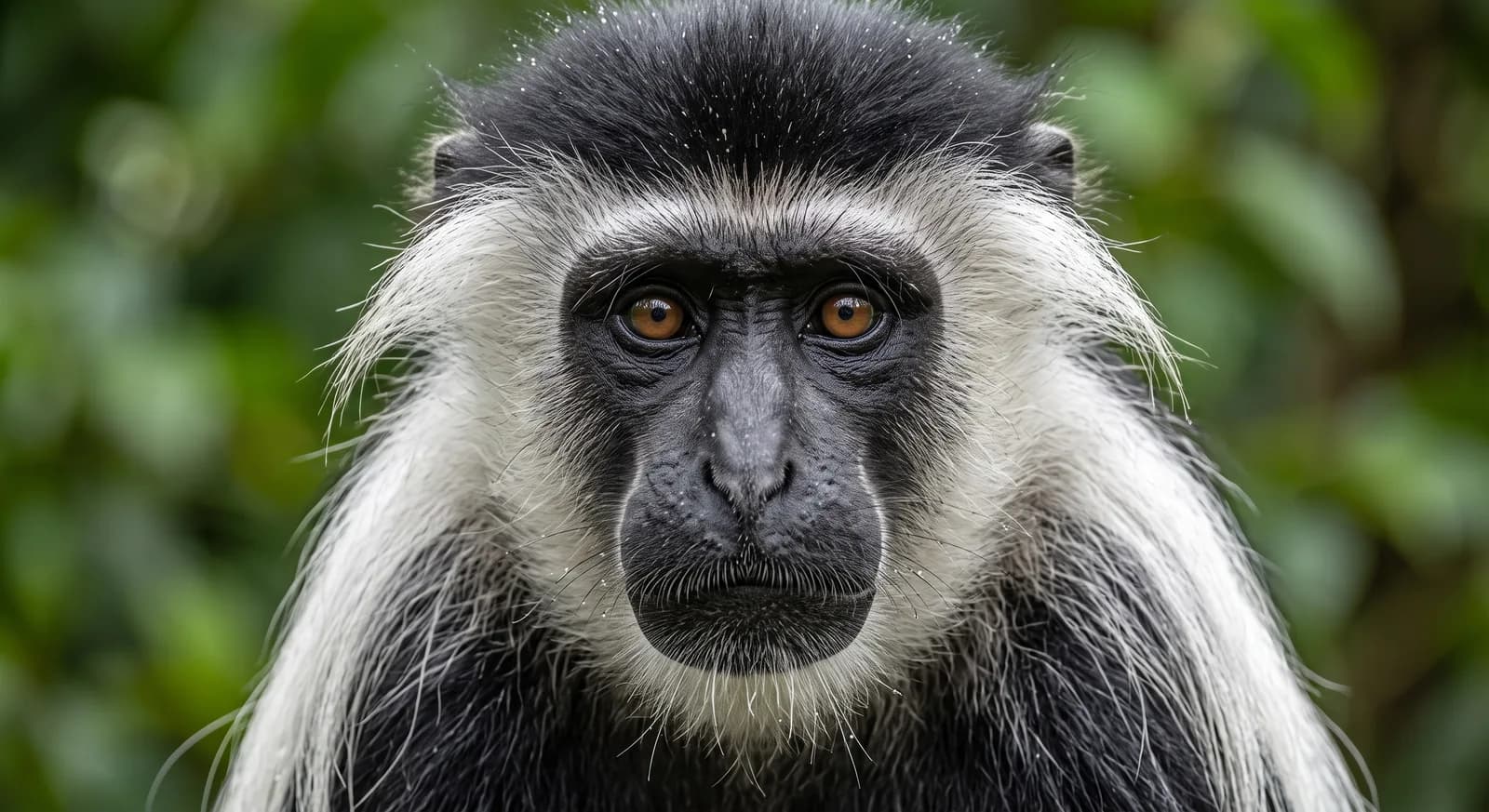 Least Concern
Guereza
Colobus guereza
Vervet Monkey
Chlorocebus pygerythrus
Yellow Baboon
Papio cynocephalus
Abbott's Duiker
Cephalophus spadix
Udzungwa Forest-partridge
Xenoperdix udzungwensis
How to help
The udzungwa red colobus is classified as endangered. Organizations such as UICN, WWF y Wildlife Conservation Society work specifically on its conservation and that of its habitat; looking into their programs is a good starting point if you want to get involved.
It's documented in 3 real protected areas — part of why protecting these places matters for its conservation.
Keep exploring
Based on what we already know about udzungwa red colobus.
Comments
Share an experience, a fun fact or a tip for seeing the udzungwa red colobus.
Be the first to comment.