One of the 6 colobuses on WAnimals
Mammals · Primates · Cercopithecidae
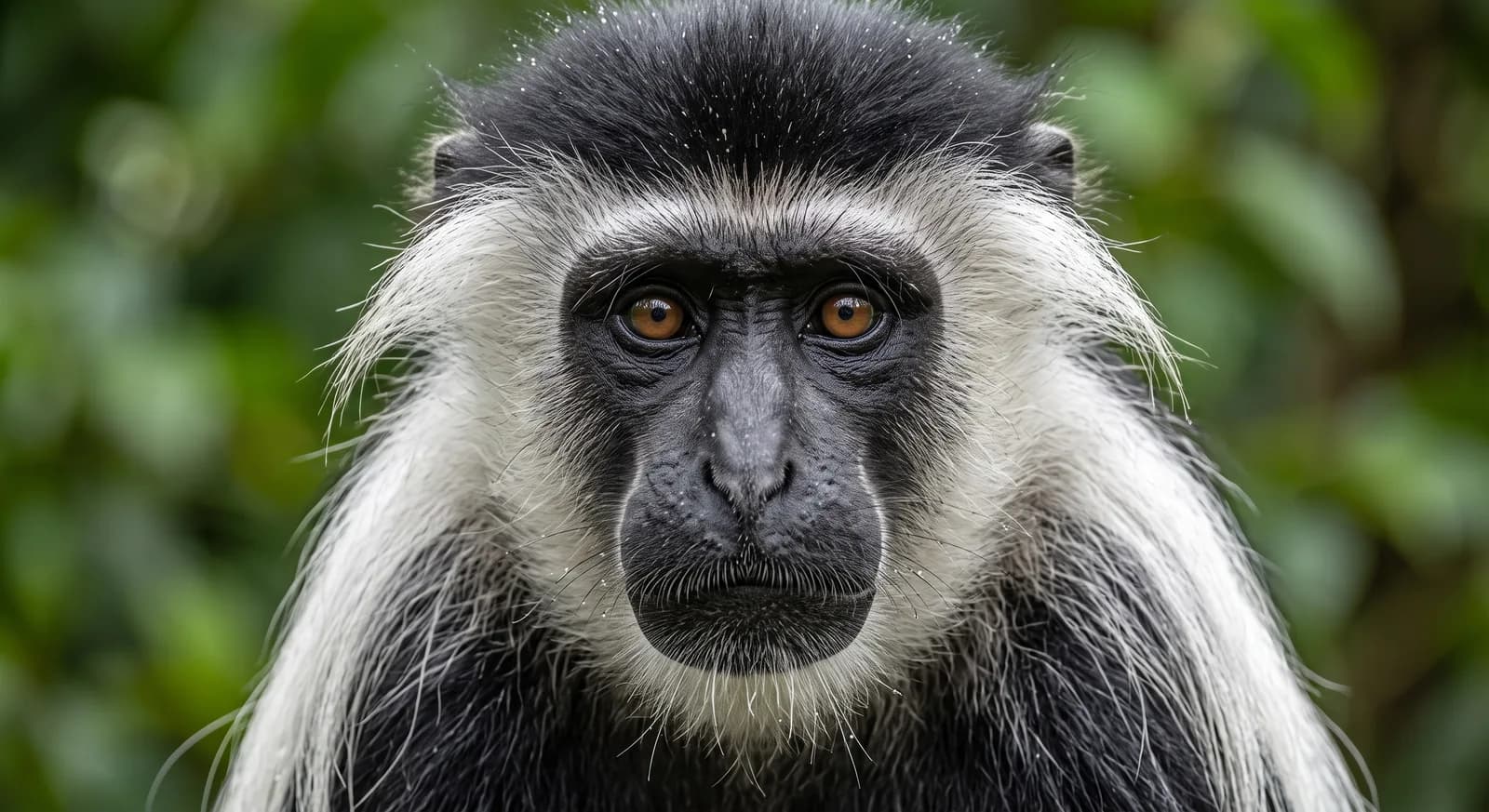
Angolan Colobus
Colobus angolensis
It faces a high risk of extinction in the wild over the medium term. See full glossary
The Angolan colobus is a black primate with long white fringes on the shoulders that hang like a cape, and a tail ending in a white tuft. It lives in groups in the canopy of montane and gallery forest, and its diet is based on mature leaves, which it ferments in a compartmented stomach. Like all colobus monkeys it has no thumb. The felling of the montane forests of East Africa and hunting for meat and skins have put it into retreat.
Weight
6 kg – 11 kg
Size
50 cm – 70 cm
Lifespan
24 years
Diet
Herbivore
Feeds mainly on plants.
Activity
Diurnal
Active mainly during the day.
Sighting difficulty
Moderate
Fun facts
- The white fringes on its shoulders work as a rudimentary parachute: as it launches itself between trees, the long hair increases air resistance and cushions leaps that can exceed fifteen metres.
- Its skins were traded for centuries in East Africa as ceremonial ornament, and at the end of the nineteenth century hundreds of thousands of colobus skins were being exported to Europe.
Life cycle & biology
- Skeleton type
- Vertebrate - internal bony skeleton (mammal)
- Habitat & environment
- Montane rainforest, bamboo forest and gallery forest of Central and East Africa
- Sexual maturity
- 4.5 years
- Gestation / incubation
- 6.3 months
- Litter / clutch size
- 1
Sources consulted: https://www.iucnredlist.org/ | https://animaldiversity.org/ | https://es.wikipedia.org/
Where to find it
See its range on the interactive mapWhere to watch it
Parks and dive sites where this species has been documented.
Related species
Other species in the catalogue with the most in common with Angolan Colobus — same habitat, park, country, tags or family.
Grey-cheeked Mangabey
Lophocebus albigena
L'Hoest's Monkey
Allochrocebus lhoesti
Wolf's Monkey
Cercopithecus wolfi
Udzungwa Red Colobus
Piliocolobus gordonorum
 Least Concern
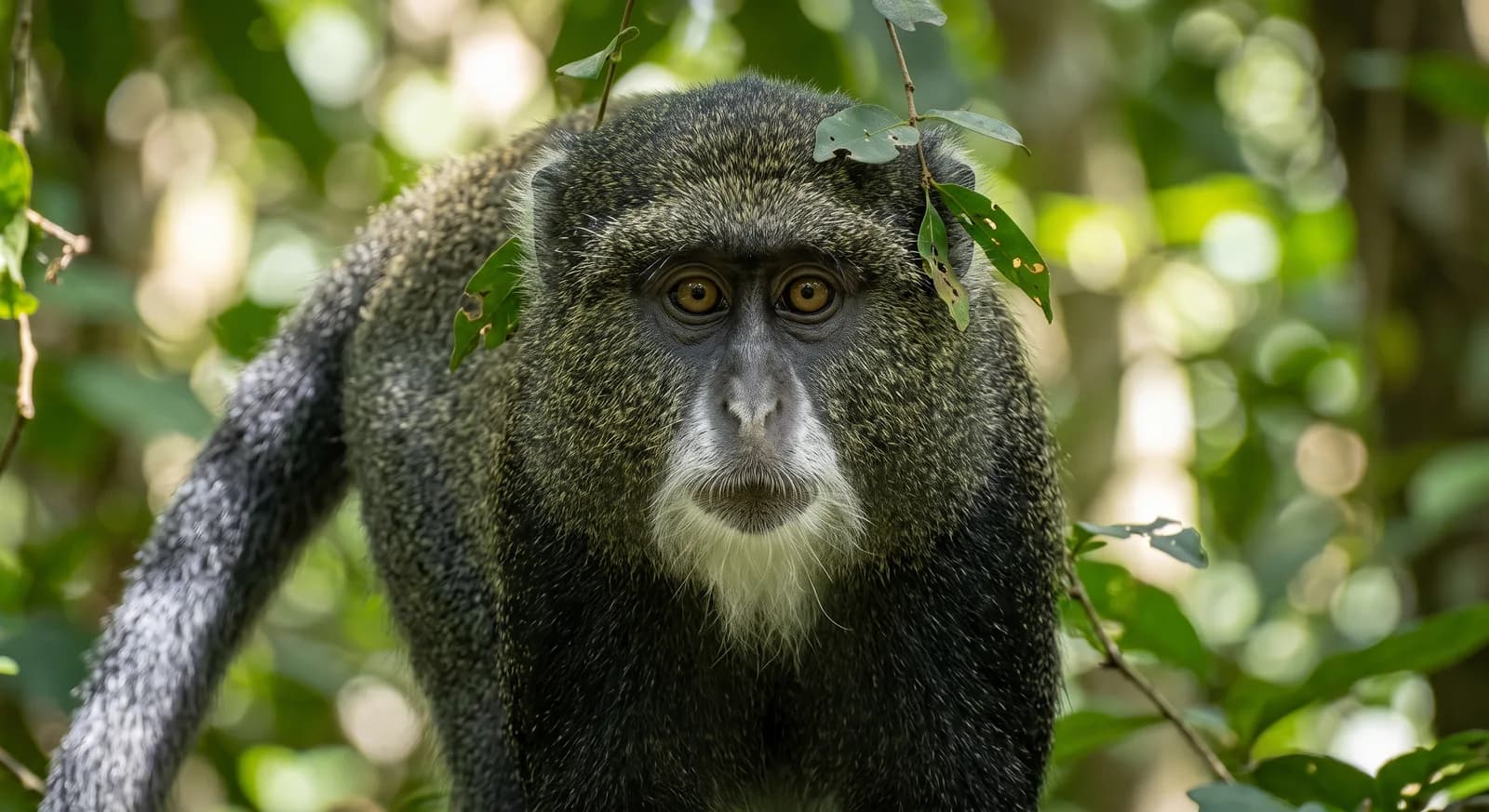
Blue Monkey
Cercopithecus mitis
 Least Concern
Guereza
Colobus guereza
How to help
The angolan colobus is classified as vulnerable. Organizations such as UICN, WWF y Wildlife Conservation Society work specifically on its conservation and that of its habitat; looking into their programs is a good starting point if you want to get involved.
It's documented in 8 real protected areas — part of why protecting these places matters for its conservation.
Keep exploring
Based on what we already know about angolan colobus.
Comments
Share an experience, a fun fact or a tip for seeing the angolan colobus.
Be the first to comment.