Mammals · Primates · Cercopithecidae
Mandrill
Mandrillus sphinx
It faces a high risk of extinction in the wild over the medium term. See full glossary
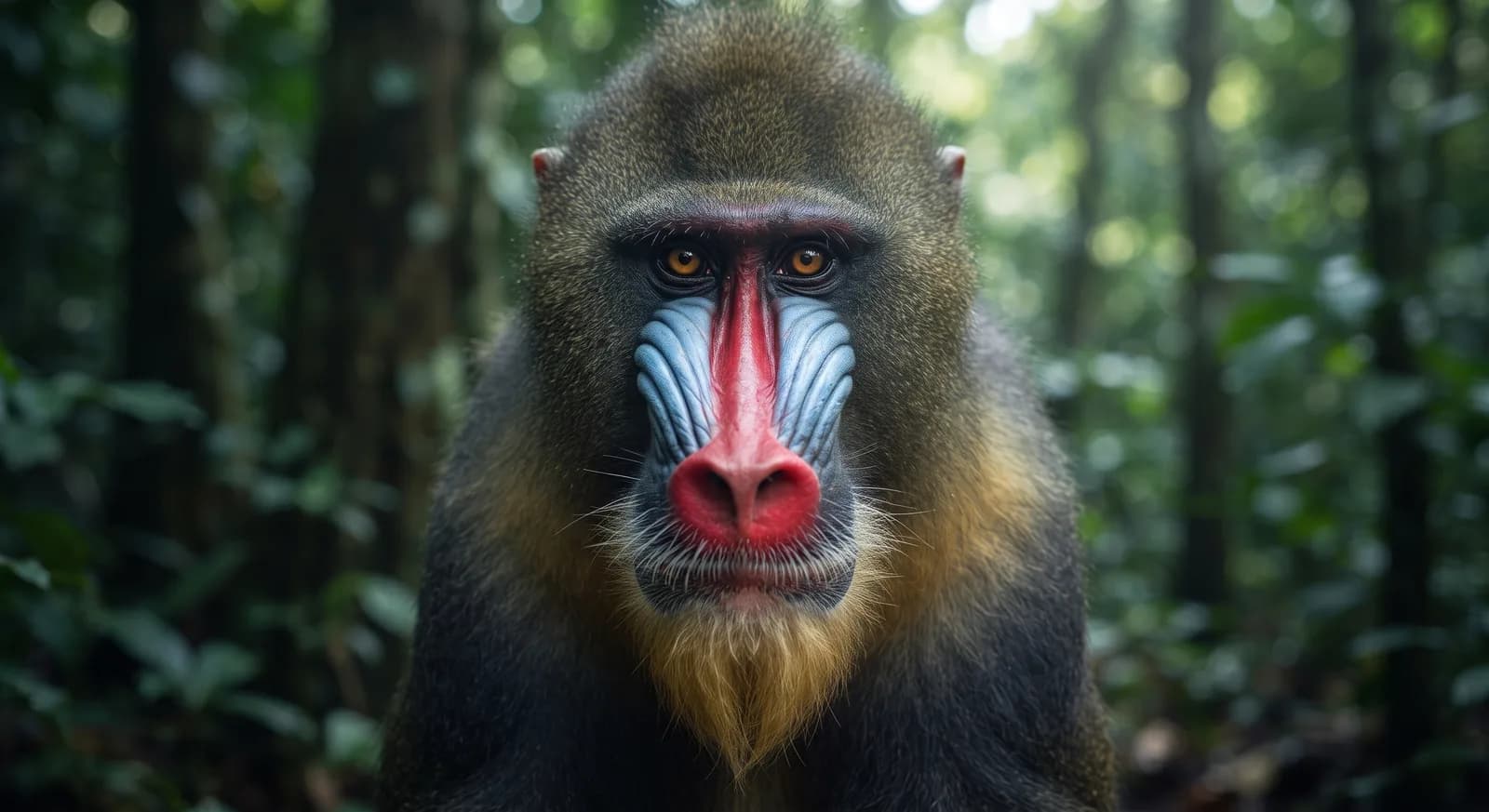
It is the largest and most colourful monkey in the world, with a blue and red muzzle that grows more intense in dominant males according to their social standing. It can form the largest social gatherings known among non-human primates.
Weight
10 kg – 54 kg
Size
56 cm – 81 cm
Lifespan
20 years
Diet
Omnivore
Combines animal and plant food depending on availability.
Activity
Diurnal
Active mainly during the day.
Social structure
Herd
Lives in large groups as a strategy against predators.
Sighting difficulty
Moderate
Fun facts
- It is the largest monkey in the world.
- The colour of its muzzle grows more intense in dominant males according to their standing.
- Hordes of more than 1,200 animals have been recorded, the largest primate gatherings known.
Life cycle & biology
- Skeleton type
- Vertebrate - internal bony skeleton (mammal)
- Habitat & environment
- Dense rainforest and gallery forest of west-central Africa
- Birth weight
- Exact weight at birth not found as a precise figure
- Size at birth
- Born with a black natal coat and pink skin, both of which change colour by around 2 months
- Sexual maturity
- Female: 4-8 years | Male: 8-9 years
- Gestation / incubation
- 152-176 days (~5.5-6 months)
- Litter / clutch size
- 1 young (twins documented only in captivity)
- Lifespan in captivity
- Documented record of 40-46.3 years in captivity
Sources consulted: AnAge; PubMed; New England Primate Conservancy; Denver Zoo; Animalia.bio; A-Z Animals; San Diego Zoo; PMC
Where to find it
See its range on the interactive mapWhere to watch it
Parks and dive sites where this species has been documented.
Related species
Other species in the catalogue with the most in common with Mandrill — same habitat, park, country, tags or family.
Black Colobus
Colobus satanas
Grey-cheeked Mangabey
Lophocebus albigena
Drill
Mandrillus leucophaeus
De Brazza’s Monkey
Cercopithecus neglectus
Putty-nosed Monkey
Cercopithecus nictitans
Preuss’s Monkey
Allochrocebus preussi
How to help
The mandrill is classified as vulnerable. Organizations such as UICN, WWF y Wildlife Conservation Society work specifically on its conservation and that of its habitat; looking into their programs is a good starting point if you want to get involved.
It's documented in 5 real protected areas — part of why protecting these places matters for its conservation.
Keep exploring
Based on what we already know about mandrill.
Comments
Share an experience, a fun fact or a tip for seeing the mandrill.
Be the first to comment.