One of the 2 wildebeests on WAnimals
Mammals · Artiodactyla · Bovidae
Black Wildebeest
Connochaetes gnou
The species is abundant and widely distributed; it faces no significant short-term risk. See full glossary
It came to the brink of extinction in the late 19th century through indiscriminate hunting, surviving only because a handful of South African farmers protected small herds on their own land.
Weight
110 kg – 180 kg
Size
1.1 m – 1.2 m
Lifespan
18 years
Diet
Herbivore
Feeds mainly on plants.
Activity
Diurnal
Active mainly during the day.
Social structure
Herd
Lives in large groups as a strategy against predators.
Sighting difficulty
Easy
Estimated population
More than 18,000 animals, nearly all of them on reserves and farms in South Africa, after coming close to extinction in the late nineteenth century.
Fun facts
- It came to the brink of extinction in the late 19th century through indiscriminate hunting.
- It survived thanks to South African farmers who protected herds on private land.
- Its striking long white tail is practically identical to a horse's.
Life cycle & biology
- Skeleton type
- Vertebrate - internal bony skeleton (mammal)
- Habitat & environment
- Open highveld grassland and the Karoo region of southern Africa
- Birth weight
- 11 kg
- Size at birth
- Precocial, able to stand 15 minutes after birth and follow its mother soon afterwards
- Sexual maturity
- Female: 1.5-2.5 years | Male: 3 years
- Gestation / incubation
- 259 days (~8.5 months)
- Litter / clutch size
- 1 young per birth
- Lifespan in captivity
- Documented record of up to 21.8-25 years in captivity
Sources consulted: AnAge (genomics.senescence.info); Dimensions.com; Animal Diversity Web; About Animals; African Hunting Gazette; Animalia.bio; Grokipedia; Website of Everything
Where to find it
See its range on the interactive mapBest time: All year round on the grasslands of the South African Highveld, by day; calving is concentrated between November and January.
Where to watch it
Parks and dive sites where this species has been documented.
Related species
Other species in the catalogue with the most in common with Black Wildebeest — same habitat, park, country, tags or family.
Blesbok
Damaliscus pygargus phillipsi
Steenbok
Raphicerus campestris
 Least Concern
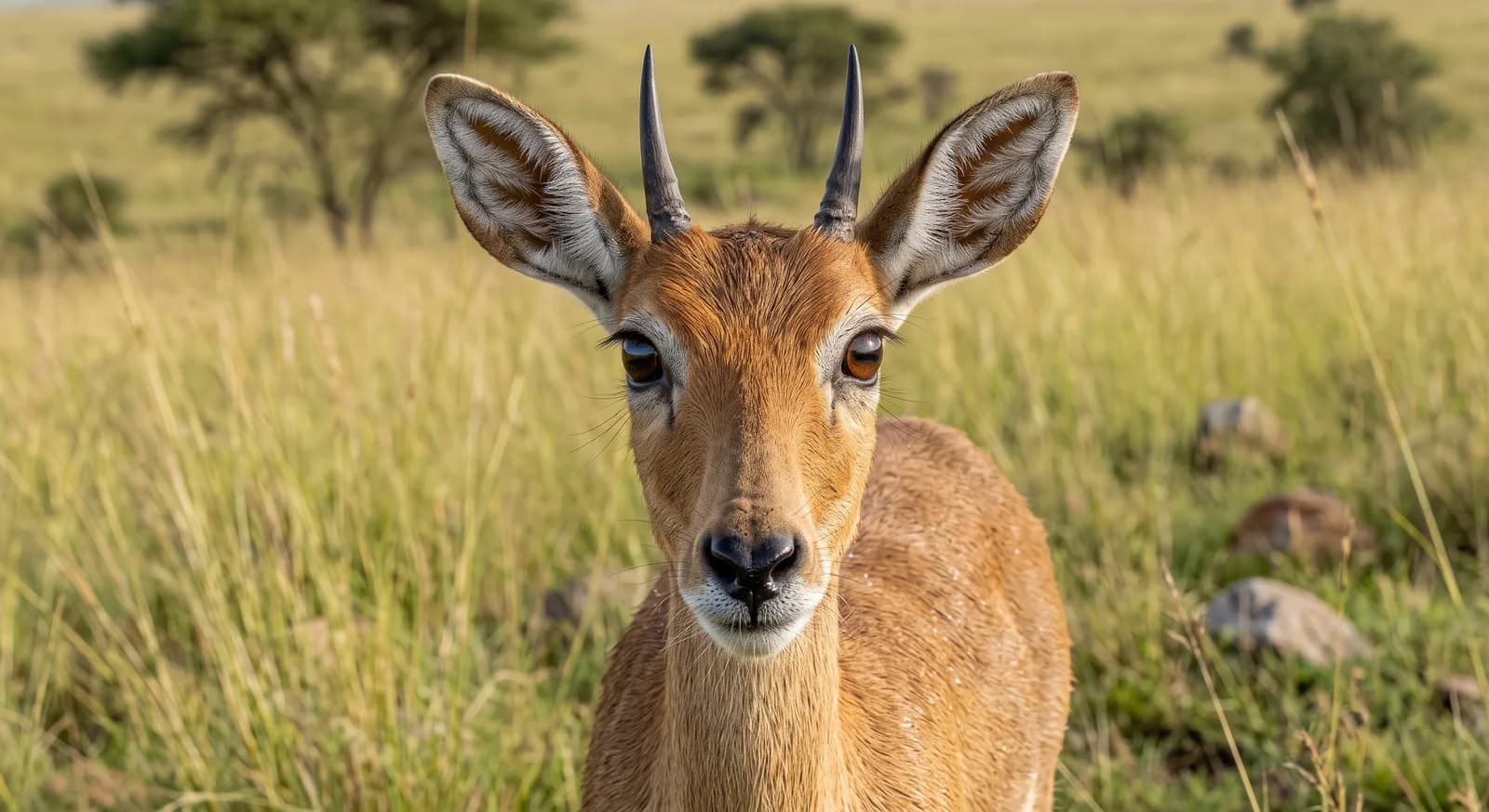
Oribi
Ourebia ourebi
 Least Concern
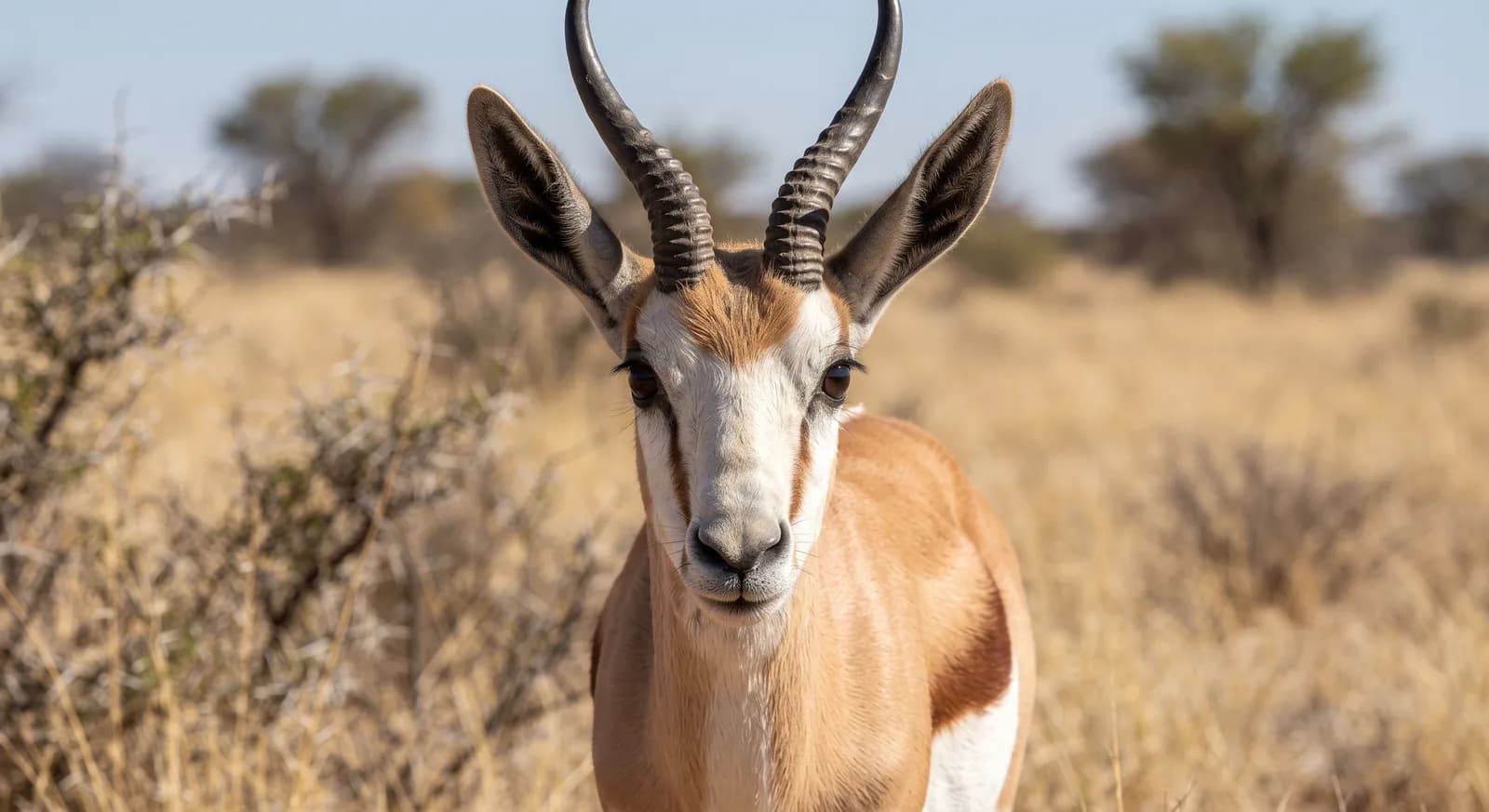
Springbok
Antidorcas marsupialis
Waterbuck
Kobus ellipsiprymnus
Hartebeest
Alcelaphus buselaphus
Keep exploring
Based on what we already know about black wildebeest.
Comments
Share an experience, a fun fact or a tip for seeing the black wildebeest.
Be the first to comment.