One of the 13 cormorants on WAnimals
Birds · Suliformes · Phalacrocoracidae
Brandt's Cormorant
Phalacrocorax penicillatus
The species is abundant and widely distributed; it faces no significant short-term risk. See full glossary
Brandt's cormorant is a large black cormorant of the North American Pacific coast, with a ruff of fine white feathers and a throat of bright cobalt blue during courtship. It breeds in dense colonies on islands and cliffs and fishes in the kelp forests of the California Current. Its populations swing sharply with El Niño events.
Weight
1.8 kg – 2.8 kg
Size
70 cm – 79 cm
Lifespan
18 years
Diet
Carnivore
Feeds mainly on other animals.
Activity
Diurnal
Active mainly during the day.
Social structure
Colony
Lives in large concentrations, often for breeding reasons.
Sighting difficulty
Easy
Fun facts
- In courtship its throat turns an intense cobalt blue and the male displays it by throwing his head back until it touches his own back, a display that lasts only a few weeks a year.
- Its populations collapse during El Niño events, when the warm water sinks the productivity of the California Current, and recover in the cold years.
- It fishes in the giant kelp forests of the Pacific, diving among the fronds to more than forty metres deep.
Life cycle & biology
- Skeleton type
- Vertebrate - internal bony skeleton (bird)
- Habitat & environment
- Rocky coasts and shelf waters of the North American Pacific, from Alaska to Baja California
- Sexual maturity
- 2 years
- Gestation / incubation
- 30 days
- Litter / clutch size
- 3
Sources consulted: https://en.wikipedia.org/wiki/Brandt's_cormorant
Where to watch it
Parques y spots de buceo donde se ha documentado esta especie — se muestran 10 de 13 documentados.
Related species
Other species in the catalogue with the most in common with Brandt's Cormorant — same habitat, park, country, tags or family.
Double-crested Cormorant
Phalacrocorax auritus
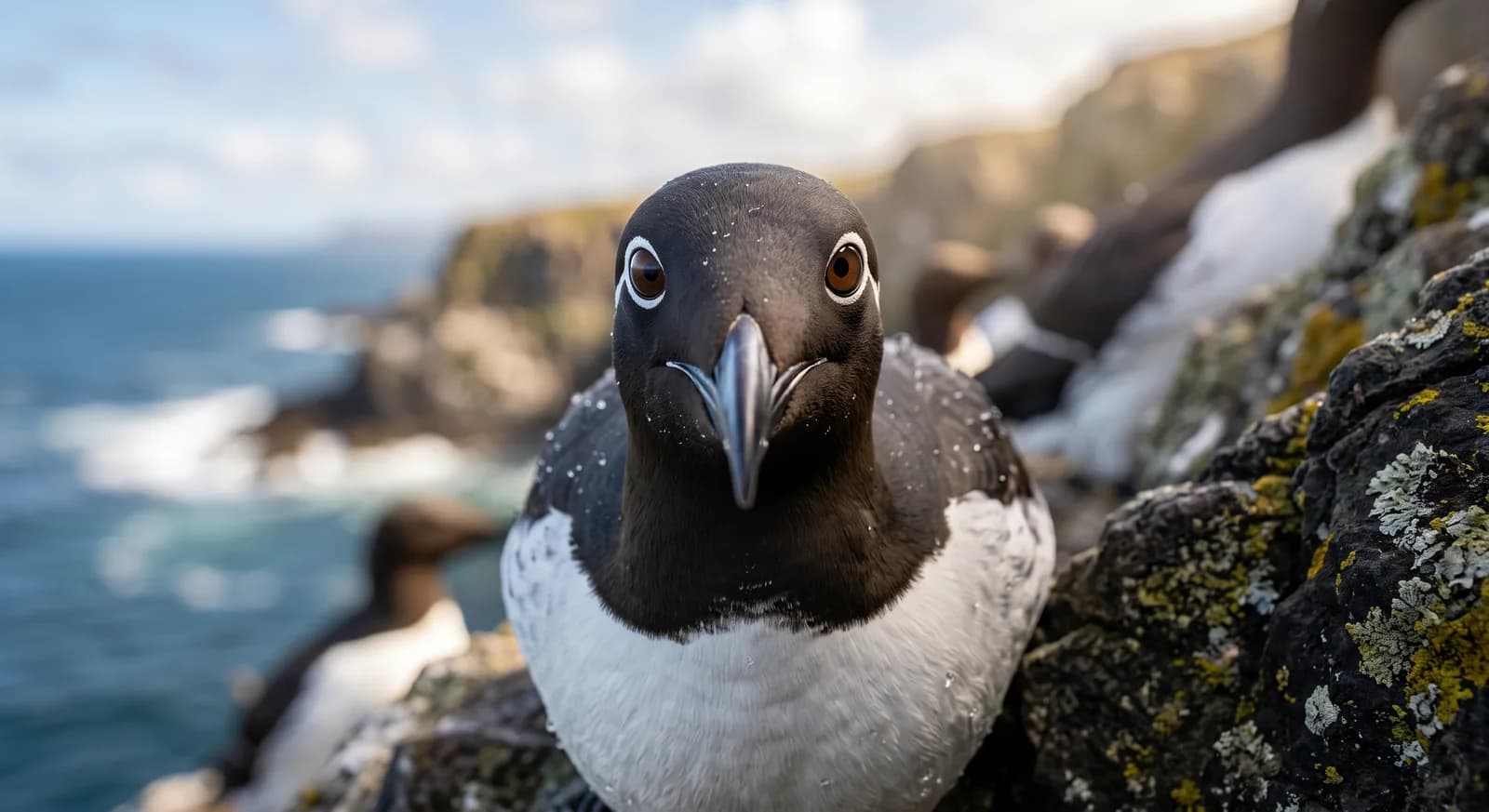 Least Concern
Common Murre
Uria aalge
Northern Fulmar
Fulmarus glacialis
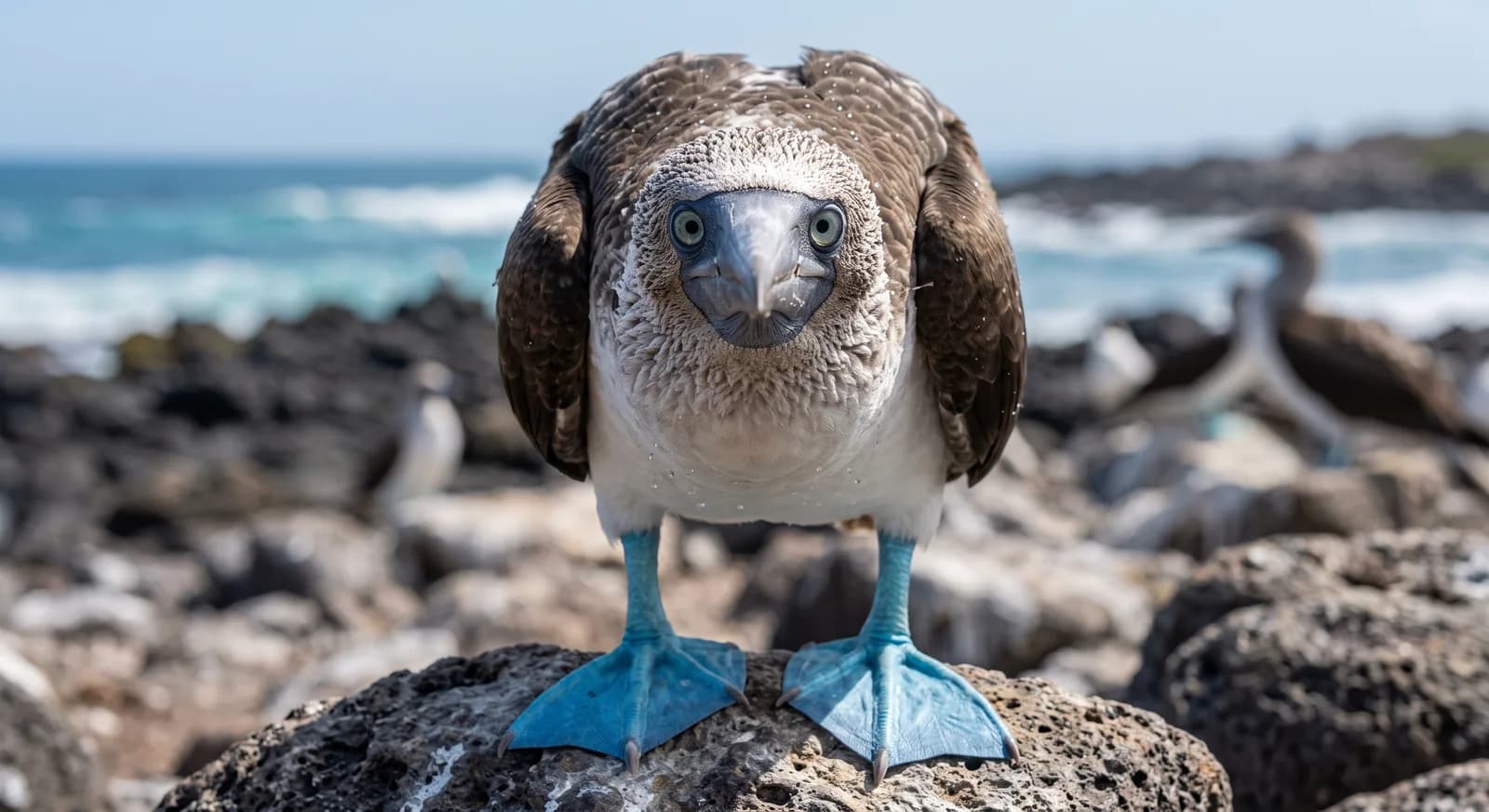 Least Concern
Blue-footed Booby
Sula nebouxii
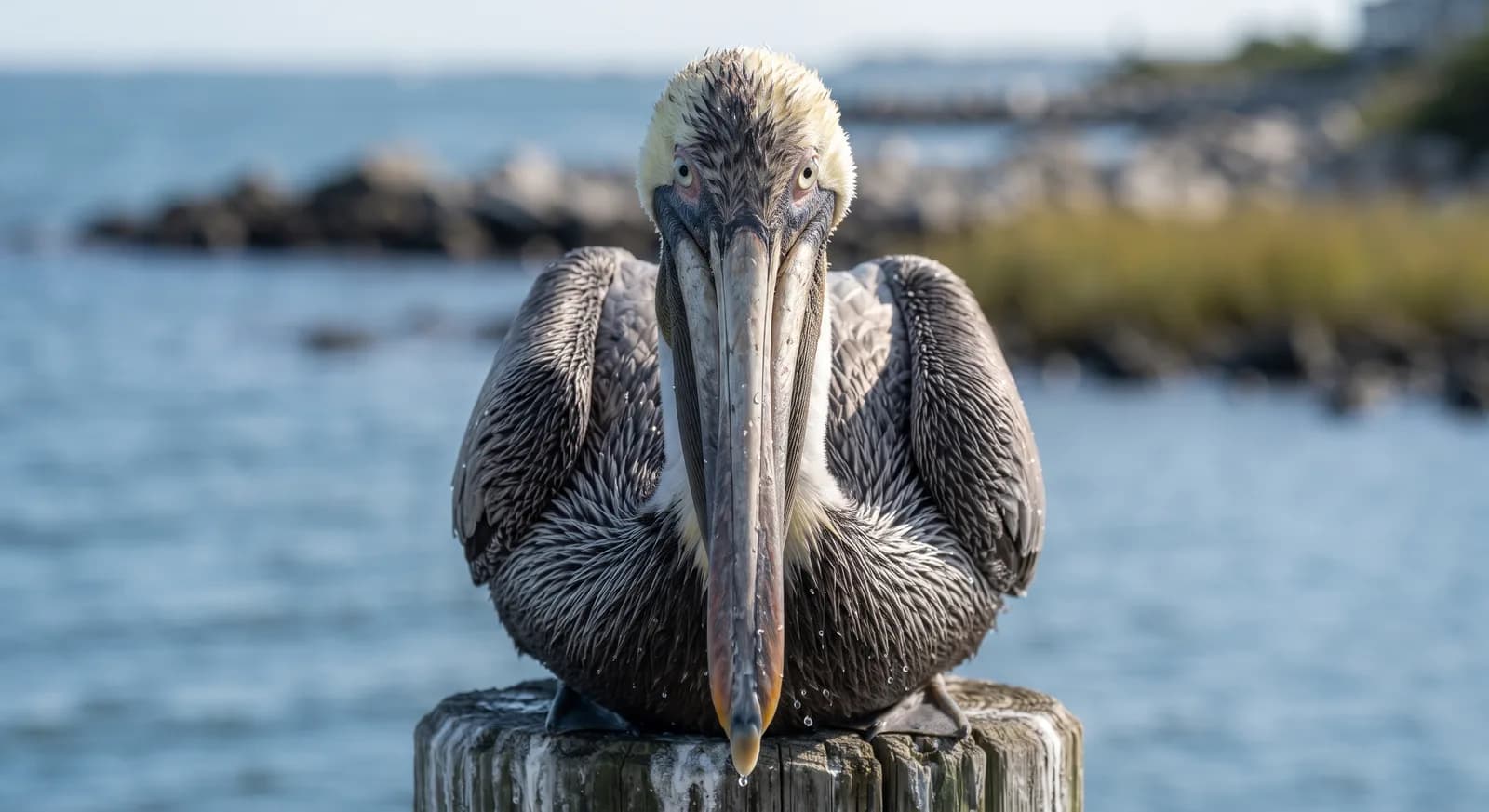 Least Concern
Brown Pelican
Pelecanus occidentalis
Belted Kingfisher
Megaceryle alcyon
Keep exploring
Based on what we already know about brandt's cormorant.
Comments
Share an experience, a fun fact or a tip for seeing the brandt's cormorant.
Be the first to comment.