One of the 3 elephants on WAnimals
Mammals · Proboscidea · Elephantidae
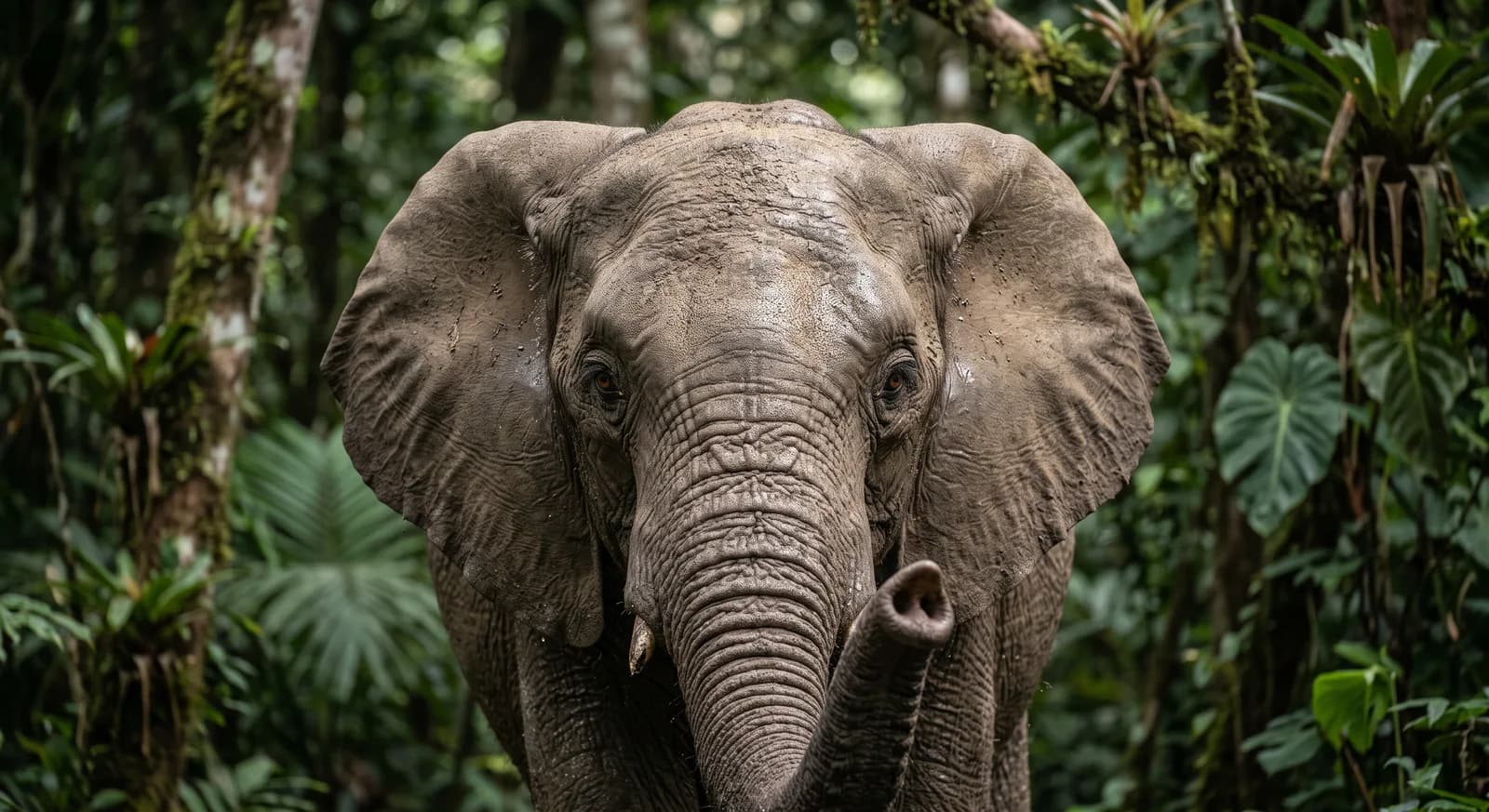
African Forest Elephant
Loxodonta cyclotis
It faces an extremely high risk of imminent extinction in the wild. See full glossary
It was only recognised as a species distinct from the savannah elephant in recent decades, after genetic studies. Its population has fallen by more than 80% in recent years through ivory poaching and the loss of forest habitat.
Size
2.4 m – 3 m
Lifespan
65 years
Diet
Frugivore
Feeds mainly on fruit.
Activity
Irregular activity
Active at irregular times, by day or night depending on circumstances.
Social structure
Family group
Lives in small family groups with close bonds.
Sighting difficulty
Very hard
Fun facts
- It was recognised as a species distinct from the savannah elephant only after recent genetic studies.
- Its population has fallen by more than 80% through ivory poaching and habitat loss.
- It is the smallest of the three living elephants, with straight tusks that point downwards.
Life cycle & biology
- Skeleton type
- Vertebrate - internal bony skeleton (mammal)
- Habitat & environment
- Tropical rainforest of West and Central Africa (the Congo Basin)
- Birth weight
- ~105 kg
- Size at birth
- Able to stand soon after birth
- Sexual maturity
- Female: 8-14 years (though effective breeding is usually delayed to 20-23) | Male: 11-14 years physiologically
- Gestation / incubation
- ~22 months (~660 days)
- Litter / clutch size
- 1 young; 4-9 years between births
Sources consulted: Animal Diversity Web; A-Z Animals; Animals Fandom Wiki; Britannica; Wikipedia (African forest elephant); Better Planet Education
Where to find it
See its range on the interactive mapWhere to watch it
Parques y spots de buceo donde se ha documentado esta especie — se muestran 10 de 12 documentados.
Related species
Other species in the catalogue with the most in common with African Forest Elephant — same habitat, park, country, tags or family.
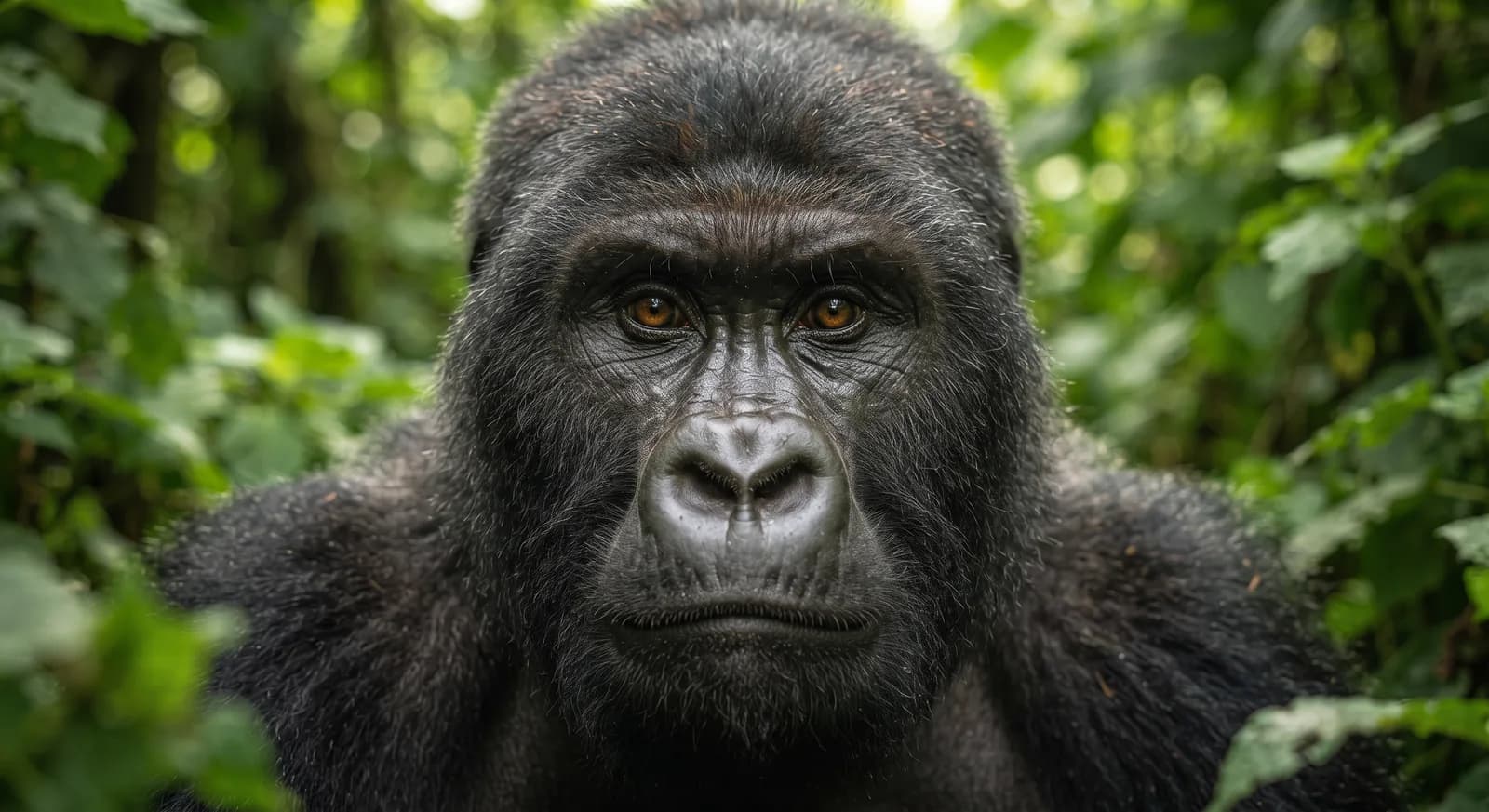 Critically Endangered
Western Gorilla
Gorilla gorilla
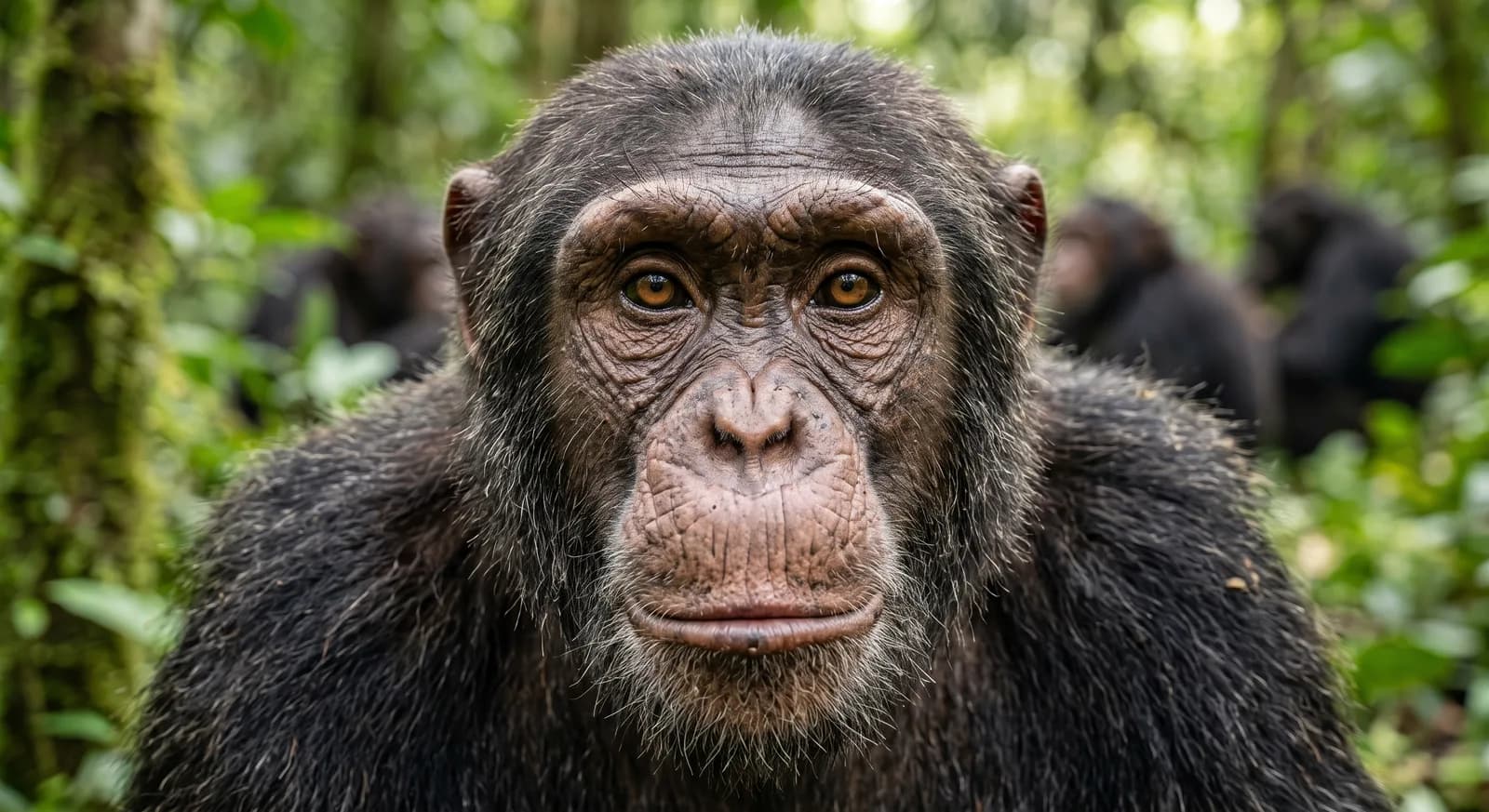 Endangered
Chimpanzee
Pan troglodytes
Bonobo
Pan paniscus
Forest Hog
Hylochoerus meinertzhageni
How to help
The african forest elephant is classified as critically endangered. Organizations such as UICN, WWF y Wildlife Conservation Society work specifically on its conservation and that of its habitat; looking into their programs is a good starting point if you want to get involved.
It's documented in 8 real protected areas — part of why protecting these places matters for its conservation.
Keep exploring
Based on what we already know about african forest elephant.
Comments
Share an experience, a fun fact or a tip for seeing the african forest elephant.
Be the first to comment.