Mammals · Primates · Hominidae
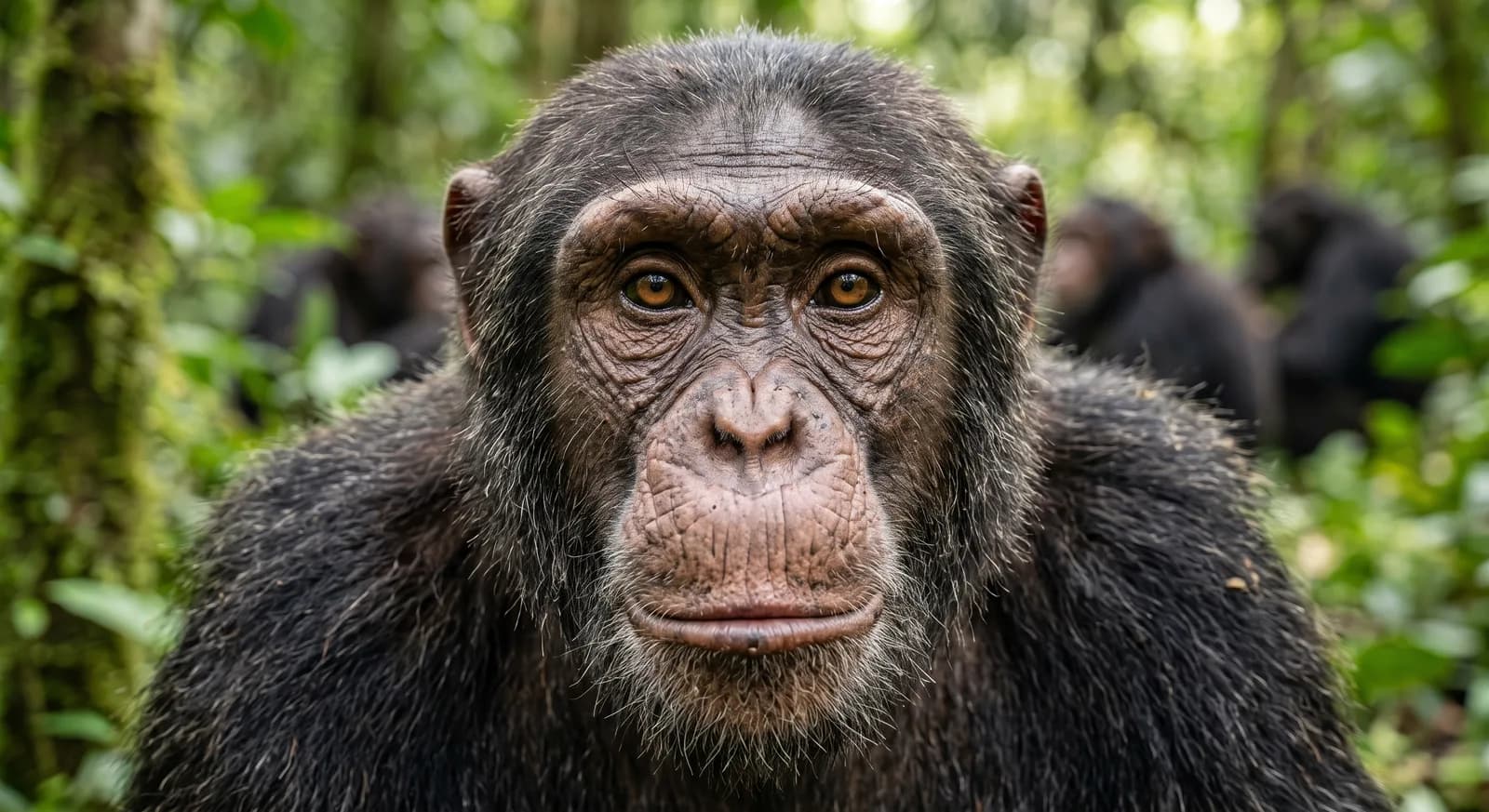
Chimpanzee
Pan troglodytes
It faces a very high risk of extinction in the wild in the near future. See full glossary
Along with the bonobo it is our closest living relative, sharing roughly 98.8% of its genetic sequence with us. Its tool use varies from one community to the next.
Weight
27 kg – 70 kg
Size
1 m – 1.7 m
Lifespan
50 years
Diet
Omnivore
Combines animal and plant food depending on availability.
Activity
Diurnal
Active mainly during the day.
Social structure
Family group
Lives in small family groups with close bonds.
Sighting difficulty
Hard
Fun facts
- It shares roughly 98.8% of its genetic sequence with humans.
- Its tool use is varied, a behaviour passed culturally from one generation to the next.
- Females do not have their first infant until they are 11 to 23 years old.
- inteligenciaIt can recognise its own reflection, one of the few non-human species to pass the mirror test of self-awareness.
- comportamientoIt organises into shifting subgroups according to how much food is available, a social pattern known as fission-fusion.
- historia naturalIn 1960 Jane Goodall was the first to document tool use by wild chimpanzees, poking blades of grass into termite mounds to fish out food.
Life cycle & biology
- Skeleton type
- Vertebrate - internal bony skeleton (mammal)
- Habitat & environment
- Tropical forest and wooded savanna of equatorial Africa, from Senegal to western Tanzania
- Birth weight
- Birth weight not found as a precise figure in the sources consulted; born in a highly dependent state
- Size at birth
- Completely dependent on its mother, clinging to her belly from birth
- Sexual maturity
- Female: first birth between 11 and 23 years in the wild (~14.5-15 years on average in Tanzania) | Male: full social maturity at around 15
- Gestation / incubation
- ~8 months (229-240 days)
- Litter / clutch size
- 1 infant (twins rare); 5-6 years between births
- Lifespan in captivity
- Up to 60-68 years documented in captivity
Sources consulted: North Carolina Zoo; AnAge (genomics.senescence.info); New England Primate Conservancy; A-Z Animals; Britannica; Animal Diversity Web; National Chimpanzee Brain Resource
Where to find it
See its range on the interactive mapWhere to watch it
Parques y spots de buceo donde se ha documentado esta especie — se muestran 10 de 19 documentados.
Related species
Other species in the catalogue with the most in common with Chimpanzee — same habitat, park, country, tags or family.
 Critically Endangered
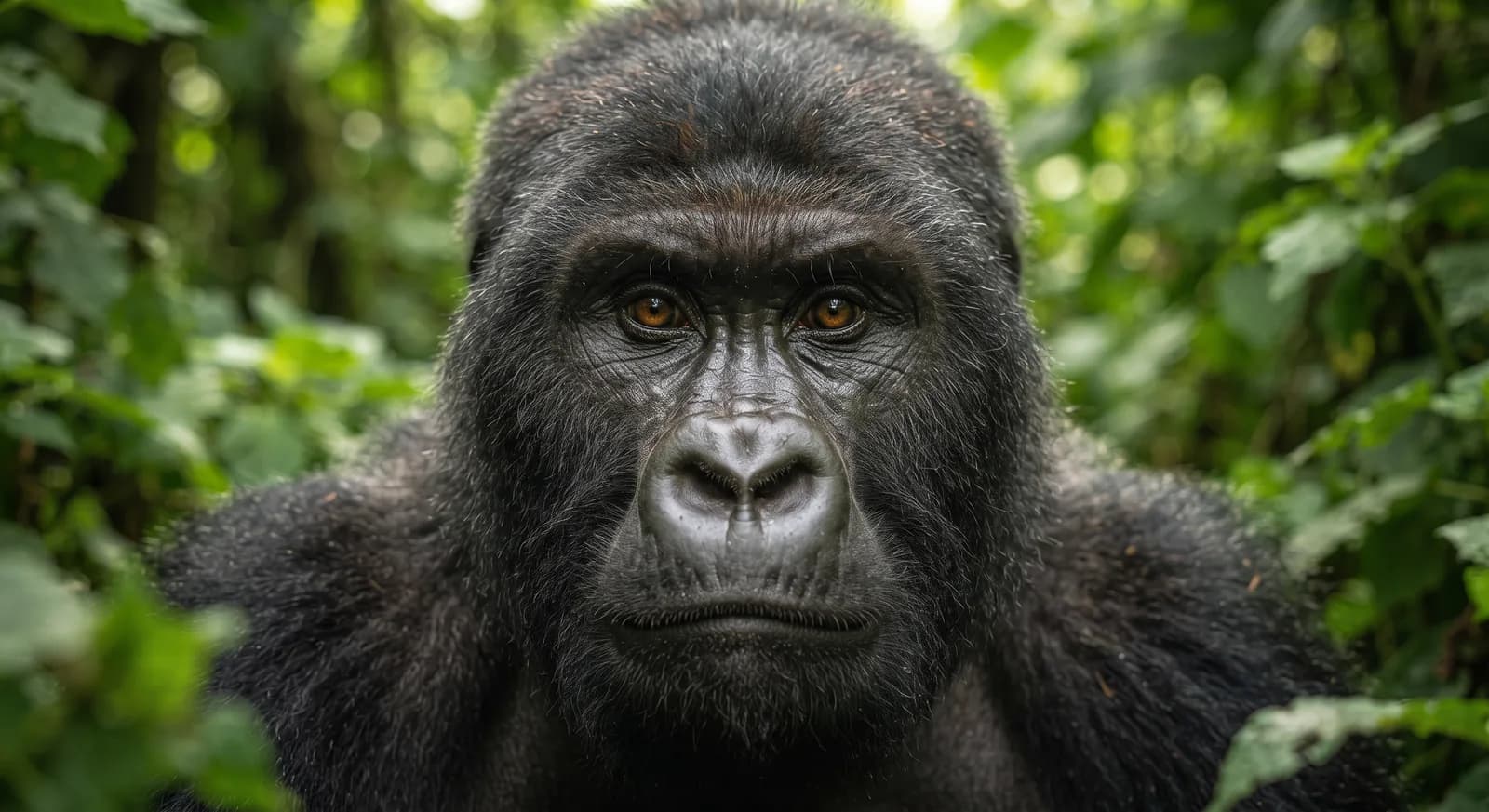
Western Gorilla
Gorilla gorilla
 Critically Endangered
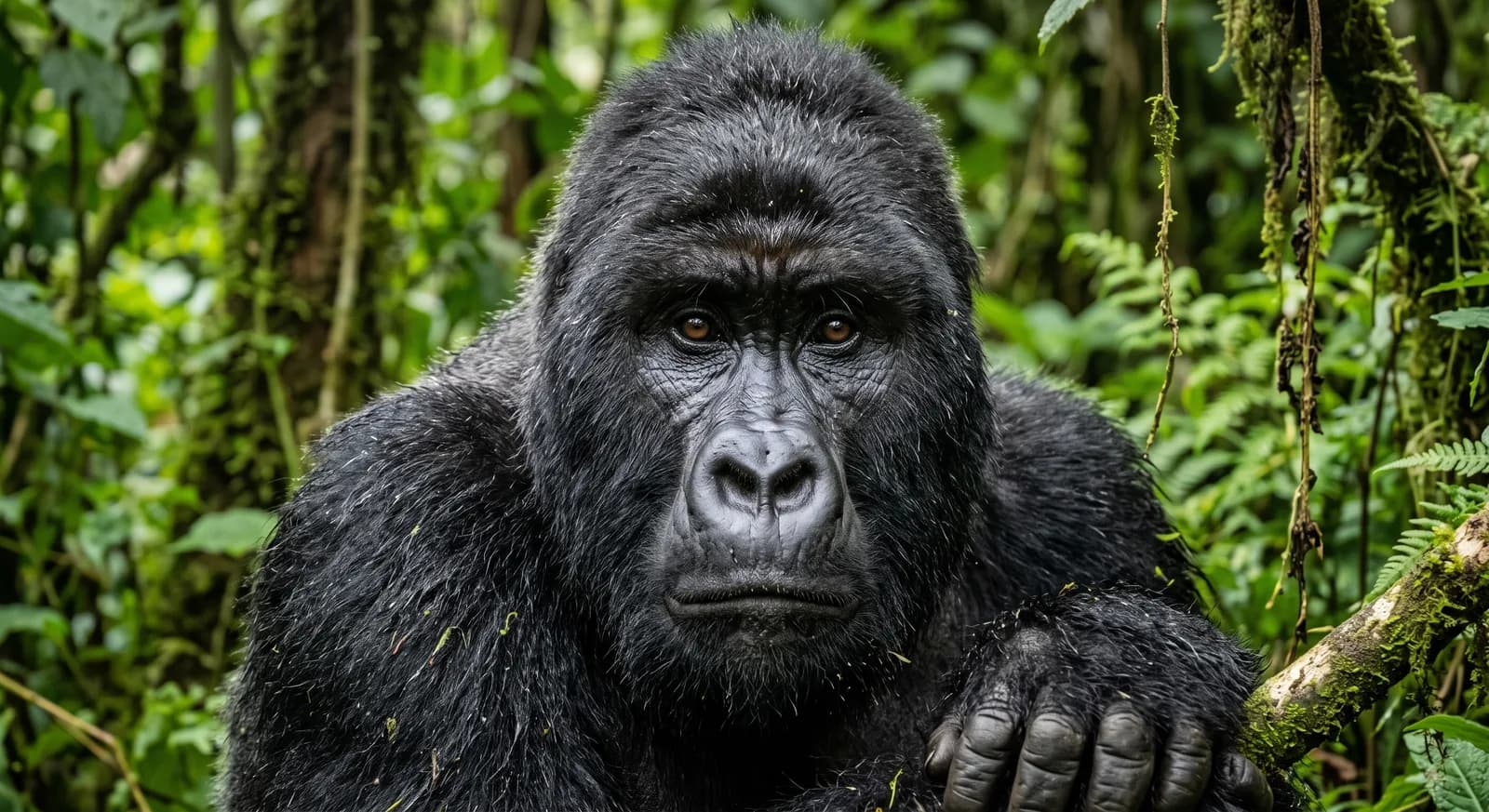
Eastern Gorilla
Gorilla beringei
Bonobo
Pan paniscus
 Endangered
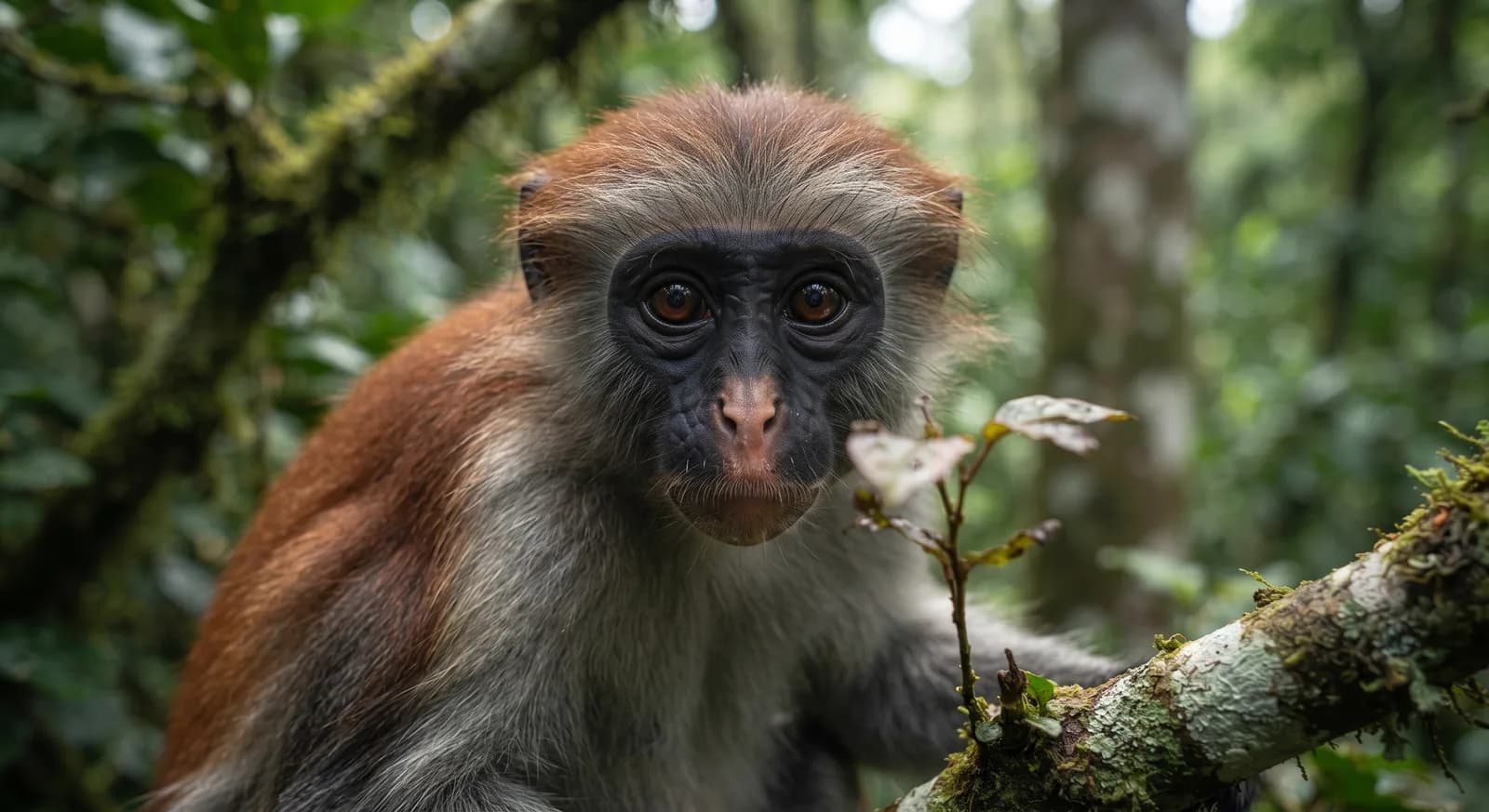
Western Red Colobus
Piliocolobus badius
Red-capped Mangabey
Cercocebus torquatus
Drill
Mandrillus leucophaeus
How to help
The chimpanzee is classified as endangered. Organizations such as UICN, WWF y Wildlife Conservation Society work specifically on its conservation and that of its habitat; looking into their programs is a good starting point if you want to get involved.
It's documented in 8 real protected areas — part of why protecting these places matters for its conservation.
Keep exploring
Based on what we already know about chimpanzee.
Comments
Share an experience, a fun fact or a tip for seeing the chimpanzee.
Be the first to comment.