One of the 2 mangabeys on WAnimals
Mammals · Primates · Cercopithecidae
Red-capped Mangabey
Cercocebus torquatus
It faces a very high risk of extinction in the wild in the near future. See full glossary
The red-capped mangabey is a primate of the coastal forests of the Gulf of Guinea, with a striking cap of chestnut-red hair on a grey body and a white collar around the neck. It spends a great deal of time on the ground, where it looks for hard seeds and fallen fruit that it opens with especially robust molars and incisors. Coastal deforestation and hunting for bushmeat have reduced it to fragmented populations between Nigeria, Cameroon and Equatorial Guinea.
Weight
5 kg – 11 kg
Size
45 cm – 67 cm
Lifespan
27 years
Diet
Omnivore
Combines animal and plant food depending on availability.
Activity
Diurnal
Active mainly during the day.
Social structure
Herd
Lives in large groups as a strategy against predators.
Sighting difficulty
Hard
Fun facts
- GeneralIt forages on the ground, turning over the leaf litter with its hands.
- Its molars and enamel are reinforced for opening seeds and nuts with extremely hard shells that no other primate in its forest can make use of, which gives it access to a food available when fruit is scarce.
- It is one of the few species in which a wild primate has been documented regularly feeding on the floor of flooded mangroves, wading through the water among the roots.
Life cycle & biology
- Skeleton type
- Vertebrate - internal bony skeleton (mammal)
- Habitat & environment
- Lowland rainforest, mangroves and swamp forest of the Gulf of Guinea
- Size at birth
- Born with its eyes open, clinging to its mother's fur from the first day
- Sexual maturity
- 2.7 years
- Gestation / incubation
- 5.5 months
- Litter / clutch size
- 1
Sources consulted: https://es.wikipedia.org/wiki/Cercocebus_torquatus
Where to find it
See its range on the interactive mapBest time: All year round in the coastal forests and mangroves of the Gulf of Guinea, by day; it is noisy and far easier to detect by ear than by sight.
Where to watch it
Parks and dive sites where this species has been documented.
Related species
Other species in the catalogue with the most in common with Red-capped Mangabey — same habitat, park, country, tags or family.
Drill
Mandrillus leucophaeus
Preuss’s Monkey
Allochrocebus preussi
De Brazza’s Monkey
Cercopithecus neglectus
Grey-cheeked Mangabey
Lophocebus albigena
Mona Monkey
Cercopithecus mona
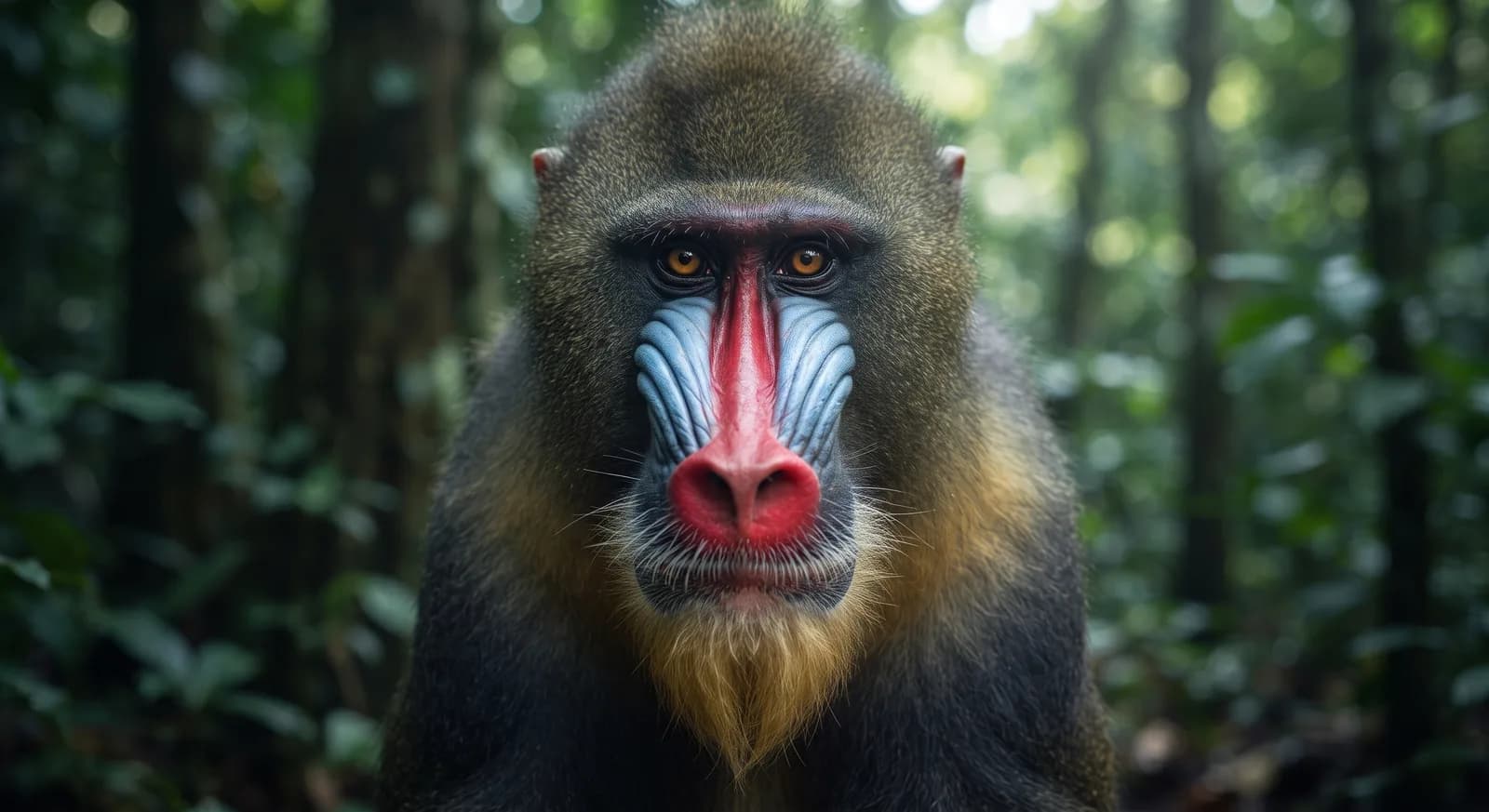 Vulnerable
Mandrill
Mandrillus sphinx
How to help
The red-capped mangabey is classified as endangered. Organizations such as UICN, WWF y Wildlife Conservation Society work specifically on its conservation and that of its habitat; looking into their programs is a good starting point if you want to get involved.
It's documented in 3 real protected areas — part of why protecting these places matters for its conservation.
Keep exploring
Based on what we already know about red-capped mangabey.
Comments
Share an experience, a fun fact or a tip for seeing the red-capped mangabey.
Be the first to comment.