One of the 13 ants on WAnimals
Insects · Hymenoptera · Formicidae
Australian Honeypot Ant
Camponotus inflatus
It has not yet been assessed against the IUCN criteria. See full glossary
A honeypot ant of the Australian desert. Some of the workers become repletes: they are stuffed with nectar until the abdomen swells like a translucent grape and they hang motionless from the roof of the underground chambers, serving as living larders for the whole colony.
Size
5 cm – 15 cm
Diet
Omnivore
Combines animal and plant food depending on availability.
Activity
Nocturnal
Active mainly at night.
Sighting difficulty
Unknown
Fun facts
- GeneralSome workers fill with nectar until they look like grapes, and serve as a living larder.
- The repletes cannot move: they hang from the ceiling for months and regurgitate food to their nestmates when asked, with a tap of the antennae.
- They are a highly prized traditional food of the Aboriginal peoples of the Australian desert, who dig down as much as a metre to unearth the nests.
- Their role allows the colony to survive the long droughts of the Australian interior, where there may be no nectar for months.
- It has a caste of workers called repletes, which the rest feed with nectar until their abdomens swell to the size of a grape: they hang from the roof of the chamber and serve as living larders.
- The repletes make up almost half the colony: in two nests excavated in the Northern Territory they accounted for 49 % and 46 % of the population.
- The largest replete measured had an abdomen of 15 mm and weighed 1.4 g.
- It is a traditional Aboriginal food, called yarumpa or wuukurta, and forms part of the Tjukurpa; the Honey Ant Dreaming site lies in central Australia.
- A 2023 study found that its honey has a distinctive antimicrobial activity, different from that of bee honey.
Life cycle & biology
- Habitat & environment
- Spinifex desert and arid scrub
Sources consulted: Conway (1991), The Australian Entomologist; Dong et al. (2023), PeerJ; Islam et al. (2022), Molecules
Where to watch it
Parks and dive sites where this species has been documented.
Related species
Other species in the catalogue with the most in common with Australian Honeypot Ant — same habitat, park, country, tags or family.
Western Gray Kangaroo
Macropus fuliginosus
 Least Concern
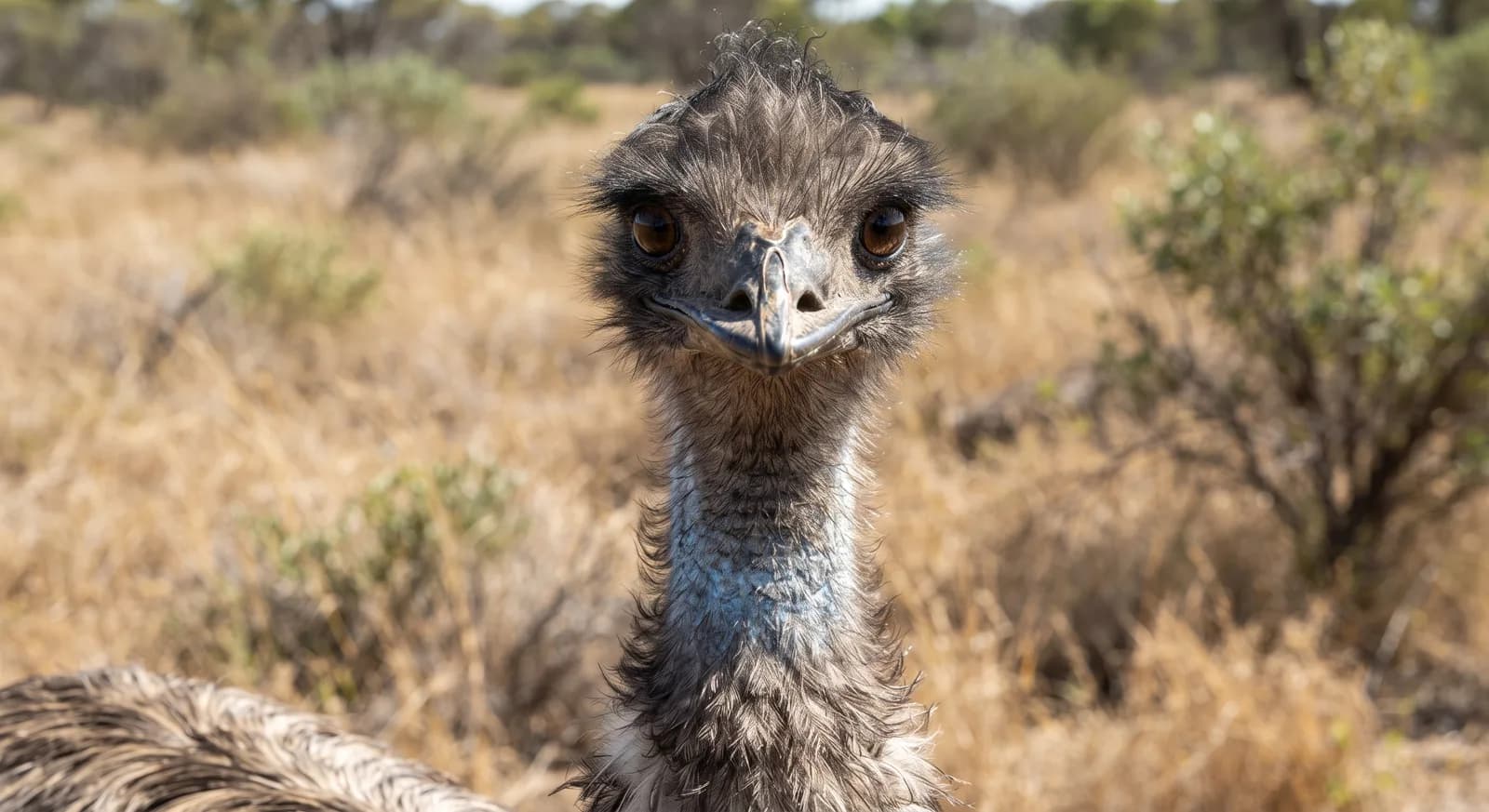
Emu
Dromaius novaehollandiae
Rufous Hare-wallaby
Lagorchestes hirsutus
Rough Knob-tail
Nephrurus asper
Dingo
Canis lupus dingo
Keep exploring
Based on what we already know about australian honeypot ant.
Comments
Share an experience, a fun fact or a tip for seeing the australian honeypot ant.
Be the first to comment.