Birds · Psittaciformes · Psittaculidae
Coconut Lorikeet
Trichoglossus haematodus
The species is abundant and widely distributed; it faces no significant short-term risk. See full glossary
Unlike most parrots it cannot crack seeds: its tongue is brush-tipped, with specialised papillae for lapping nectar and pollen from flowers.
Weight
75 g – 167 g
Size
25 cm – 30 cm
Lifespan
20 years
Diet
Nectarivore
Feeds mainly on flower nectar.
Activity
Diurnal
Active mainly during the day.
Social structure
Colony
Lives in large concentrations, often for breeding reasons.
Sighting difficulty
Easy
Fun facts
- Unlike most parrots it cannot crack seeds: its tongue is a specialised brush for lapping nectar.
- anatomíaIts brush-tipped tongue is specialised for taking pollen and nectar from eucalypt flowers, unlike the seed-eating tongues of most parrots.
- It forms communal night roosts that can hold as many as 50,000 birds.
- It eats nectar and pollen, along with fruit and insects.
Life cycle & biology
- Skeleton type
- Vertebrate - pneumatised bony skeleton (bird)
- Habitat & environment
- Tropical forest, mangrove and towns with flowering trees in Australia, Indonesia and the Pacific islands
- Birth weight
- Exact weight at hatching not found as a precise figure
- Size at birth
- Blind and featherless on hatching (altricial)
- Sexual maturity
- ~2 years
- Gestation / incubation
- 23-25 days
- Litter / clutch size
- 1 to 3 eggs per clutch (most commonly 2)
- Lifespan in captivity
- A documented record of up to 16-32 years in captivity (higher figures unconfirmed)
Sources consulted: AnAge (genomics.senescence.info); Northern Parrots; SeaWorld/Busch Gardens; The Animal Facts; Birds in Backyards; JRank Articles; Rain Forest Reports; PMC (genome study)
Where to find it
See its range on the interactive mapBest time: All year round in northern and eastern Australia and in New Guinea, by day; it gathers noisily in flowering eucalypts and other blossoming trees.
Where to watch it
Parques y spots de buceo donde se ha documentado esta especie — se muestran 10 de 25 documentados.
Related species
Other species in the catalogue with the most in common with Coconut Lorikeet — same habitat, park, country, tags or family.
Moluccan Eclectus
Eclectus roratus
Australian Brushturkey
Alectura lathami
Satin Bowerbird
Ptilonorhynchus violaceus
Regent Bowerbird
Sericulus chrysocephalus
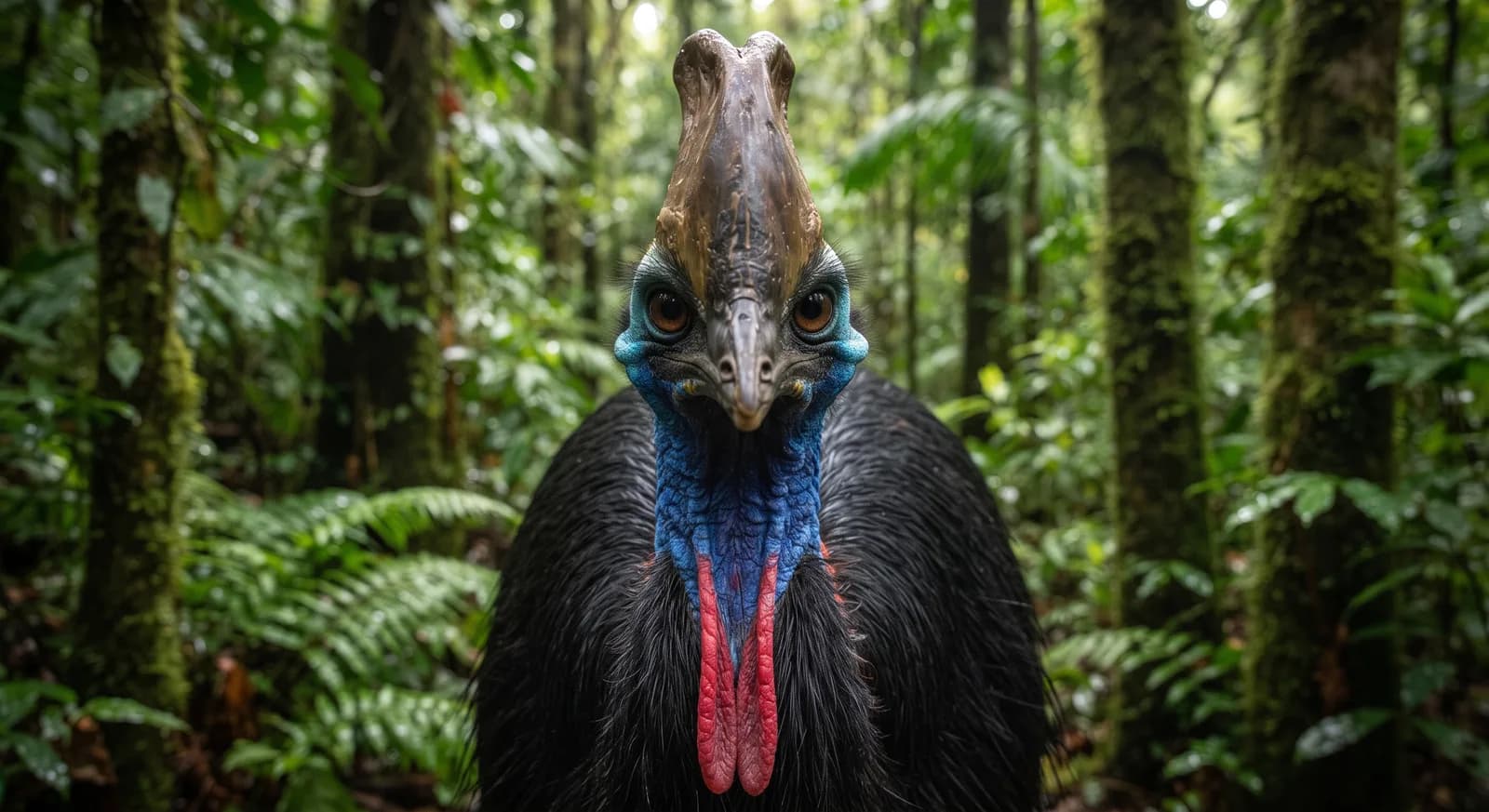 Endangered
Southern Cassowary
Casuarius casuarius
Keep exploring
Based on what we already know about coconut lorikeet.
Comments
Share an experience, a fun fact or a tip for seeing the coconut lorikeet.
Be the first to comment.