Birds · Galliformes · Megapodiidae
Australian Brushturkey
Alectura lathami
The species is abundant and widely distributed; it faces no significant short-term risk. See full glossary
The Australian brush-turkey, or red-headed brush-turkey, is a black megapode with a bare red head and a yellow wattle on the neck. It does not incubate with its body: the male builds an enormous mound of leaf litter and soil, several metres across and weighing tonnes, and regulates its internal temperature by adding or removing material according to the heat generated by decomposition.
Weight
2 kg – 2.5 kg
Size
60 cm – 75 cm
Lifespan
13 years
Diet
Omnivore
Combines animal and plant food depending on availability.
Activity
Diurnal
Active mainly during the day.
Social structure
Solitary
Lives and hunts alone, joining others only to breed.
Sighting difficulty
Easy
Fun facts
- It incubates with compost: the male builds a mound of leaf litter weighing up to four tonnes and checks the internal temperature by pushing in his bill, holding it at around 33 degrees for months by adding or removing material.
- The chicks hatch completely independent: they dig their own way up to the surface of the mound, and from the first day they fly and feed with no contact at all with their parents, an extreme case of precocity among birds.
- It has adapted so well to the gardens of Sydney and Brisbane that its mounds, which swallow up the mulch from flower beds, are a recurrent cause of neighbourly conflict.
Life cycle & biology
- Skeleton type
- Vertebrate - internal bony skeleton (bird)
- Habitat & environment
- Rainforest, wet sclerophyll forest and urban gardens of eastern Australia
- Sexual maturity
- 3 years
- Gestation / incubation
- 50 days of incubation
- Litter / clutch size
- 20 eggs
Sources consulted: https://es.wikipedia.org/wiki/Alectura_lathami
Where to watch it
Parques y spots de buceo donde se ha documentado esta especie — se muestran 10 de 14 documentados.
Related species
Other species in the catalogue with the most in common with Australian Brushturkey — same habitat, park, country, tags or family.
 Least Concern
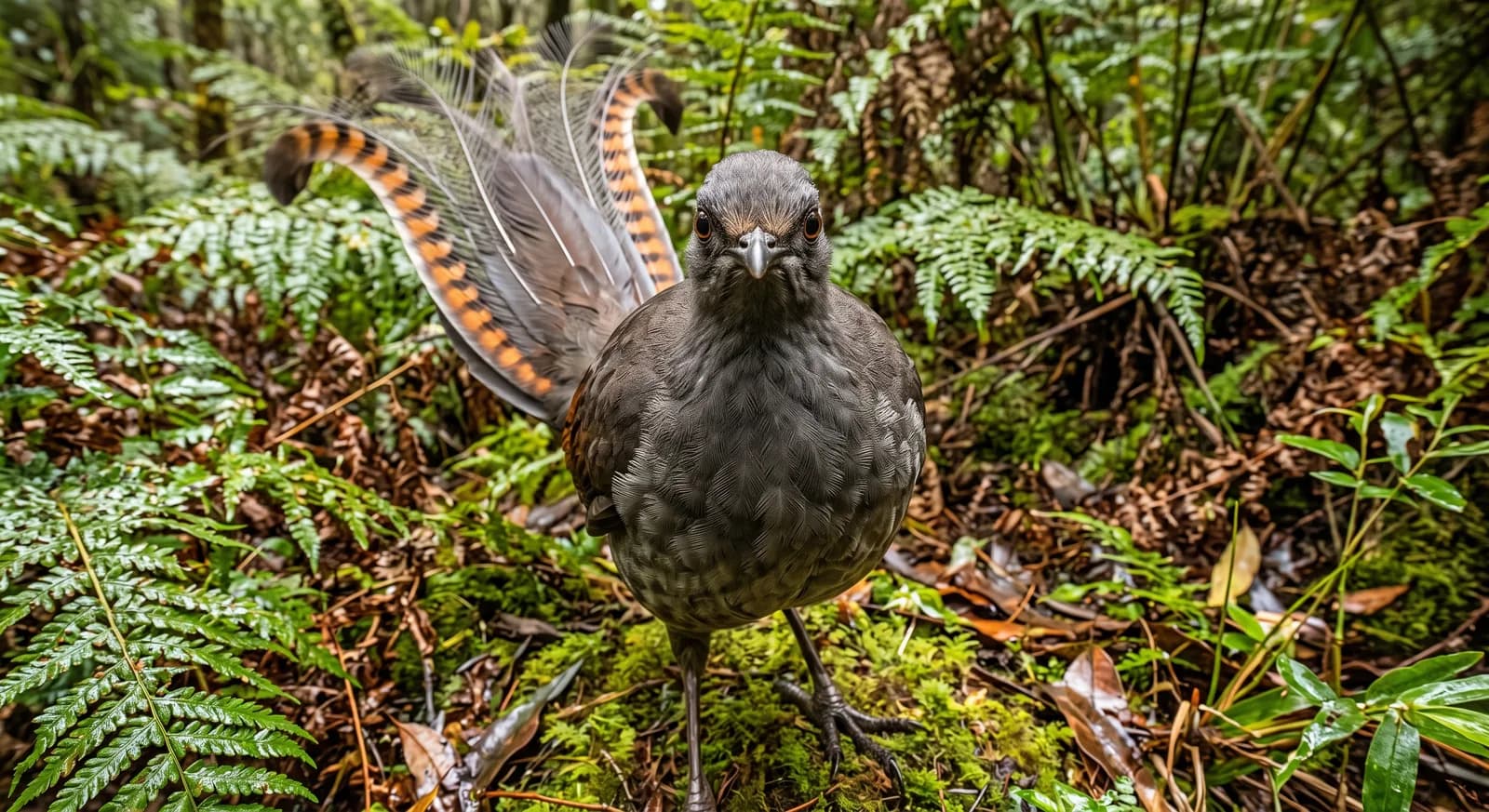
Superb Lyrebird
Menura novaehollandiae
Common Bluetongue
Tiliqua scincoides
Satin Bowerbird
Ptilonorhynchus violaceus
Australian Magpie
Cracticus tibicen
Common Myna
Acridotheres tristis
Keep exploring
Based on what we already know about australian brushturkey.
Comments
Share an experience, a fun fact or a tip for seeing the australian brushturkey.
Be the first to comment.