One of the 15 butterflies on WAnimals
Insects · Lepidoptera · Saturniidae
North American Luna Moth
Actias luna
It has not yet been assessed against the IUCN criteria. See full glossary
The luna moth is a ditrysian lepidopteran of the family Saturniidae. It is a lime-green moth native to the Nearctic region.
Size
up to 11.5 cm
Lifespan
1 years
Diet
Herbivore
Feeds mainly on plants.
Activity
Nocturnal
Active mainly at night.
Social structure
Solitary
Lives and hunts alone, joining others only to breed.
Sighting difficulty
Unknown
Fun facts
- The adult does not feed: its proboscis is vestigial and it has no digestive system at all, so it lives on the fat stored as a caterpillar and dies within a week or ten days.
- Each of the four wings carries a transparent crescent-shaped eyespot, which is where its name comes from.
- The very long tails on the hindwings confuse bats' sonar, so that they strike the tail instead of the body.
- The female emits pheromones and the male detects them at a distance with his feathery antennae; mating takes place after midnight and laying begins the following afternoon.
- The caterpillar, when threatened, rears up, clicks its mandibles and regurgitates a foul-tasting fluid.
Life cycle & biology
- Skeleton type
- Invertebrate - chitin exoskeleton (insect)
- Habitat & environment
- Deciduous woodland of eastern North America; the caterpillars eat the leaves of birch, hickory, persimmon, sweetgum and sumac, and the cocoon is spun among the leaf litter on the ground
- Gestation / incubation
- The eggs hatch in around a week
Sources consulted: https://es.wikipedia.org/wiki/Actias_luna
Where to watch it
Parques y spots de buceo donde se ha documentado esta especie — se muestran 10 de 17 documentados.
Related species
Other species in the catalogue with the most in common with North American Luna Moth — same habitat, park, country, tags or family.
North American Porcupine
Erethizon dorsatum
 Least Concern
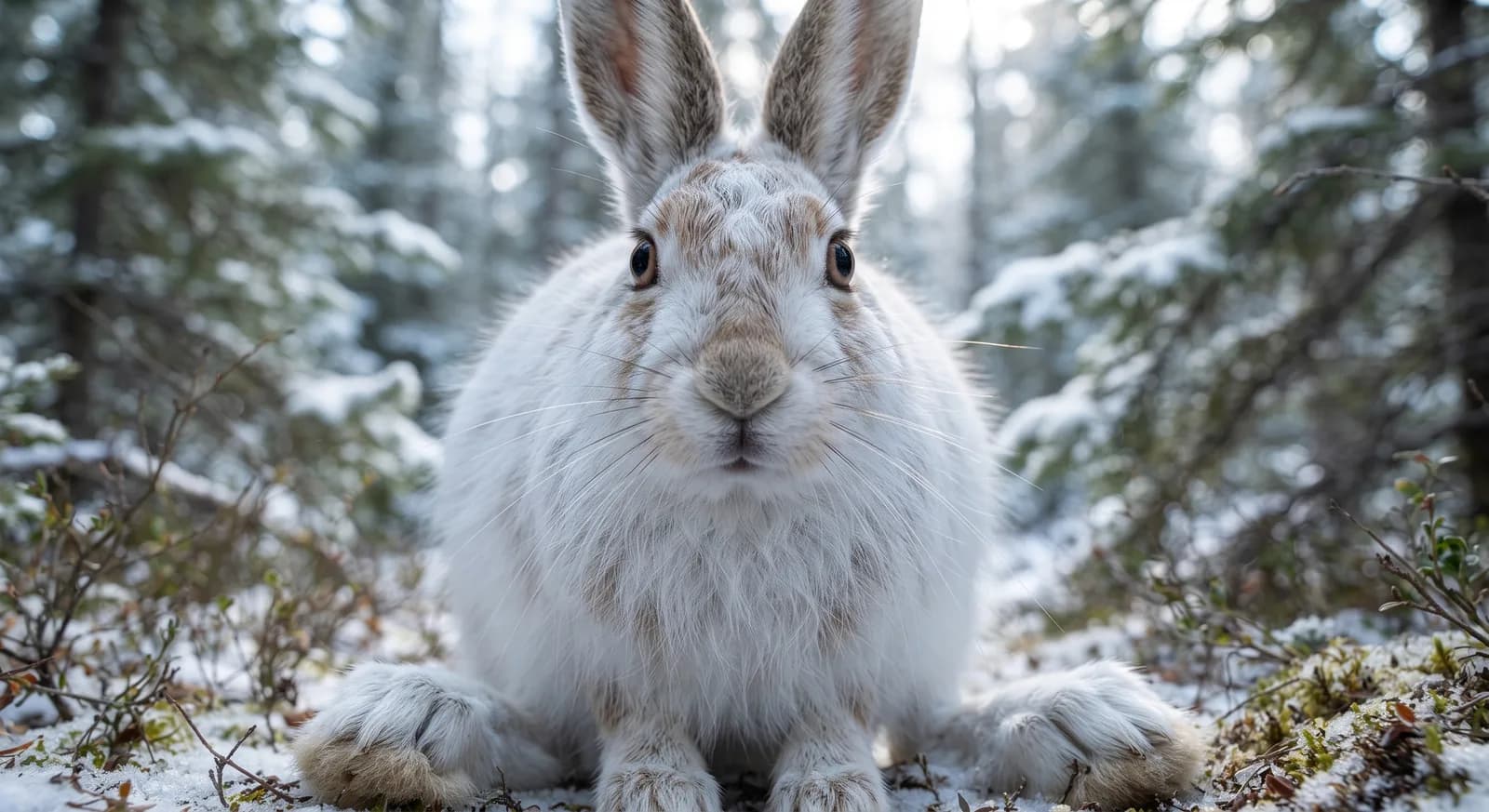
Snowshoe Hare
Lepus americanus
Woodroach
Cryptocercus punctulatus
Cave Cricket
Pristoceuthophilus rhoadsi
Keep exploring
Based on what we already know about north american luna moth.
Comments
Share an experience, a fun fact or a tip for seeing the north american luna moth.
Be the first to comment.