One of the 18 monkeys on WAnimals
Mammals · Primates · Atelidae
Central American Spider Monkey
Ateles geoffroyi
It faces a very high risk of extinction in the wild in the near future. See full glossary
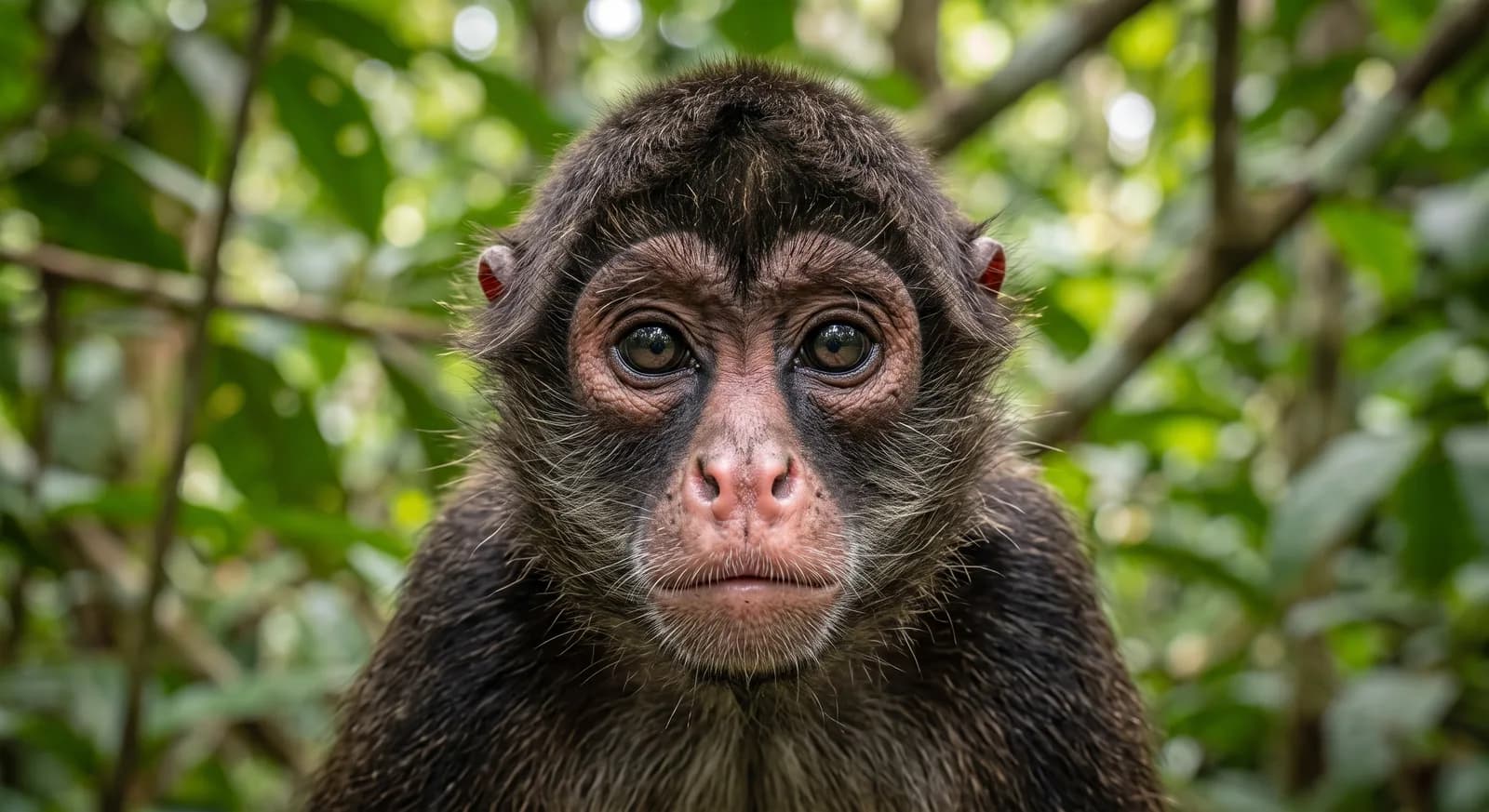
The Central American spider monkey, or Geoffroy's spider monkey, is also known as the black-handed spider monkey. The species belongs to the family Atelidae. It is one of the largest New World monkeys. The male measures between 38 and 50 cm, the female between 34 and 52 cm, both sexes weigh 4 to 6 kg and they live for 27 to 30 years. Its slender, globular trunk has arms longer than its hind limbs, and its long prehensile tail bears its entire weight, acting as an additional limb. Its thumb is vestigial; in exchange its other fingers are long, strong and hook-shaped, an adaptation that lets it swing between branches. Its head is small and the muzzle proportionate. The upper coat may be black, brown or reddish, and its face is often marked with a pale mask of unpigmented skin around the eyes and muzzle. Arms and feet are dark and the underparts paler. It gathers in groups of between 6 and 40 members, breaking up into smaller parties at night in search of food. It feeds mainly on fruit pulp. It requires large areas to survive. It lives in southern and eastern Mexico and in Central America as far as Panama, probably reaching the northern edge of the Colombian Pacific. The species is emblematic of the tropical forest and plays an outstanding ecological role in seed dispersal, taking part in the regeneration and maintenance of the vegetation. Mexico's NOM-059-SEMARNAT-2010 lists it as in danger of extinction, and the IUCN as an endangered species. This monkey is a food source for mestizo and indigenous groups in Central America. It is also kept as a pet. For these reasons, along with deforestation, hunting and disease, its populations have declined. It is also traded because local people believe it has medicinal properties. The greatest risk to the species is habitat loss.
Weight
6 kg – 9 kg
Size
30 cm – 63 cm
Lifespan
27 years
Diet
Herbivore
Feeds mainly on plants.
Activity
Diurnal
Active mainly during the day.
Sighting difficulty
Hard
Fun facts
- It has no thumb: its hands are elongated hooks that catch on branches without needing to close, and the whole job of fine gripping falls to the prehensile tail, with its bare, ridged pad at the tip.
- It lives in fission-fusion societies: the group splits every day into small parties that forage for fruit separately and regroup at dusk, an arrangement similar to that of chimpanzees.
Life cycle & biology
- Skeleton type
- Vertebrate - internal bony skeleton (mammal)
- Habitat & environment
- The high canopy of rainforest, dry forest and mangrove in Central America
- Sexual maturity
- 5 years
- Gestation / incubation
- 7.6 months
- Litter / clutch size
- 1
Sources consulted: https://es.wikipedia.org/wiki/Ateles_geoffroyi
Where to find it
See its range on the interactive mapWhere to watch it
Parques y spots de buceo donde se ha documentado esta especie — se muestran 10 de 20 documentados.
Related species
Other species in the catalogue with the most in common with Central American Spider Monkey — same habitat, park, country, tags or family.
 Least Concern
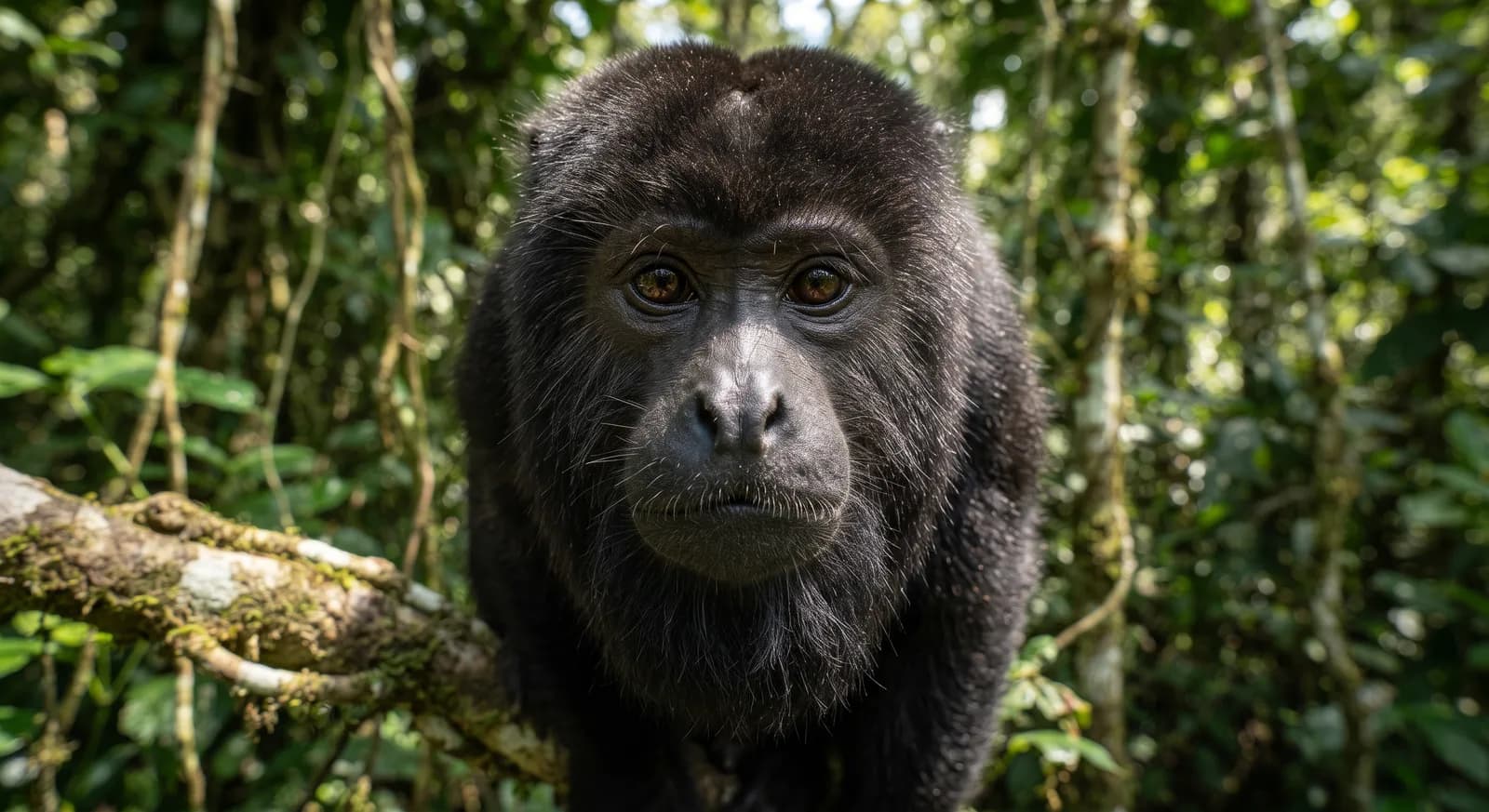
Black and Gold Howler Monkey
Alouatta caraya
 Least Concern
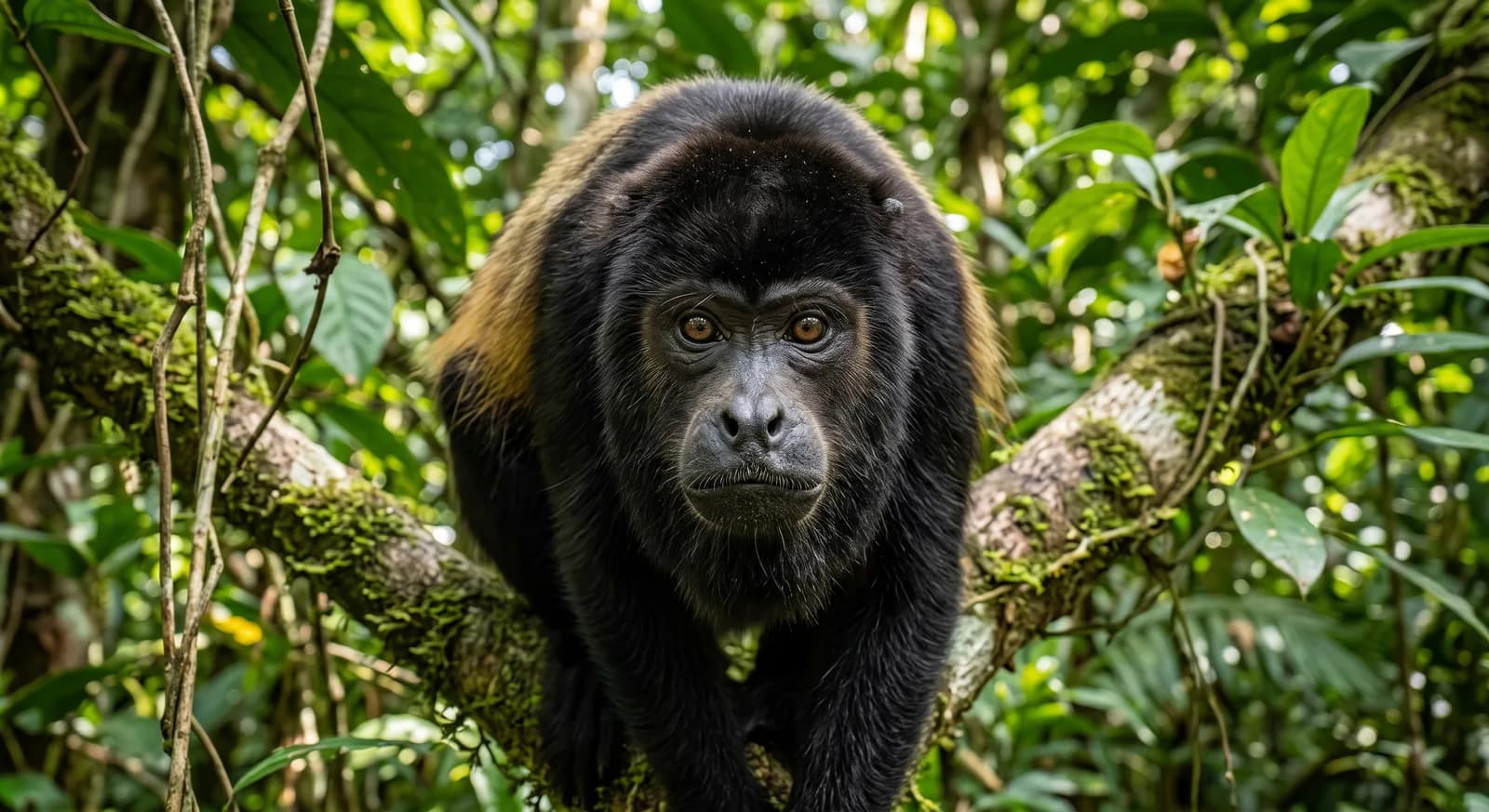
Mantled Howler Monkey
Alouatta palliata
Common Woolly Monkey
Lagothrix lagothricha
 Endangered
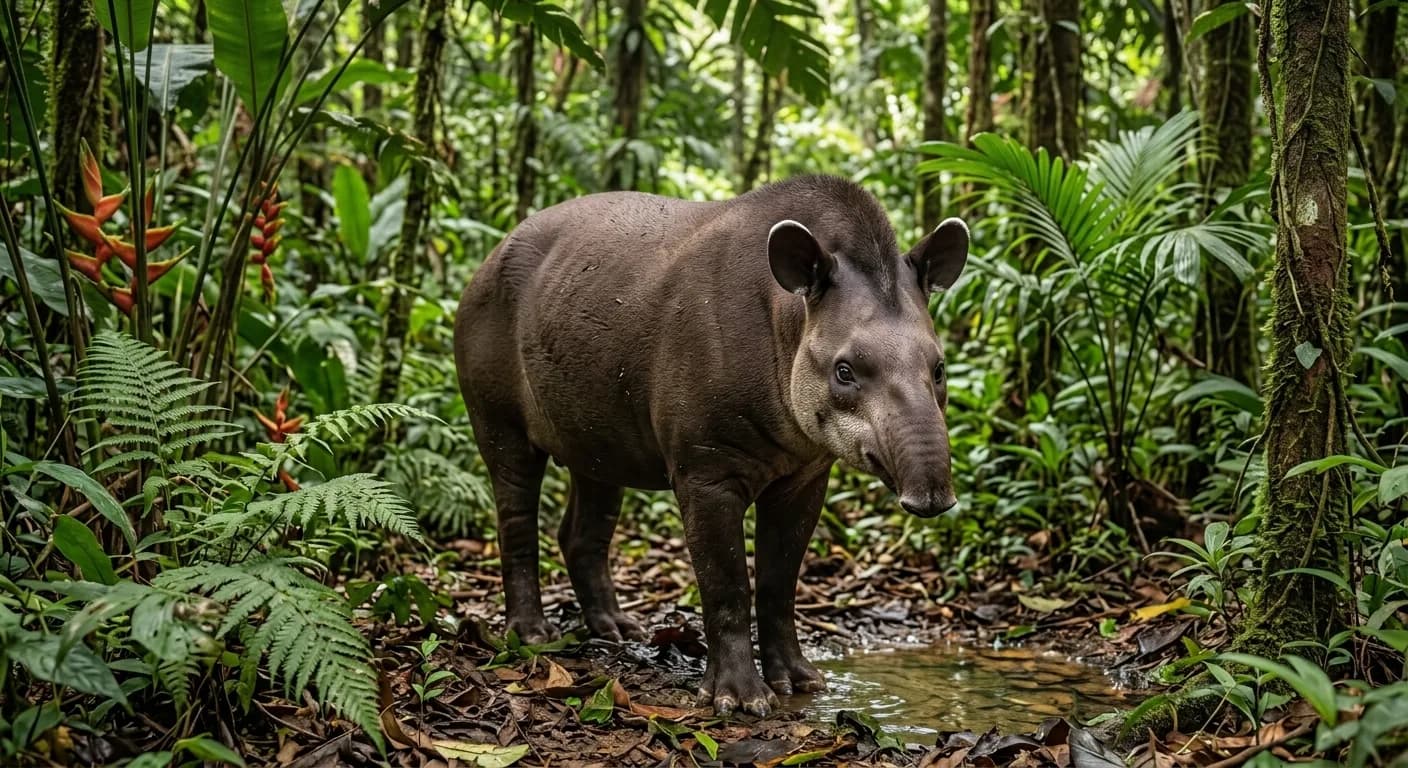
Baird's Tapir
Tapirus bairdii
Horned Guan
Oreophasis derbianus
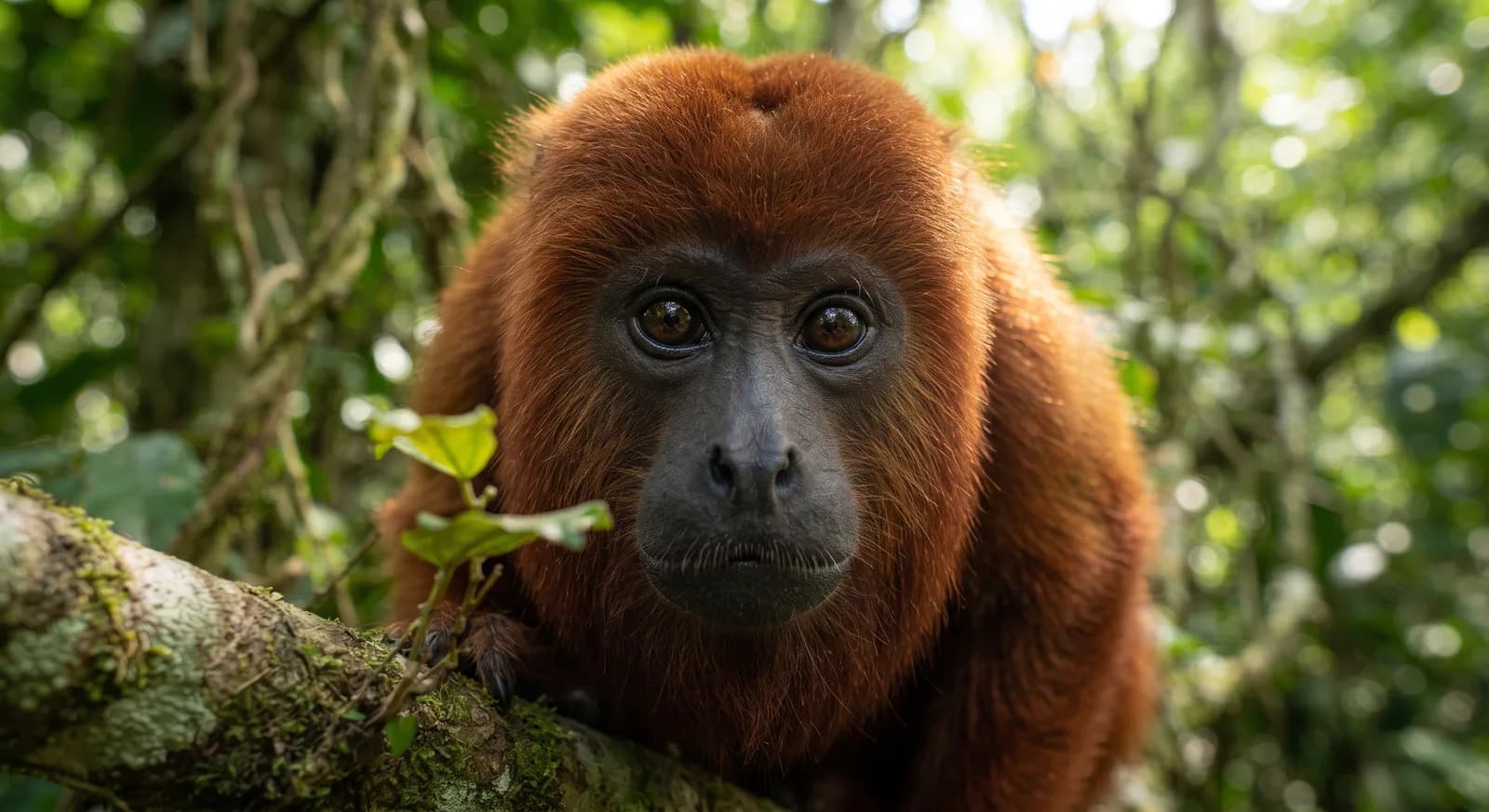 Least Concern
Colombian Red Howler Monkey
Alouatta seniculus
How to help
The central american spider monkey is classified as endangered. Organizations such as UICN, WWF y Wildlife Conservation Society work specifically on its conservation and that of its habitat; looking into their programs is a good starting point if you want to get involved.
It's documented in 9 real protected areas — part of why protecting these places matters for its conservation.
Keep exploring
Based on what we already know about central american spider monkey.
Comments
Share an experience, a fun fact or a tip for seeing the central american spider monkey.
Be the first to comment.