One of the 8 otters on WAnimals
Mammals · Carnivora · Mustelidae
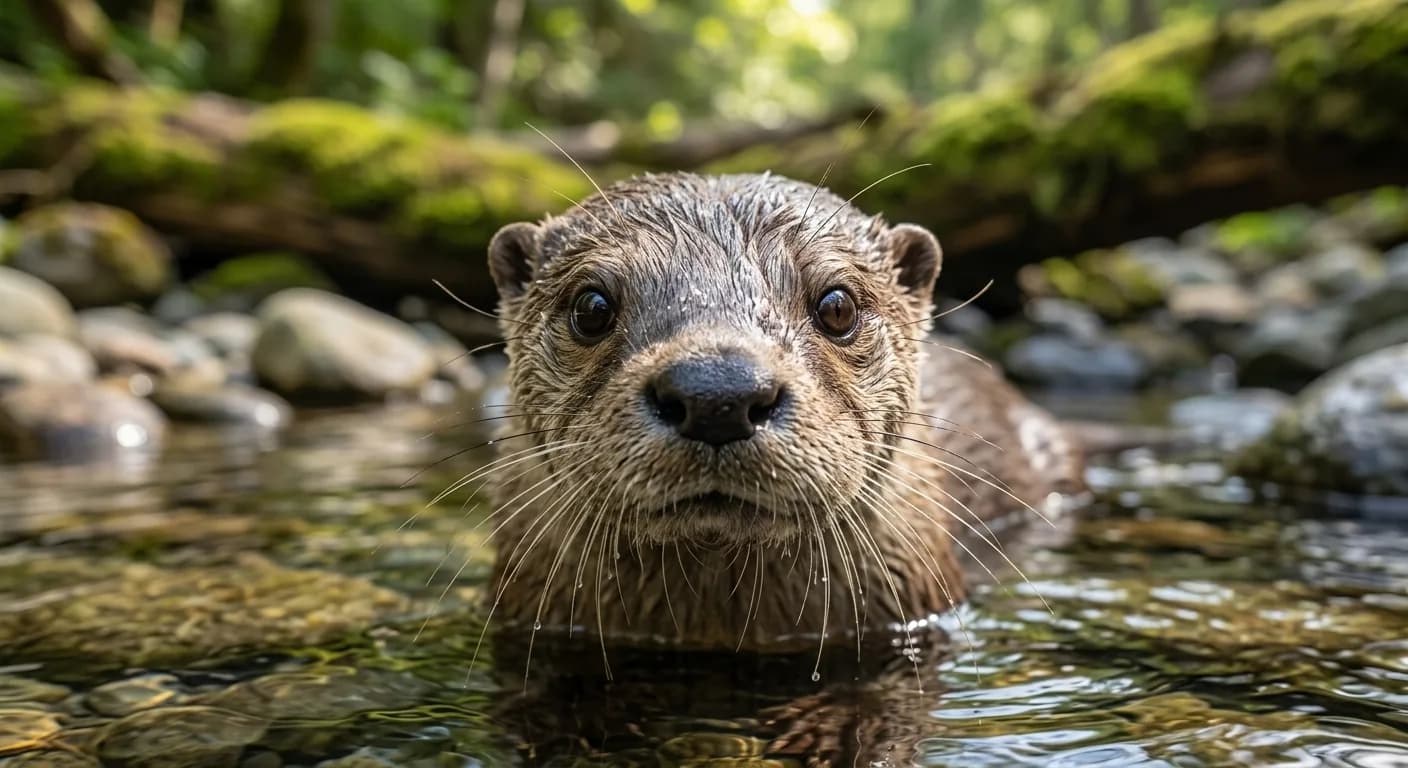
North American River Otter
Lontra canadensis
The species is abundant and widely distributed; it faces no significant short-term risk. See full glossary
It was wiped out across much of its historic range by intensive hunting for its fur, but a great many reintroduction programmes have restored populations in most of its original river basins.
Weight
8 kg – 9 kg
Size
1.3 m on average
Lifespan
9 years
Diet
Carnivore
Feeds mainly on other animals.
Activity
Irregular activity
Active at irregular times, by day or night depending on circumstances.
Social structure
Solitary
Lives and hunts alone, joining others only to breed.
Sighting difficulty
Easy
Fun facts
- It is a fine swimmer, able to dive for several minutes thanks to special oil glands that waterproof its coat.
- It eats fish, crayfish and aquatic invertebrates, and occasionally small mammals and birds.
- It lives in rivers, lakes, wetlands and rocky coasts across much of North America.
Life cycle & biology
- Skeleton type
- Vertebrate - internal bony skeleton (mammal)
- Habitat & environment
- Rivers, lakes, wetlands and rocky coasts across much of North America
- Birth weight
- Born furred but helpless
- Size at birth
- Born furred but helpless
- Sexual maturity
- 2-3 years
- Gestation / incubation
- A total gestation of 290-380 days with delayed implantation (only 60-63 days of active embryonic development)
- Litter / clutch size
- 1 to 6 young per litter (most commonly 2-3)
- Lifespan in captivity
- Documented record of up to 21-27 years
Sources consulted: Otter Spotter Blog; Animal Diversity Web; AnAge (genomics.senescence.info); Lafayette Indiana (River Otter); NPS Yellowstone; BC Conservation Data Centre
Where to watch it
Parques y spots de buceo donde se ha documentado esta especie — se muestran 14 de 21 documentados.
Related species
Other species in the catalogue with the most in common with North American River Otter — same habitat, park, country, tags or family.
American Mink
Neovison vison
Brook Trout
Salvelinus fontinalis
Fisher
Pekania pennanti
Common Muskrat
Ondatra zibethicus
Spiny Softshell Turtle
Apalone spinifera
 Least Concern
American Alligator
Alligator mississippiensis
Keep exploring
Based on what we already know about north american river otter.
Comments
Share an experience, a fun fact or a tip for seeing the north american river otter.
Be the first to comment.