One of the 5 rhinoceroses on WAnimals
Mammals · Perissodactyla · Rhinocerotidae
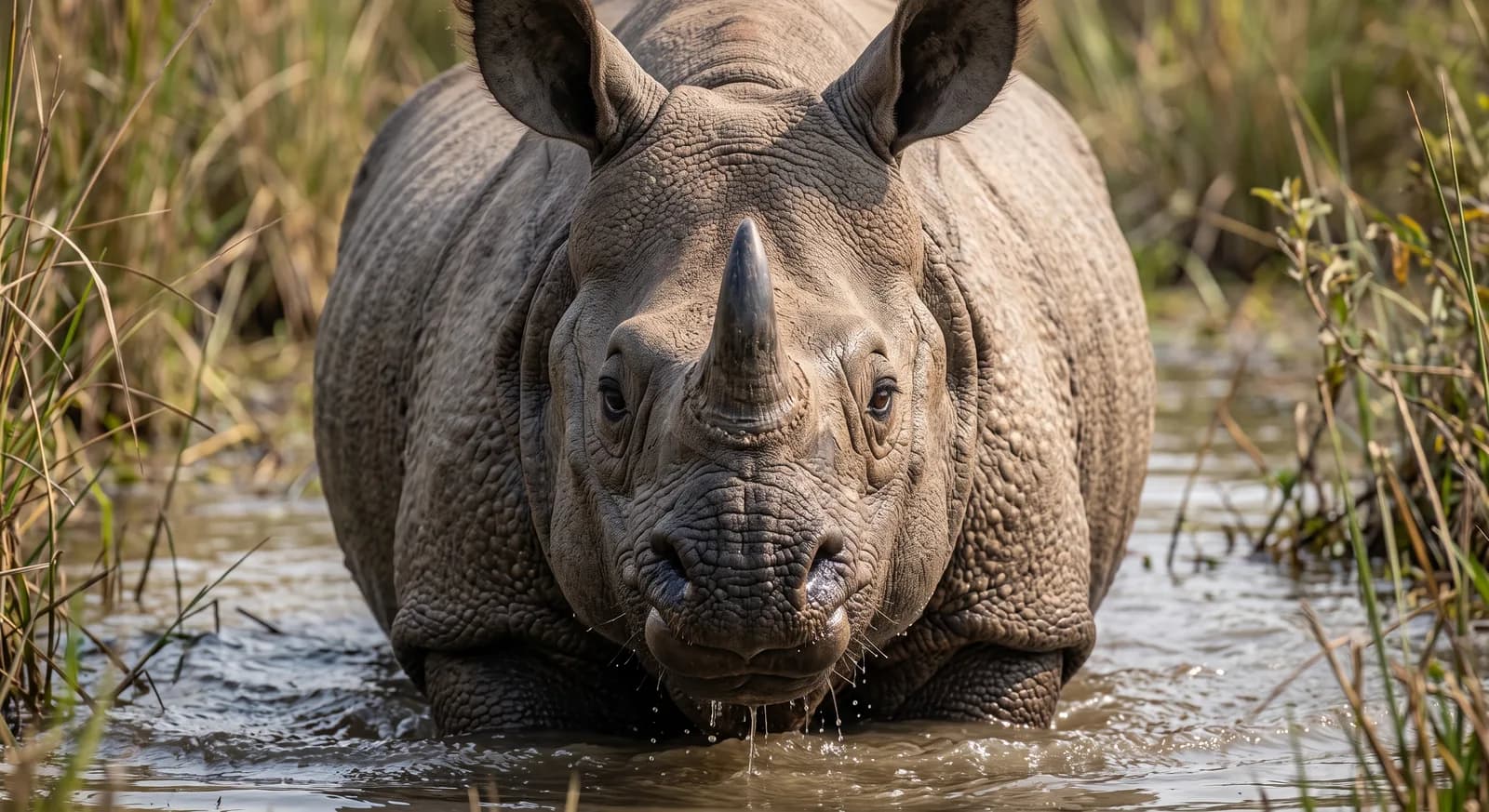
Greater One-horned Rhino
Rhinoceros unicornis
It faces a high risk of extinction in the wild over the medium term. See full glossary
It is one of the great rhino conservation success stories: from barely 200 animals at the start of the twentieth century, the population has recovered to over 3,500-4,000.
Weight
1.6 t – 3 t
Size
3 m – 3.8 m
Lifespan
35 years
Diet
Herbivore
Feeds mainly on plants.
Activity
Irregular activity
Active at irregular times, by day or night depending on circumstances.
Social structure
Solitary
Lives and hunts alone, joining others only to breed.
Sighting difficulty
Moderate
Fun facts
- Unlike other rhinos, the folds of its skin form plates that give it the look of articulated armour.
- It feeds on grasses, leaves, twigs, fruit and water plants.
- It lives in the alluvial grassland and riverine forest of northern India and southern Nepal.
- anatomíaIts horn is not bone but compacted keratin, the same substance as human hair and nails.
- fisiologíaIts thick skin folds deeply and looks like armour, but it is in fact sensitive and will sunburn if the animal does not wallow in mud regularly.
Life cycle & biology
- Skeleton type
- Vertebrate - internal bony skeleton (mammal)
- Habitat & environment
- Alluvial grassland and riverine forest of northern India and southern Nepal
- Birth weight
- 40 - 81 kg (average ~64.5-70 kg)
- Size at birth
- Smoother-skinned than the adult, with folds that deepen with age
- Sexual maturity
- Female: 4-7 years | Male: 7-9 years physically, though it does not breed effectively until it wins dominance
- Gestation / incubation
- 425-496 days (~15.5-16 months)
- Litter / clutch size
- 1 young, with an interval between births of 3-4 years
- Lifespan in captivity
- Documented record of 43.5-47 years in captivity (though the 47-year figure is disputed)
Sources consulted: A-Z Animals; Animal Diversity Web; AnAge (genomics.senescence.info); Animals Time; Rhino Resource Center; Ultimate Ungulate; Animalia.bio; Animal Corner; PMC (reproductive tract tumours study)
Where to find it
See its range on the interactive mapWhere to watch it
Parks and dive sites where this species has been documented.
Related species
Other species in the catalogue with the most in common with Greater One-horned Rhino — same habitat, park, country, tags or family.
 Vulnerable
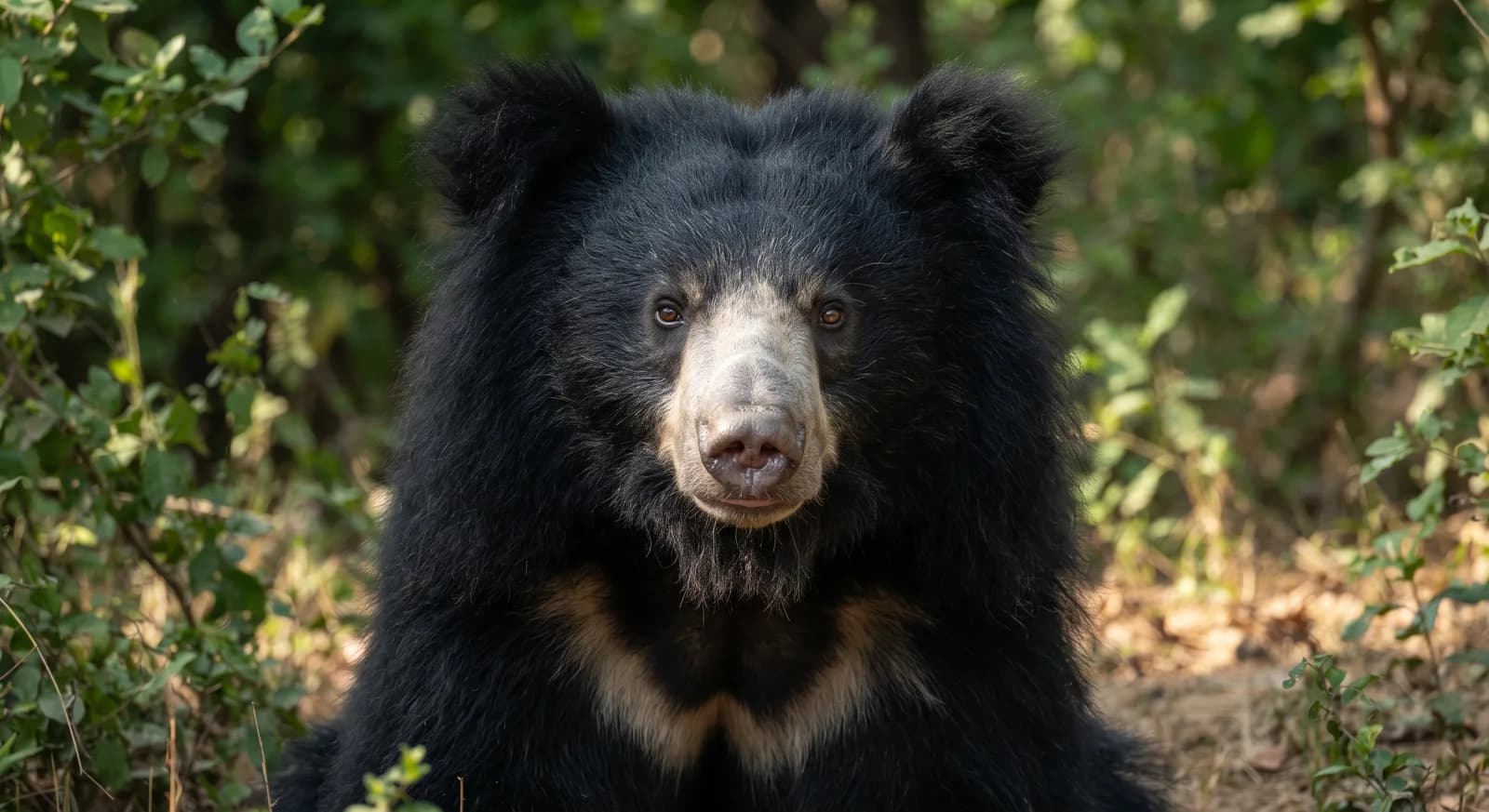
Sloth Bear
Melursus ursinus
Fishing Cat
Prionailurus viverrinus
Barasingha
Rucervus duvaucelii
Mugger
Crocodylus palustris
Four-horned Antelope
Tetracerus quadricornis
 Not Evaluated
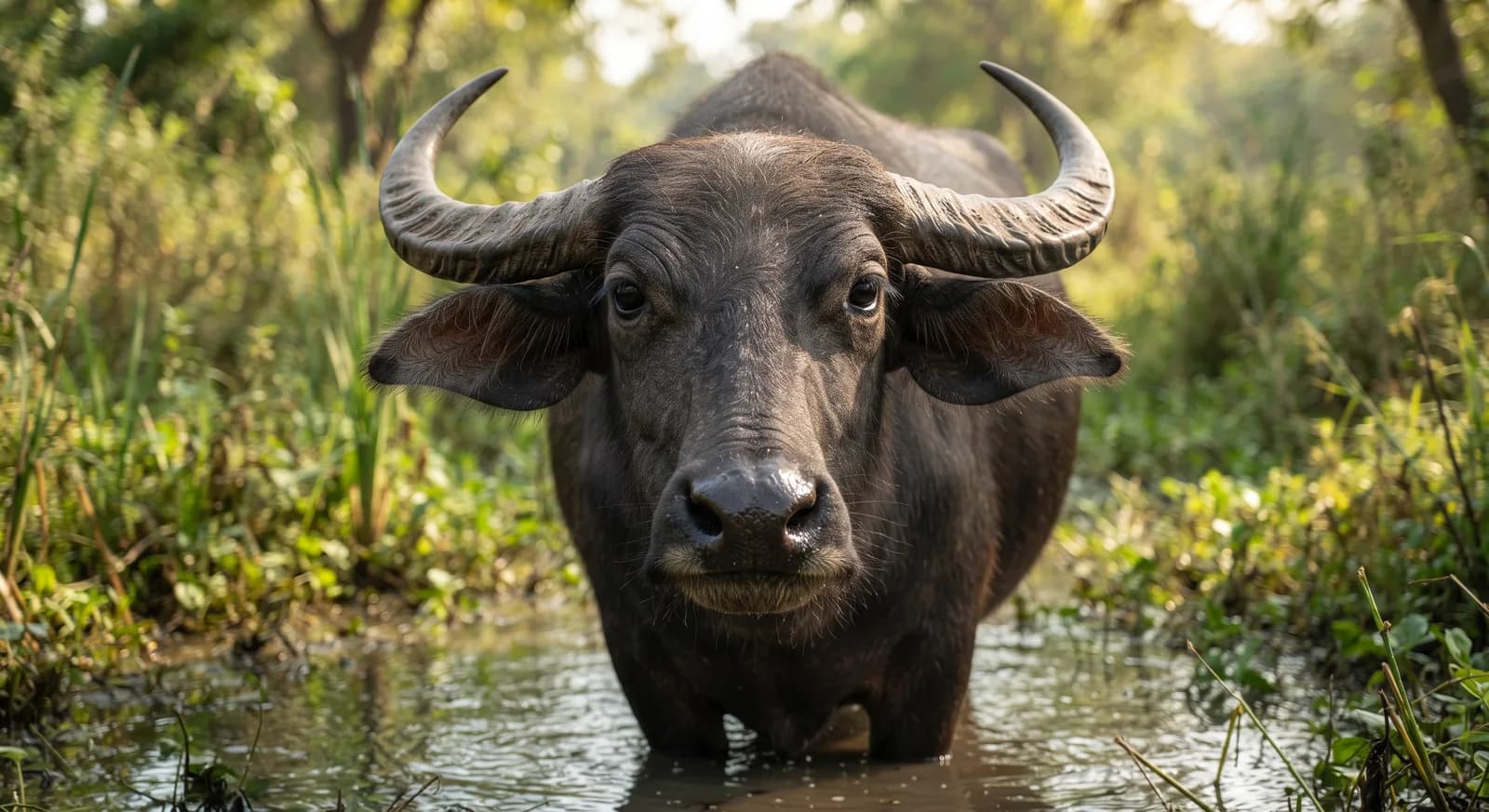
Water Buffalo
Bubalus bubalis
How to help
The greater one-horned rhino is classified as vulnerable. Organizations such as UICN, WWF y Wildlife Conservation Society work specifically on its conservation and that of its habitat; looking into their programs is a good starting point if you want to get involved.
It's documented in 5 real protected areas — part of why protecting these places matters for its conservation.
Keep exploring
Based on what we already know about greater one-horned rhino.
Comments
Share an experience, a fun fact or a tip for seeing the greater one-horned rhino.
Be the first to comment.