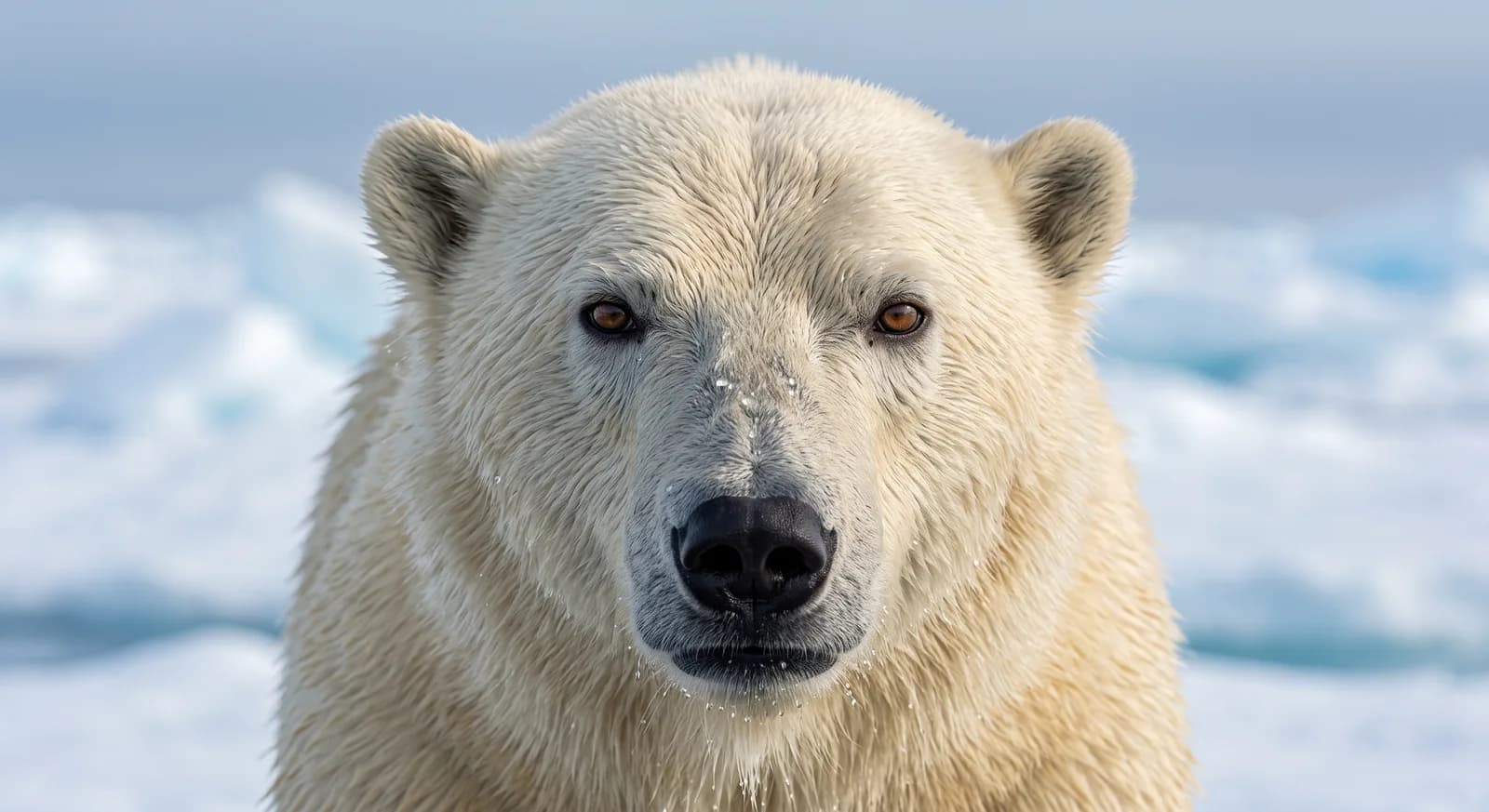
 Vulnerable
Polar Bear
Ursus maritimus
The "Galápagos of the Carboniferous": Bay of Fundy cliffs holding a 310-million-year-old fossil forest still standing upright.
Area
6.9 km²
Designated in
2008
Region
North America
An in-situ Carboniferous fossil forest above the world's highest tides
The Joggins Fossil Cliffs are a palaeontological site of 689 hectares on the coast of Nova Scotia, on the Cumberland Basin, at the head of the Bay of Fundy. Their 14.7 kilometres of sea cliffs, rock platforms and beach were inscribed on the World Heritage List in 2008 and are known as the "Galápagos of the Carboniferous" for the abundance and quality of their fossils. They constitute the thickest and most complete record in the world of Pennsylvanian strata, between 318 and 303 million years old, and preserve the finest known archive of terrestrial life from that period.
What is exceptional is that everything is in its original position. The fossil trunks of lycopsids are preserved upright, exactly as they grew in the equatorial forest that then covered this latitude, alongside the tracks and remains of the animals that lived in it. The site brings together three superimposed ecosystems: estuarine bay, floodplain forest and forested alluvial plain subject to fire, with freshwater pools. The tides of the Bay of Fundy, the greatest on the planet with a range of almost 17 metres, renew the base of the cliff twice a day and continuously expose fresh material, which makes the site one that regenerates itself.
Joggins is a foundational place in palaeontology. Charles Lyell, father of modern geology, visited the cliffs in the middle of the nineteenth century and described the forest of fossilised trees as the most astonishing phenomenon he had seen. In 1852, together with William Dawson, he found inside a hollow lepidodendron stump the first tetrapod amphibian and fossil land snails, named Dendrerpeton acadianum and Dendropupa vetusta; Darwin drew those finds into his argument. In 1859 Dawson discovered Hylonomus lyelli there, the oldest known reptile and ancestor of dinosaurs, birds and lizards. Traces of giant invertebrates have also been preserved, among them those of a millipede-like arthropod some two metres long. Today the Joggins Fossil Centre, built on the cliff itself, runs the interpretation and the guided visits.
1 dive site within 300 km is also shown.
Ecosystems found in Canada, where Joggins Fossil Cliffs lies.
Where can I dive near here?
89 km away
What is worth looking out for this month in Canada?
Now is a good time: Polar bear gathering at Churchill (October to November)
Which other parks are like this one?
Same country: Canada
Same country: Canada
Same country: Canada
Same country: Canada
Based on what we already know about this park.
Climate
Temperate, Polar / cold
Best season
June to September
 Canada