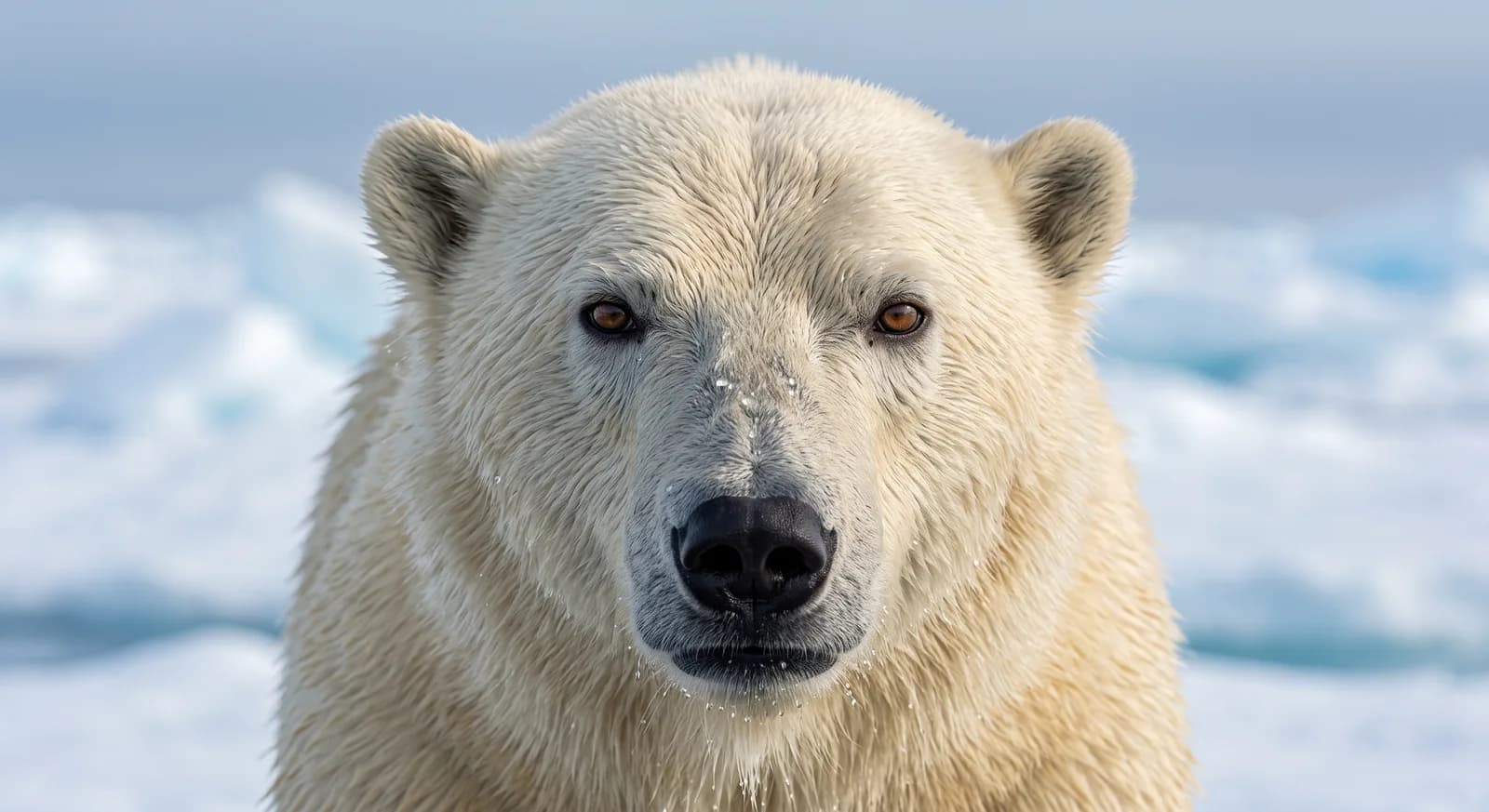
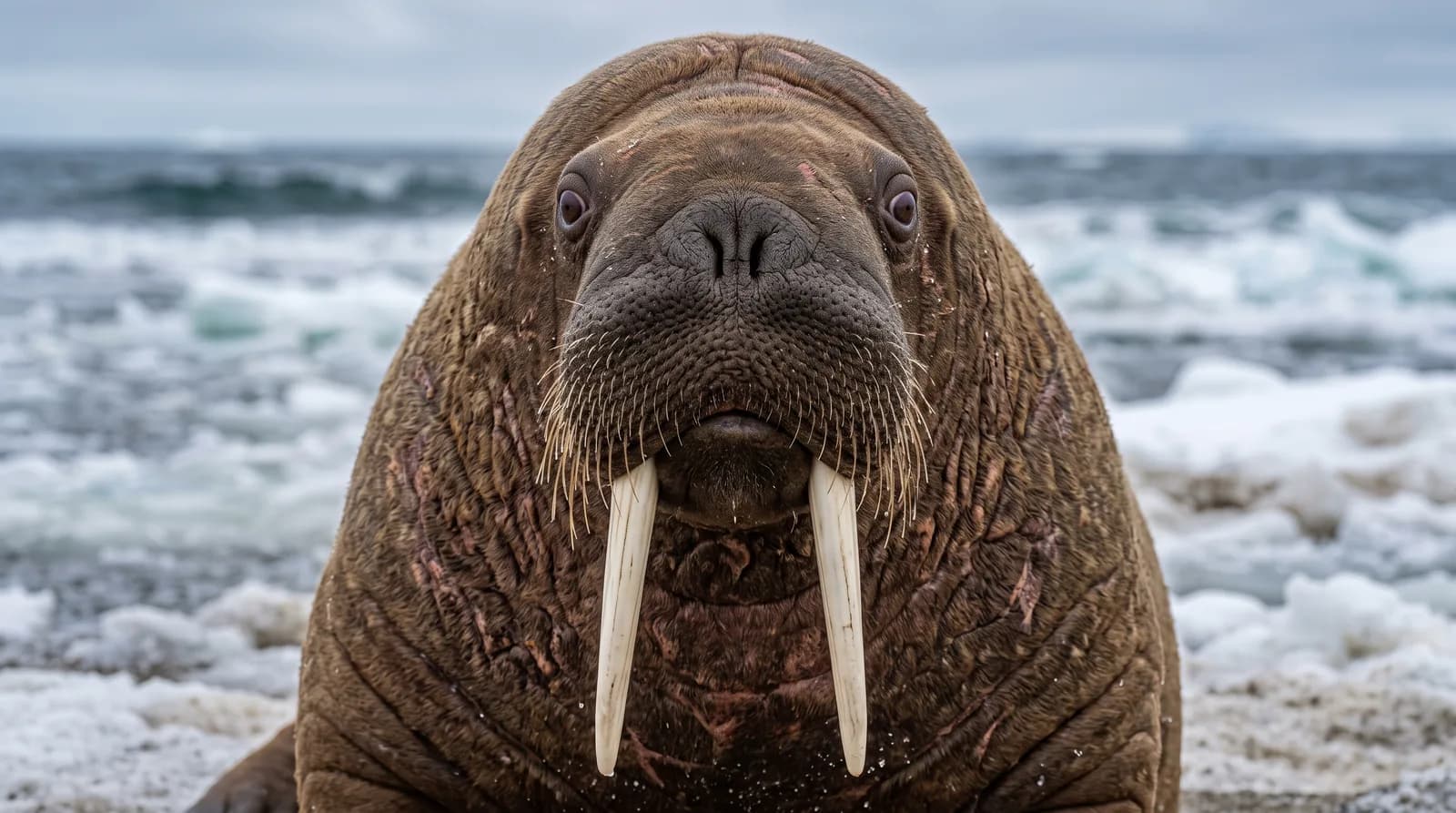
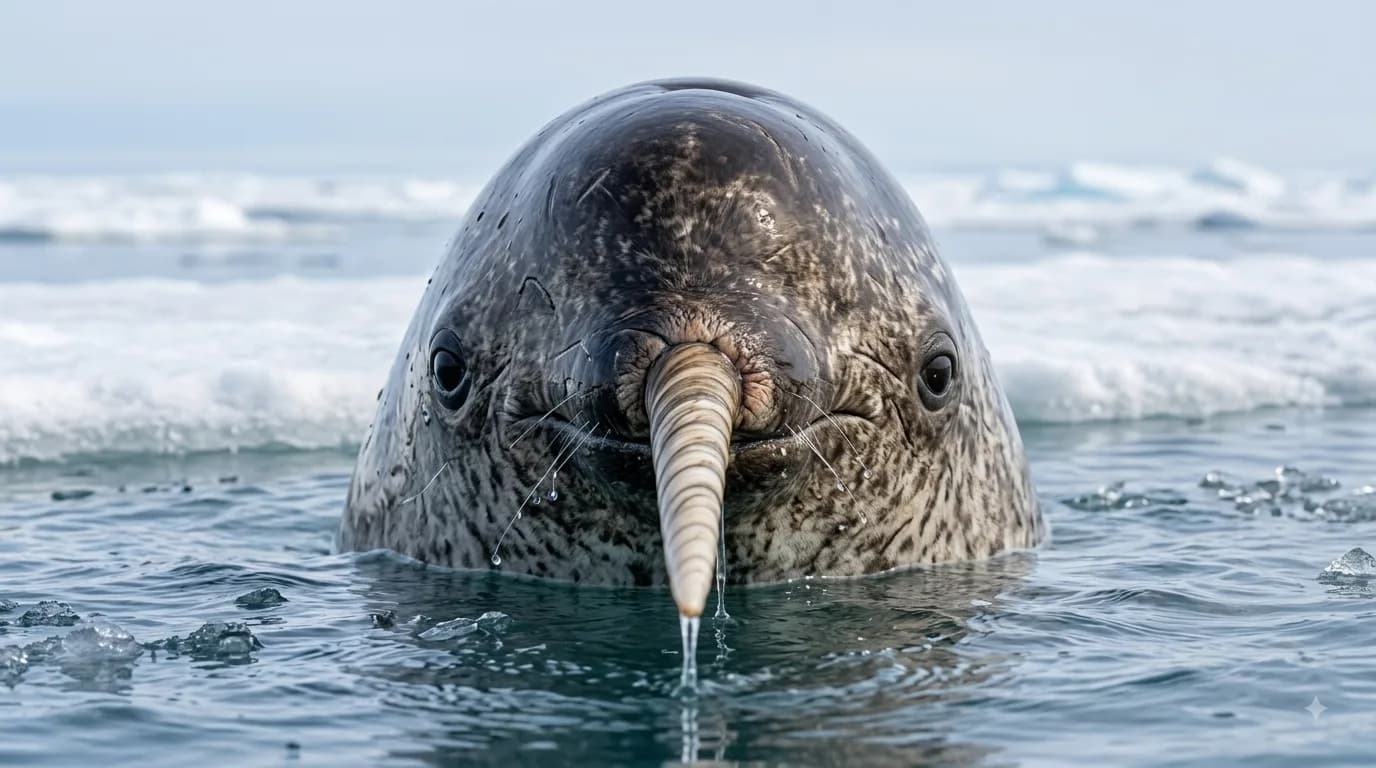
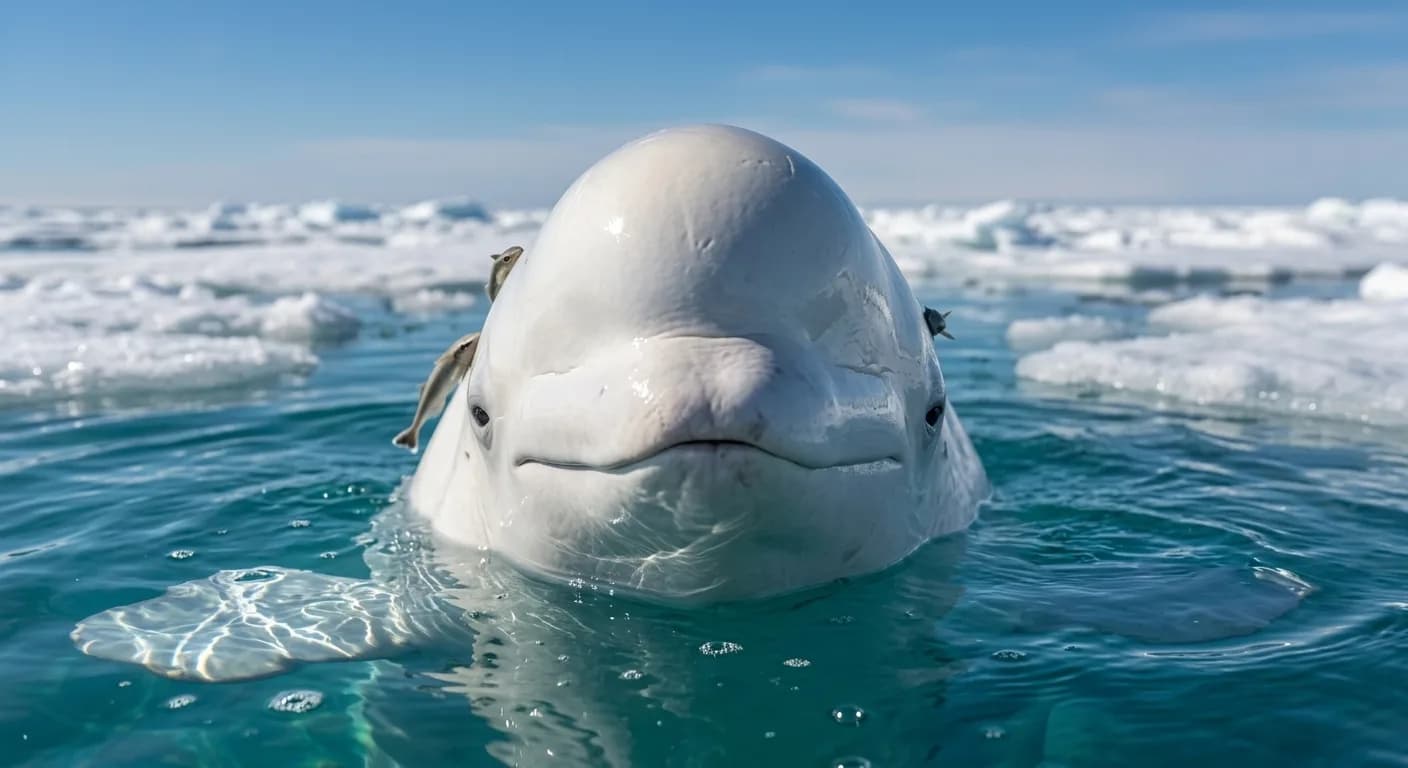
AI-generated images: illustrations, not photographs.
Fun facts
Its skin is black beneath a transparent coat that scatters light to look white.
It can smell a seal over a kilometre away.
It is an excellent swimmer, able to cover long distances in open water.
Life cycle and biology
Skeleton type
Vertebrate - internal bony skeleton (mammal)
Habitat and environment
Sea ice, coasts and waters of the Arctic Ocean
Birth weight
0.45 - 0.9 kg (1 - 2 lb) at birth, after delayed implantation
Size at birth
Born blind and all but hairless, in a den dug into the snow
Sexual maturity
Female: 4-6 years (first cub usually at 5-6) | Male: physically mature at 4-5, breeding effectively after 6-8
Gestation / incubation
195-265 days in total because of delayed implantation (active embryonic development lasts only 2-3 months)
Litter / clutch size
1 to 4 cubs per litter (most commonly 2)
Life expectancy in captivity
Up to 43.8 years documented in captivity
Sources consulted: MarineBio; AnAge (genomics.senescence.info); A-Z Animals; PBS Nature; U.S. Fish & Wildlife Service; Alaska Dept. of Fish and Game; Wiig et al. 2015, IUCN Red List e.T22823A14871490 || Wiig et al. 2015, IUCN Red List e.T22823A14871490; San Diego Zoo Wildlife Alliance Library
Where to find it
Best time: October to November
Loading map…
The pins mark the parks and dive sites where its presence is documented.
Where to see it
Parks and dive sites where this species has been documented.
Related species
Other species in the catalogue with the most in common with Polar Bear — same habitat, park, country, tags or family.
Shares a park
Shares a park
Shares a park
Shares a park
Shares a park
Shares a park
How to help
The polar bear is classified as vulnerable. Organisations such as Polar Bears International work specifically on its conservation and that of its habitat; looking into their programmes is a good starting point if you want to get involved.