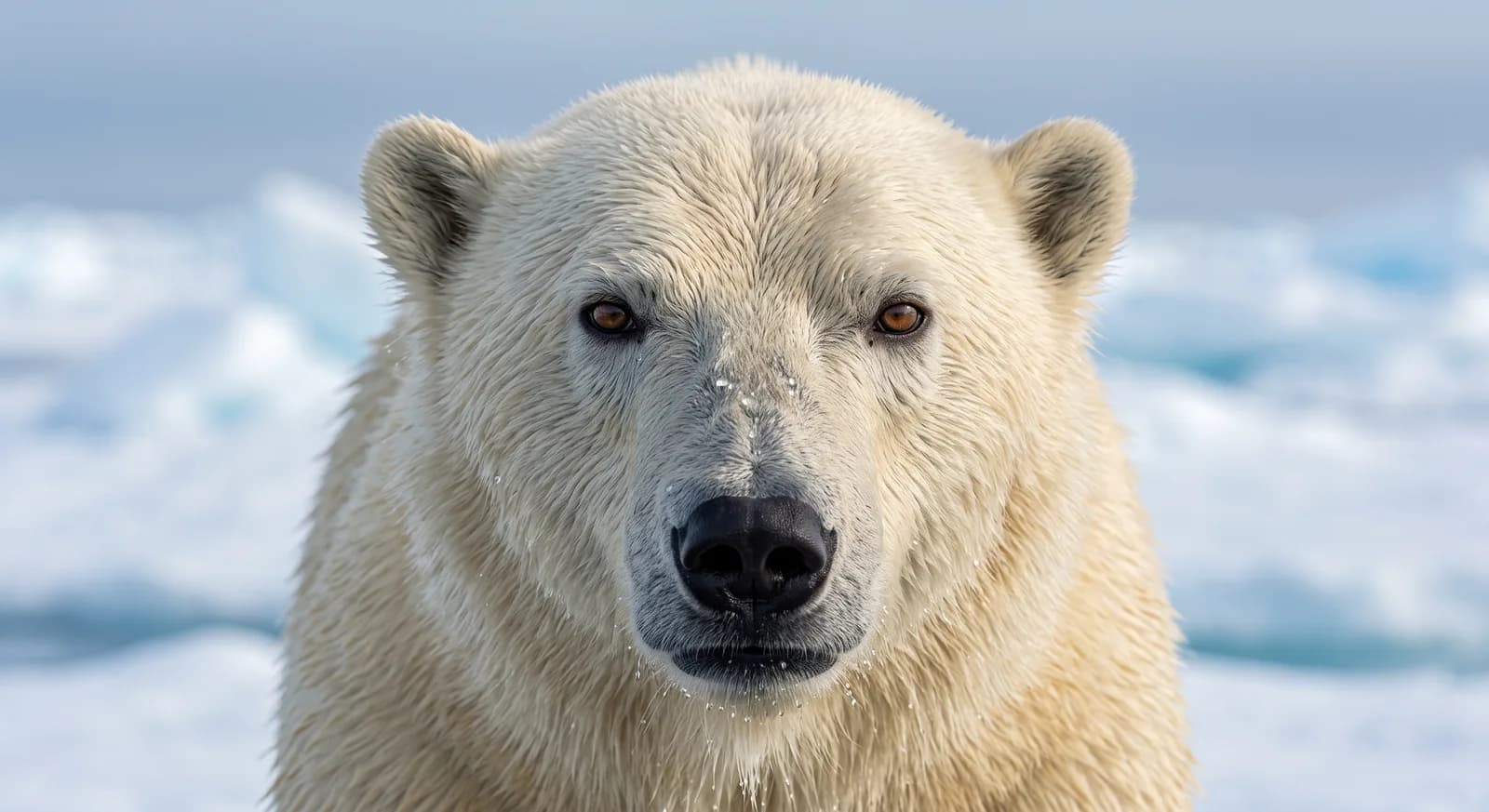
 Vulnerable
Polar Bear
Ursus maritimus
The oldest fossils in the world of large, complex organisms, on an Ediacaran cliff in Newfoundland.
Area
15 km²
Designated in
2016
Region
North America
Bedding surfaces with an in-situ Ediacaran biota
Mistaken Point lies at the south-eastern tip of the Avalon Peninsula, in Newfoundland. The property inscribed by UNESCO on 17 July 2016 is 146 hectares: a narrow strip of 17 kilometres of naturally eroding coastal cliffs, with a further 74 hectares of buffer zone on its landward margin. It lies almost entirely within the Mistaken Point Ecological Reserve, a provincial site of 5.7 km² designated in the 1980s.
The rock sequence, two kilometres thick and of deep marine origin, dates from the middle Ediacaran, between 580 and 560 million years ago, and contains the oldest assemblages of large fossils known on the planet. They document a turning point in the history of life: the appearance of large, biologically complex organisms after almost three billion years of evolution dominated by micro-organisms. These soft-bodied creatures lived long before animals developed skeletons, and they were preserved because successive flows of sediment laden with volcanic ash buried them on the very muddy floor where they lived. Those ash layers contain zircon crystals, which allows them to be dated with great precision. Although Ediacaran fossils occur in Russia, Australia, China and Namibia, the antiquity, abundance and variety of those at Mistaken Point make them unique, and the site preserves the oldest and most diverse deep-sea floor communities of their kind, including some of the earliest evidence of animal locomotion.
The fossil beds were known to hunters and to people from the nearby communities during the twentieth century; the children who played on them called them "flowers in the rocks". Their significance was not understood until 1967, when Shiva Balak Misra, a student at Memorial University, and his field assistant Paul Thompson were mapping Precambrian rocks along the coast. Access to the fossil surfaces is possible only on a guided visit with an official interpreter, after a walk of some 45 minutes across the coastal barrens.
1 dive site within 300 km is also shown.
Ecosystems found in Canada, where Mistaken Point lies.
Where can I dive near here?
111 km away
What is worth looking out for this month in Canada?
Now is a good time: Polar bear gathering at Churchill (October to November)
Which other parks are like this one?
Same country: Canada
Same country: Canada
Same country: Canada
Same country: Canada
Based on what we already know about this park.
Share your experience visiting Mistaken Point, or a tip for other travellers.
Be the first to comment.
Climate
Temperate, Polar / cold
Best season
June to September
 Canada