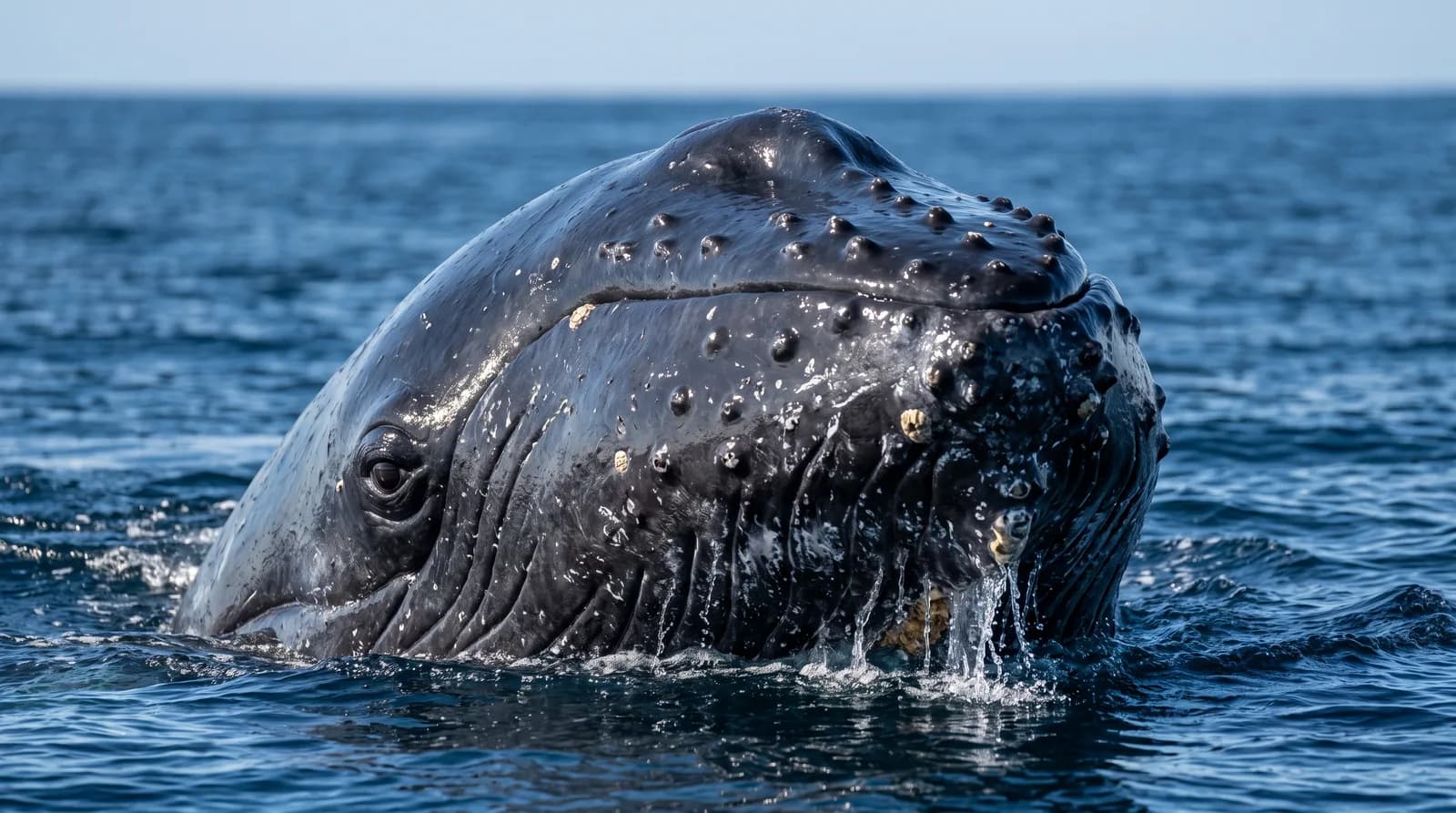
 Least Concern
Humpback Whale
Megaptera novaeangliae
Two sites 2,000 km apart that document the evolution of Australian mammals over 25 million years.
Area
103 km²
Designated in
1994
Region
Australia
Fossil mammal sites from the Oligocene to the Pleistocene
The Australian Fossil Mammal Sites, inscribed on the World Heritage List in 1994, are a serial property made up of two localities some 2,000 kilometres apart: Riversleigh, in north-western Queensland, and Naracoorte, in south-eastern South Australia. Together they offer the most complete record of the evolution of Australia's mammal fauna.
Riversleigh is a group of limestone deposits formed in caves and freshwater pools between some 25 and 12 million years ago, when the region was rainforest and not today's dry savannah. Its fossils document the moment when the Australian marsupial lineages diversified, and have yielded extraordinary species such as marsupial lions, tree kangaroos and dozens of bats, many of them described for the first time from this site.
Naracoorte, by contrast, belongs to the Pleistocene, the last 500,000 years. Its caves acted as natural traps: animals fell down the shafts and were buried, producing accumulations of complete and exceptionally preserved skeletons. There lie the remains of Australia's vanished megafauna, with giant kangaroos, wombats the size of a rhinoceros and the marsupial lion Thylacoleo, and the site is central to the scientific debate on the causes of their extinction, between climate change and human arrival on the continent.
Ecosystems found in Australia, where Riversleigh and Naracoorte Fossil Sites lies.
What is worth looking out for this month in Australia?
Now is a good time: The Humpback Highway on Australia's east coast (May to November (northbound May to August, southbound return August to November))
Now is a good time: Red crab migration on Christmas Island (October to January (spawning Nov-Dec))
Which other parks are like this one?
Same country: Australia
Same country: Australia
Same country: Australia
Same country: Australia
Based on what we already know about this park.
Share your experience visiting Riversleigh and Naracoorte Fossil Sites, or a tip for other travellers.
Be the first to comment.
Climate
Tropical, Arid / desert, Temperate, Mediterranean
Best season
March to May

 Australia