 Least Concern
Natterer's Bat
Myotis nattereri
One of the 29 bats on WAnimals
Mammals · Chiroptera · Vespertilionidae
Plecotus auritus
The species is abundant and widely distributed; it faces no significant short-term risk.
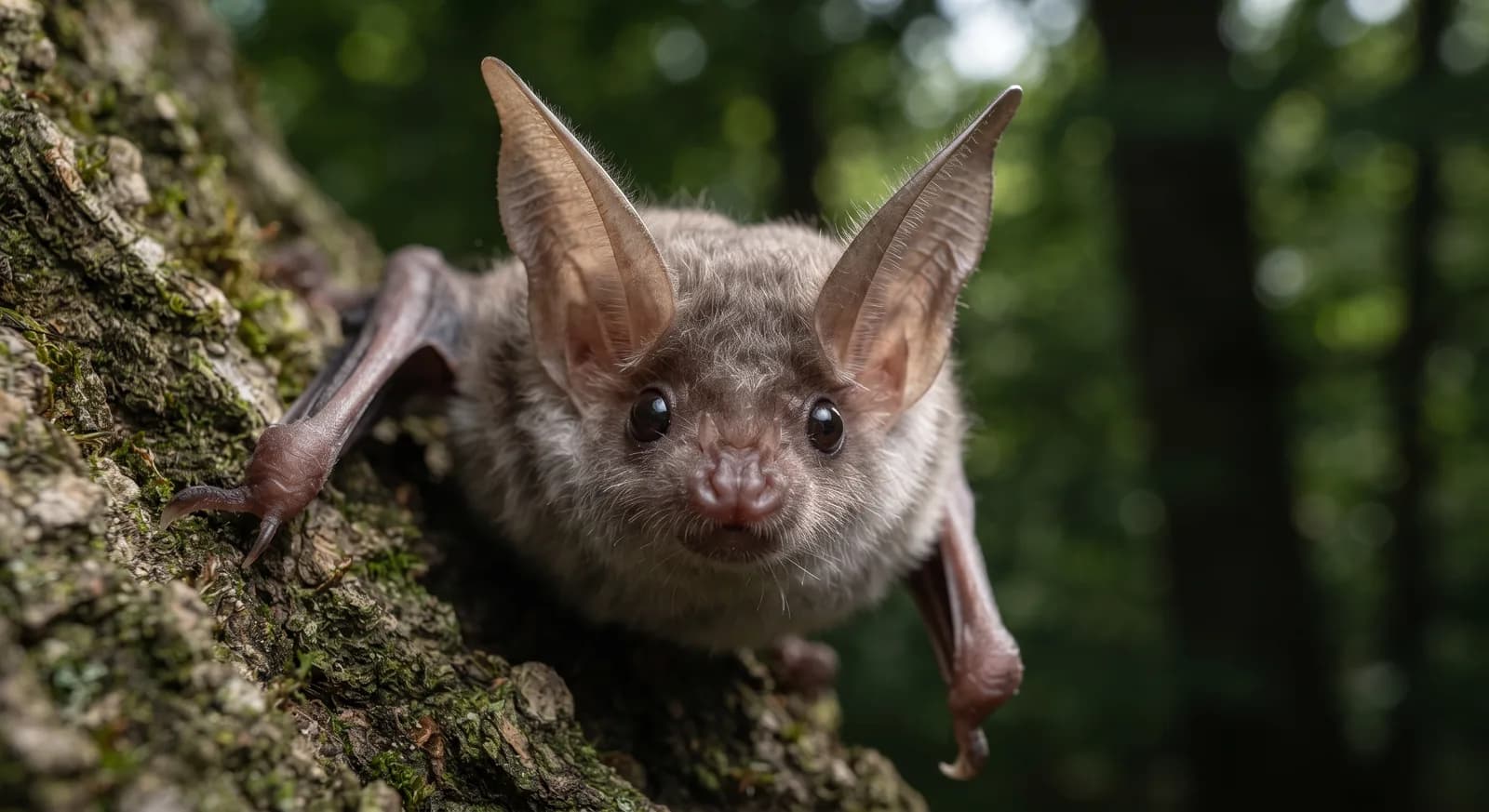
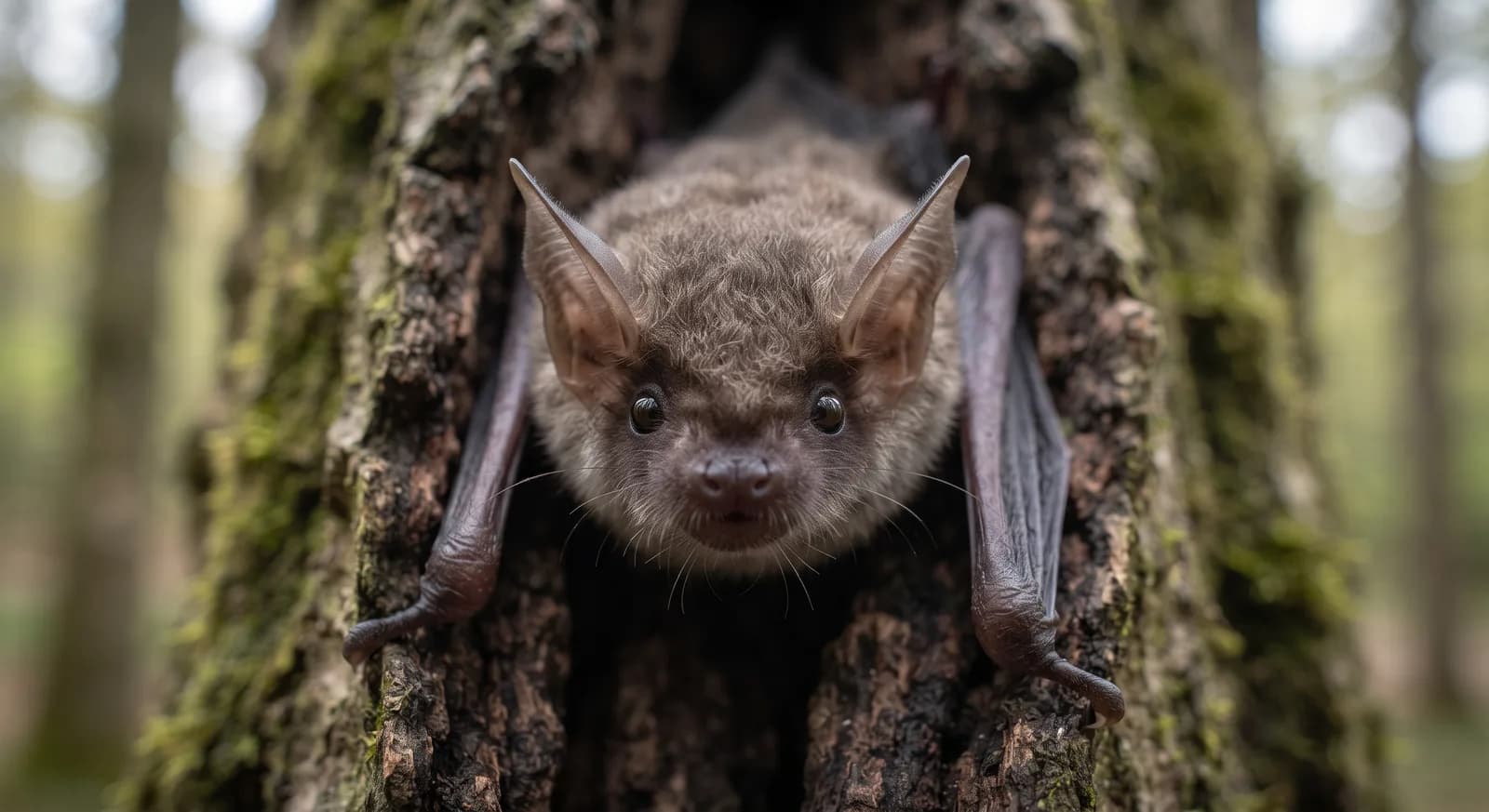
Its enormous ears, almost as long as its own body, fold back or tuck under the wings at rest. It spends an extraordinary amount of time in torpor, which may explain why females live longer.
Weight
6 g – 12 g
Size
4.5 cm – 4.8 cm
Life expectancy
15 years
Diet
Insectivore
Feeds mainly on insects and other invertebrates.
Activity
Nocturnal
Active mainly at night.
Social structure
Colony
Lives in large concentrations, often for breeding reasons.
Sighting difficulty
Easy
Sources consulted: The Wildlife Trusts; AnAge (genomics.senescence.info); Animal Diversity Web; First-Nature; Animalia.bio; People's Trust for Endangered Species; batmonitoring.org; PMC (genome sequence study)
Best time: From April to October, at dusk, in woods and gardens; in winter it hibernates in caves, mines and cellars, with its enormous ears folded under its wings.
Other species in the catalogue with the most in common with Brown Long-eared Bat — same habitat, park, country, tags or family.
Based on what we already know about brown long-eared bat.
Share an experience, a fun fact or a tip for seeing the brown long-eared bat.
Be the first to comment.