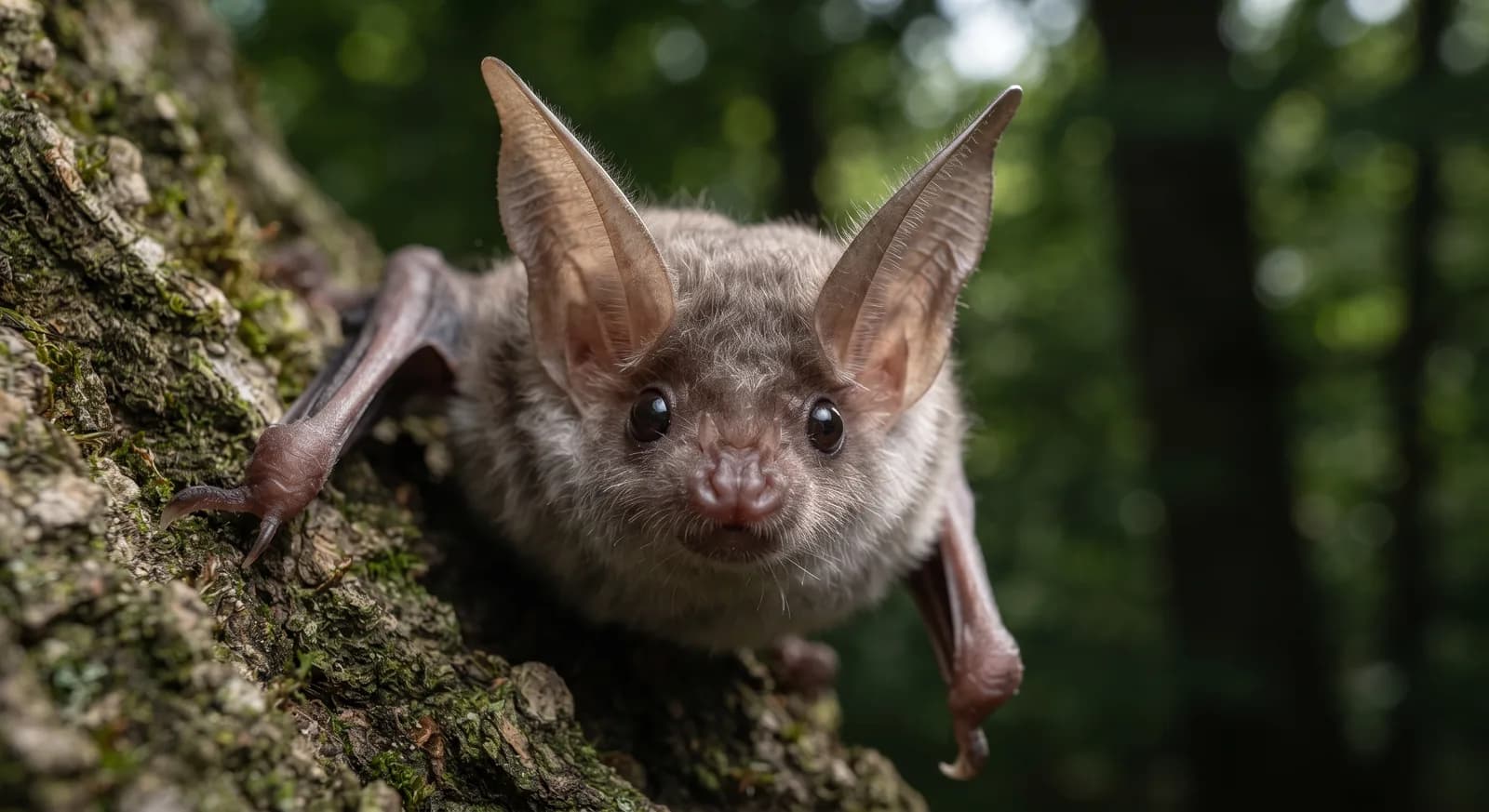
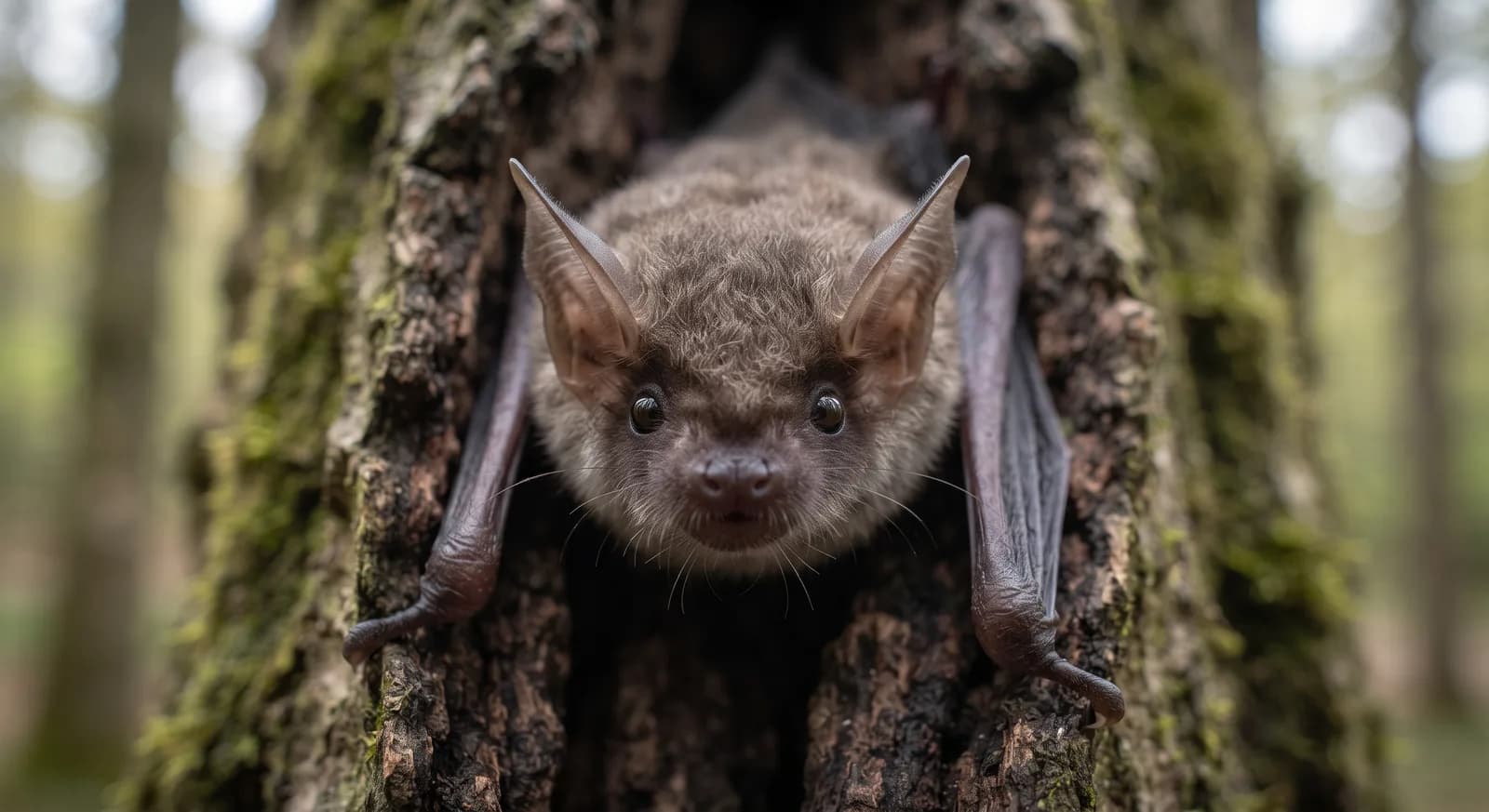
 Least Concern
Natterer's Bat
Myotis nattereri
One of the 2 noctules on WAnimals
Mammals · Chiroptera · Vespertilionidae
Nyctalus noctula
The species is abundant and widely distributed; it faces no significant short-term risk.
It is the largest and highest-flying bat in the United Kingdom, able to reach 50 to 60 km/h chasing insects above the canopy. Males aggressively defend a mating territory in a tree hollow.
Weight
18 g – 40 g
Size
5 cm – 10 cm
Life expectancy
5 years
Diet
Insectivore
Feeds mainly on insects and other invertebrates.
Activity
Nocturnal
Active mainly at night.
Social structure
Colony
Lives in large concentrations, often for breeding reasons.
Sources consulted: AnAge (genomics.senescence.info) · The Wildlife Trusts · Animal Diversity Web · People's Trust for Endangered Species · Heart of England Forest · NatureStyle · Encyclopedia of Life · Wikipedia (Common noctule)
Best time: From April to October, at dusk; it flies high and fast, often above the rooftops, and is one of the first bats out.
Parks and dive sites where this species has been documented — showing 10 of 129.
Other species in the catalogue with the most in common with Common Noctule — same habitat, park, country, tags or family.
Based on what we already know about common noctule.
The pins mark the parks where its presence is documented.