 Near Threatened
Bechstein's Bat
Myotis bechsteinii
Mammals · Chiroptera · Vespertilionidae
Barbastella barbastellus
It could become threatened in the near future if current threats go unchecked.
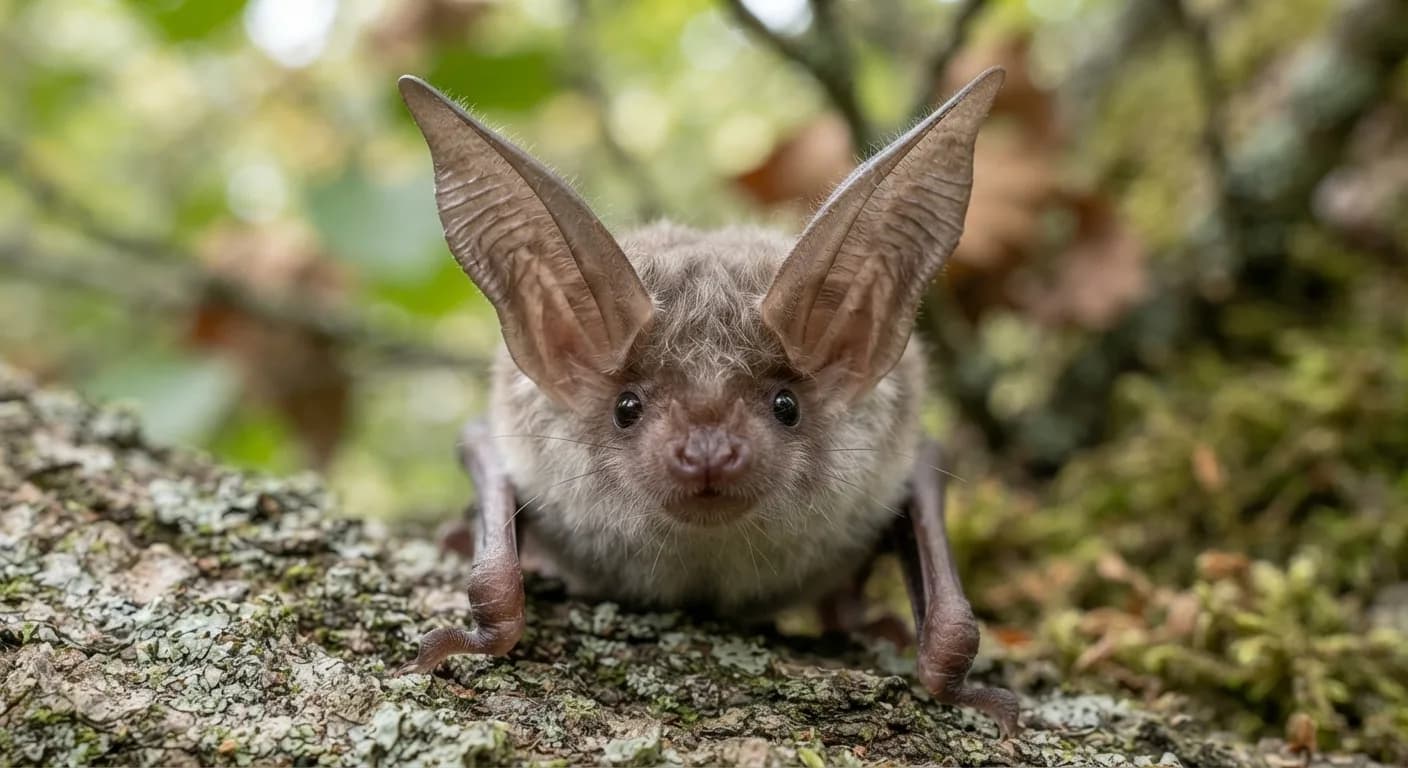
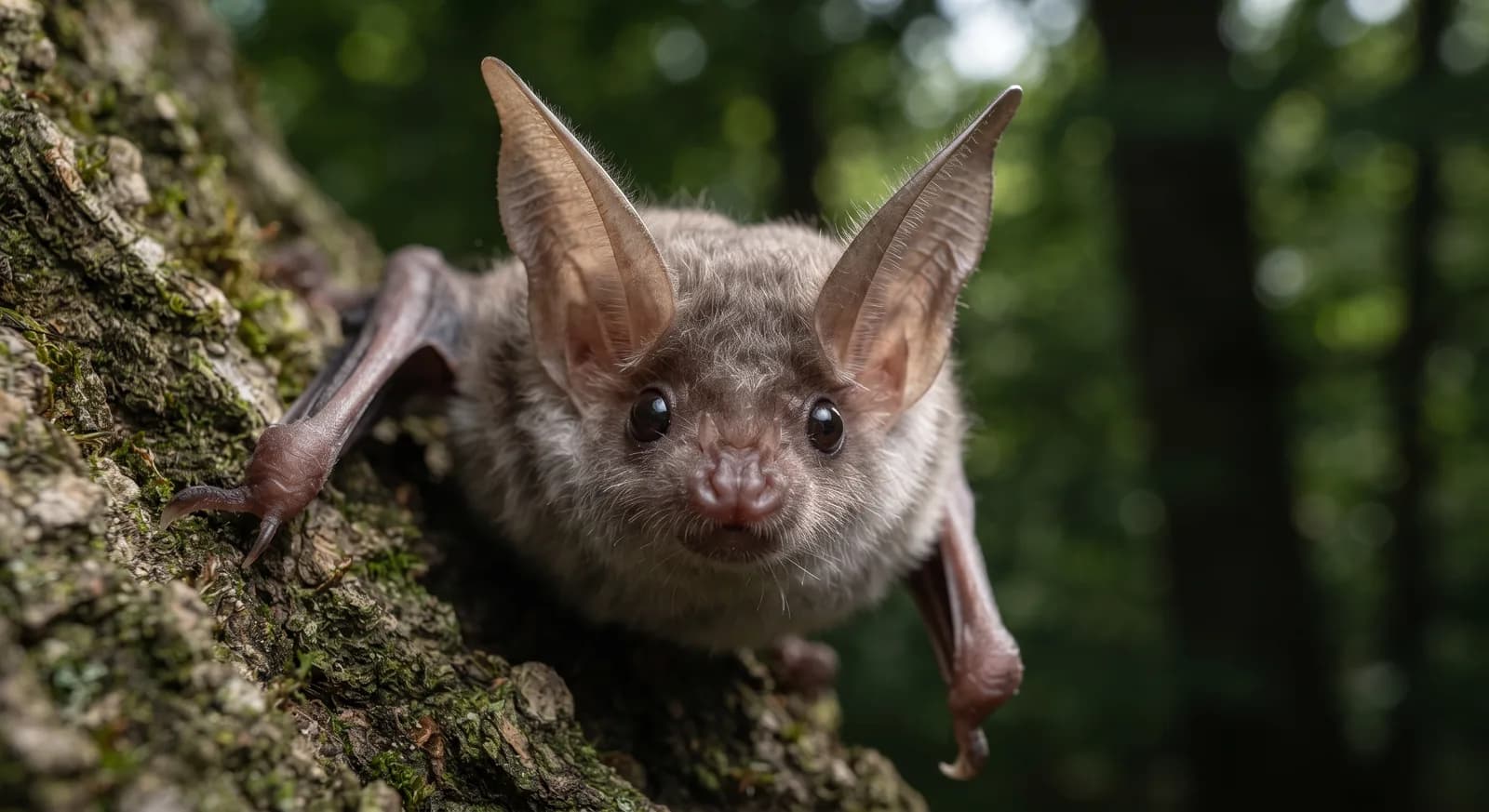
Its striking flat, pushed-in face, with large ears joined at the base above the forehead, gives it a look all its own among European bats. It hunts using extraordinarily quiet echolocation calls.
Weight
6 g – 13 g
Size
4 cm – 5.5 cm
Life expectancy
20 years
Diet
Insectivore
Feeds mainly on insects and other invertebrates.
Activity
Nocturnal
Active mainly at night.
Social structure
Colony
Lives in large concentrations, often for breeding reasons.
Sources consulted: First-Nature · AnAge (genomics.senescence.info) · People's Trust for Endangered Species · Heart of England Forest · Britannica · Animalia.bio · Wikipedia (Western barbastelle)
Best time: From May to September, at dusk, in mature woodland with old trees; between November and March it hibernates in cold caves and mines.
Parks and dive sites where this species has been documented — showing 10 of 127.
Other species in the catalogue with the most in common with Western Barbastelle — same habitat, park, country, tags or family.
Based on what we already know about western barbastelle.
The pins mark the parks where its presence is documented.