Skip to content
WAnimals
  • Map
  • Species
  • Parks
  • Diving
Log inCreate account
WAnimals

The guide for travellers and animal lovers: discover, plan and share your wild adventures around the world.

Discover wildlife

  • Species
  • Ecosystems
  • Glossary
  • Tags

Explore places

  • Map
  • Countries
  • Parks
  • Diving

Plan experiences

  • Guides

Learn

  • Blog

Resources

  • About us
  • How we build our profiles
  • Help centre
  • Contact
  • Install the app

Follow us

Account

  • Log in
  • Create account

© 2026 WAnimals. All rights reserved.

Terms of servicePrivacyCookiesLegal notice
MapSpeciesParksDiving
  1. Home
  2. Species
  3. Culpeo

One of the 17 foxes on WAnimals
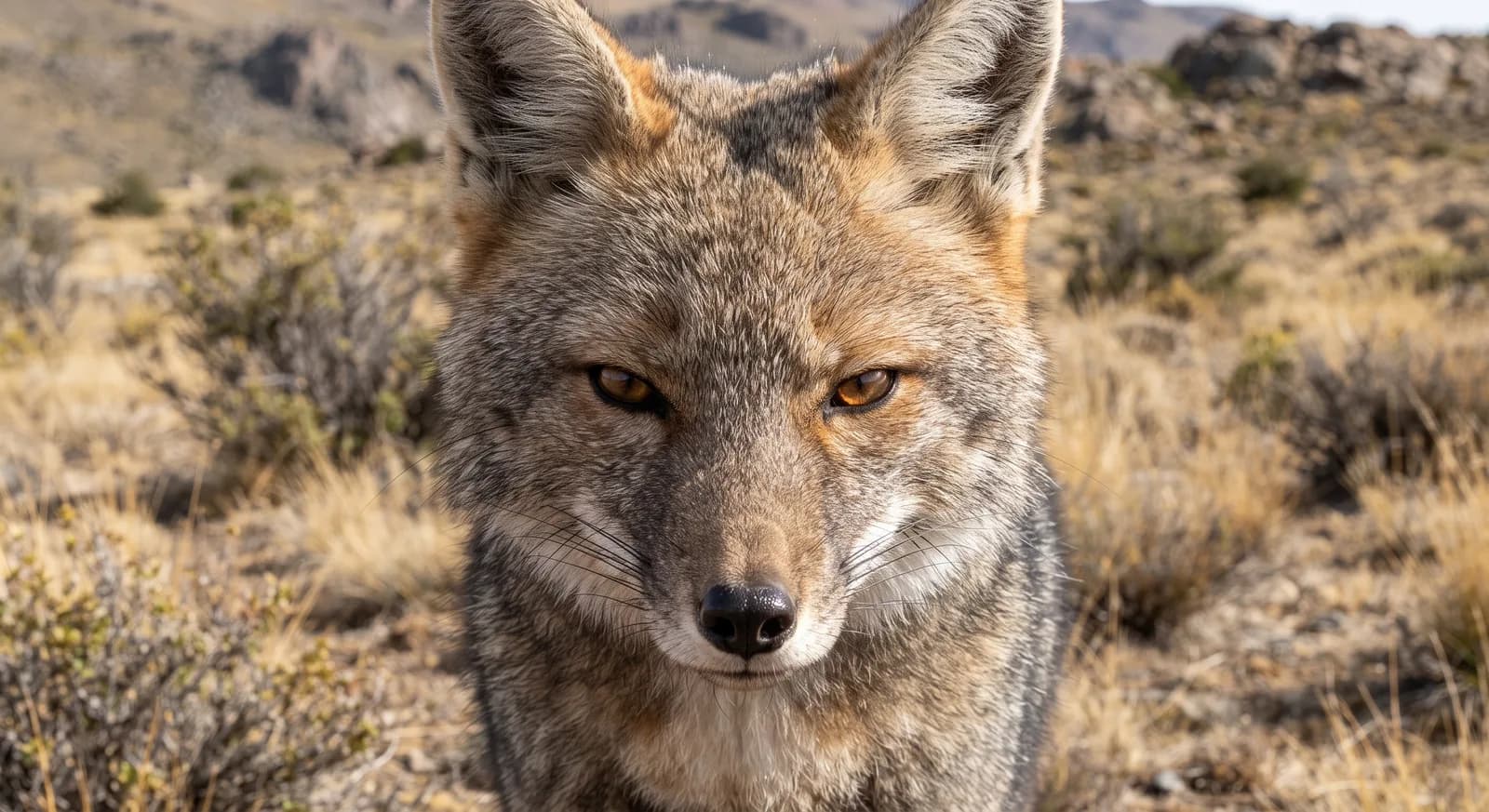
Culpeo (Lycalopex culpaeus)

Mammals · Carnivora · Canidae

Culpeo

Lycalopex culpaeus

Least Concern

The species is abundant and widely distributed; it faces no significant short-term risk.

Spotted something wrong?

It is the second largest native canid in South America after the maned wolf, and ranges across the Andes from sea level to 4,500 metres. Despite being called a fox, it is more closely related to wolves and jackals than to true foxes.

Weight

5 kg – 14 kg

Size

94 cm – 1.3 m

Life expectancy

11 years

Diet

Carnivore

Feeds mainly on other animals.

Activity

Nocturnal

Active mainly at night.

Social structure

Solitary

Lives and hunts alone, joining others only to breed.

Temperate forestDesertMountain
7countries22parks34same family

AI-generated images: illustrations, not photographs.

Fun facts

  • It is the second-largest native canid in South America, behind only the maned wolf.
  • It is a key seed disperser: fruits such as the peumo germinate better after passing through its gut.
  • It can live anywhere from sea level to 4,500 metres up in the Andes.
  • distribuciónIt is South America's second-largest wild canid, after the maned wolf, and lives across a very wide altitudinal range, from the coast to over 4,000 metres in the Andes.

Life cycle and biology

Skeleton type
Vertebrate - internal bony skeleton (mammal)
Habitat and environment
A wide range of Andean and Patagonian habitats, from temperate forest to desert, between sea level and 4,500 m
Birth weight
168 - 170 grams
Size at birth
Born naked and with its eyes closed
Sexual maturity
~1 year
Gestation / incubation
55-61 days
Litter / clutch size
2 to 5 young per litter (3 to 8, 5.2 on average, according to other sources)
Life expectancy in captivity
Documented record of 13.1 years in captivity

Sources consulted: Animal Diversity Web · AnAge · JungleDragon · Animalia.bio · Animal of the World Wiki · Quasar Expeditions · Animal Spot · Wikipedia · Beyond BA

Where to find it

Loading map…

The pins mark the parks where its presence is documented.

Where to see it

Parks and dive sites where this species has been documented — showing 10 of 22.

Related species

Other species in the catalogue with the most in common with Culpeo — same habitat, park, country, tags or family.

Same taxonomic family
Shares a park
Shares a park

Keep exploring

Based on what we already know about culpeo.

Share an experience, a fun fact or a tip for seeing the culpeo.
See full glossary
This page in other languages: Español · Deutsch · Français · Português · Italiano
See its range on the interactive map→
Nahuel HuapiArgentina
Los GlaciaresArgentina
Torres del PaineChile
LaucaChile
Los FlamencosChile
Patagonia (Patagonia National Park)Chile
HuascaránPeru
Eduardo AvaroaBolivia
SajamaBolivia
Vicente Pérez RosalesChile
See all 22 parks
South American Gray FoxLeast Concern

South American Gray Fox

Lycalopex griseus

Gray FoxLeast Concern

Gray Fox

Urocyon cinereoargenteus

Endangered

Darwin's Fox

Lycalopex fulvipes

Least Concern

Pampas Fox

Lycalopex gymnocercus

Southern Monito del MonteLeast Concern

Southern Monito del Monte

Dromiciops gliroides

PumaLeast Concern

Puma

Puma concolor

CountriesChile
ParksNahuel HuapiArgentina
TagsCarnivore
Carnivore
Nocturnal
Solitary
Temperate forest
Desert
Mountain
Mammal
Chile
Argentina
Bolivia
Peru
Colombia
Ecuador
Venezuela