Skip to content
WAnimals
  • Map
  • Species
  • Parks
  • Diving
Log inCreate account
WAnimals

The guide for travellers and animal lovers: discover, plan and share your wild adventures around the world.

Discover wildlife

  • Species
  • Ecosystems
  • Glossary
  • Tags

Explore places

  • Map
  • Countries
  • Parks
  • Diving

Plan experiences

  • Guides

Learn

  • Blog

Resources

  • About us
  • How we build our profiles
  • Help centre
  • Contact
  • Install the app

Follow us

Account

  • Log in
  • Create account

© 2026 WAnimals. All rights reserved.

Terms of servicePrivacyCookiesLegal notice
MapSpeciesParksDiving
  1. Home
  2. Species
  3. Kennel Tick

One of the 3 ticks on WAnimals

Arachnids · Ixodida · Ixodidae

Kennel Tick

Rhipicephalus sanguineus

Not Evaluated

It has not yet been assessed against the IUCN criteria.

Spotted something wrong?

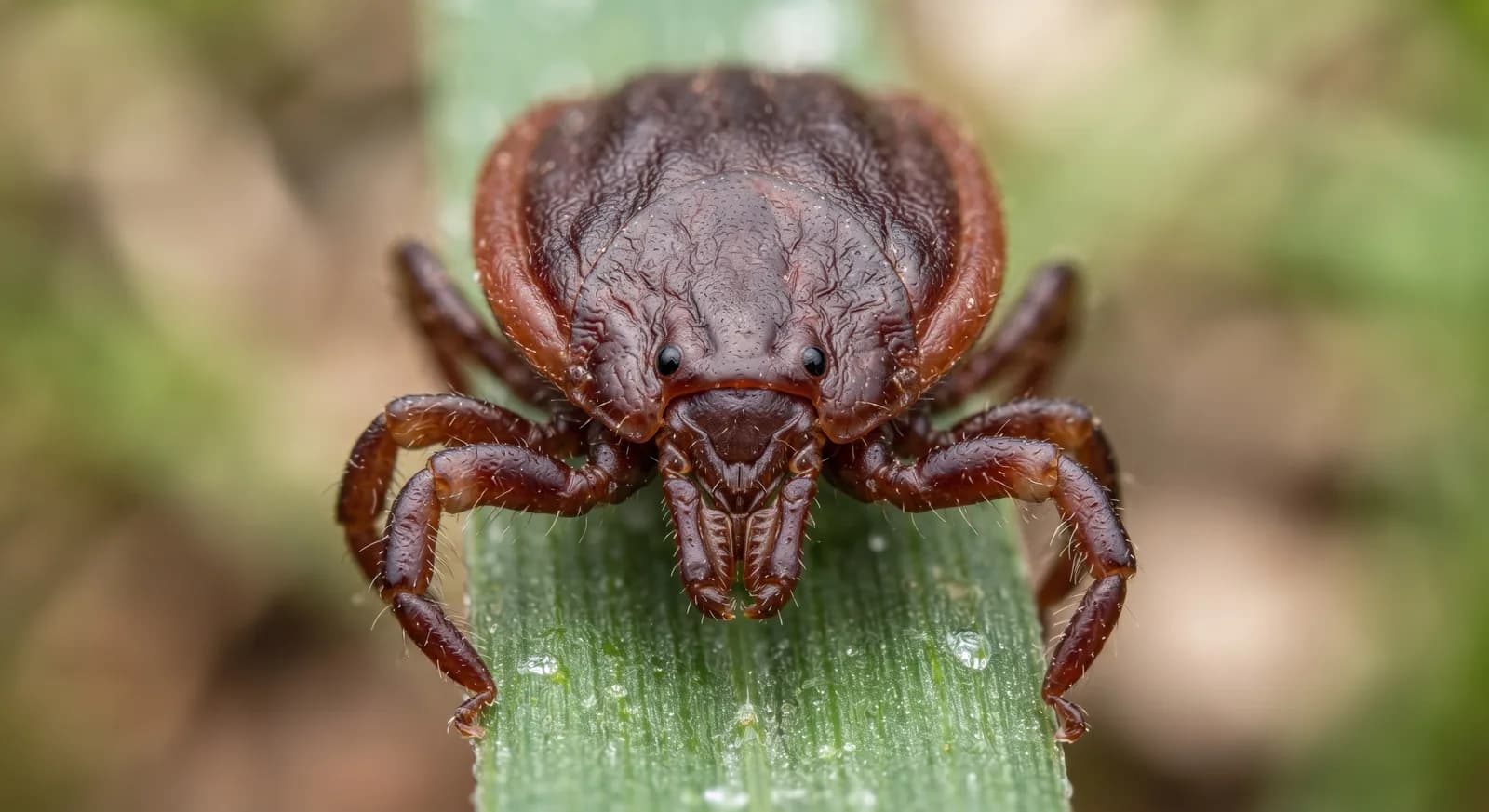
The brown dog tick, dog tick or kennel tick is a blood-feeding ectoparasitic arthropod of the family Ixodidae, which attacks dogs above all, although it can also parasitise other domestic and wild animals and even, occasionally, humans, although other warm-blooded animals are rarely bitten.

Size

0.3 cm – 1.2 cm

Diet

Carnivore

Feeds mainly on other animals.

Social structure

Solitary

Lives and hunts alone, joining others only to breed.

Temperate forest
8countries1same family

Fun facts

  • GeneralIt completes its cycle indoors and carries canine ehrlichiosis.
  • It is the only tick that has managed to become a household pest: it lays several thousand eggs in cracks around the house and can infest a whole home.
  • In some regions it also transmits Rocky Mountain spotted fever to people.
  • With the warming climate it is extending its range into northern Europe.
  • It is probably the most widespread tick in the world, and the only one able to complete its whole cycle indoors. That is why household infestations are persistent and hard to clear.
  • It is a three-host tick: each stage drops off to moult and then seeks another host, but all three can be on the same dog at once.
  • Its distribution follows that of people and their dogs, not that of any particular ecosystem.
  • It transmits canine monocytic ehrlichiosis and several babesioses to dogs, and to people Mediterranean spotted fever and, in the south-western United States and northern Mexico, Rocky Mountain spotted fever.
  • That fever has sustained an epidemic in tribal communities in Arizona, with more than 500 cases and 28 deaths since 2003.
  • Its taxonomy remains unresolved: it is treated as a species complex, and some of the older records probably refer to other species.

Life cycle and biology

Skeleton type
Invertebrate - chitin exoskeleton (arachnid)
Habitat and environment
Homes, kennels and suburban areas

Sources consulted: Wikipedia (es): Rhipicephalus sanguineus

Where to find it

Loading map…

Related species

Other species in the catalogue with the most in common with Kennel Tick — same habitat, park, country, tags or family.

Same taxonomic family
Related to
Related to
Related to
Related to
Related to

Keep exploring

Based on what we already know about kennel tick.

Share an experience, a fun fact or a tip for seeing the kennel tick.
See full glossary
This page in other languages: Español · Deutsch · Français · Português · Italiano
See its range on the interactive map→
Castor Bean TickNot Evaluated

Castor Bean Tick

Ixodes ricinus

Not Evaluated

Southern Black Widow

Latrodectus mactans

Not Evaluated

Brown Recluse

Loxosceles reclusa

Not Evaluated

House False-scorpion

Chelifer cancroides

Not Evaluated

Joro Spider

Trichonephila clavata

Not Evaluated

Southern Unstriped Scorpion

Vaejovis carolinianus

CountriesAustralia
TagsCarnivore
Carnivore
Solitary
Temperate forest
Arachnid
Australia
Brazil
Canada
Italy
Mexico
South Africa
Spain
United States