Skip to content
WAnimals
  • Map
  • Species
  • Parks
  • Diving
Log inCreate account
WAnimals

The guide for travellers and animal lovers: discover, plan and share your wild adventures around the world.

Discover wildlife

  • Species
  • Ecosystems
  • Glossary
  • Tags

Explore places

  • Map
  • Countries
  • Parks
  • Diving

Plan experiences

  • Guides

Learn

  • Blog

Resources

  • Help centre
  • Contact
  • Install the app

Follow us

Account

  • Log in
  • Create account

© 2026 WAnimals. All rights reserved.

About usHow we build our profilesTerms of servicePrivacyLegal notice
MapSpeciesParksDiving
  1. Home
  2. Species
  3. Painted Reed Frog

One of the 47 frogs on WAnimals
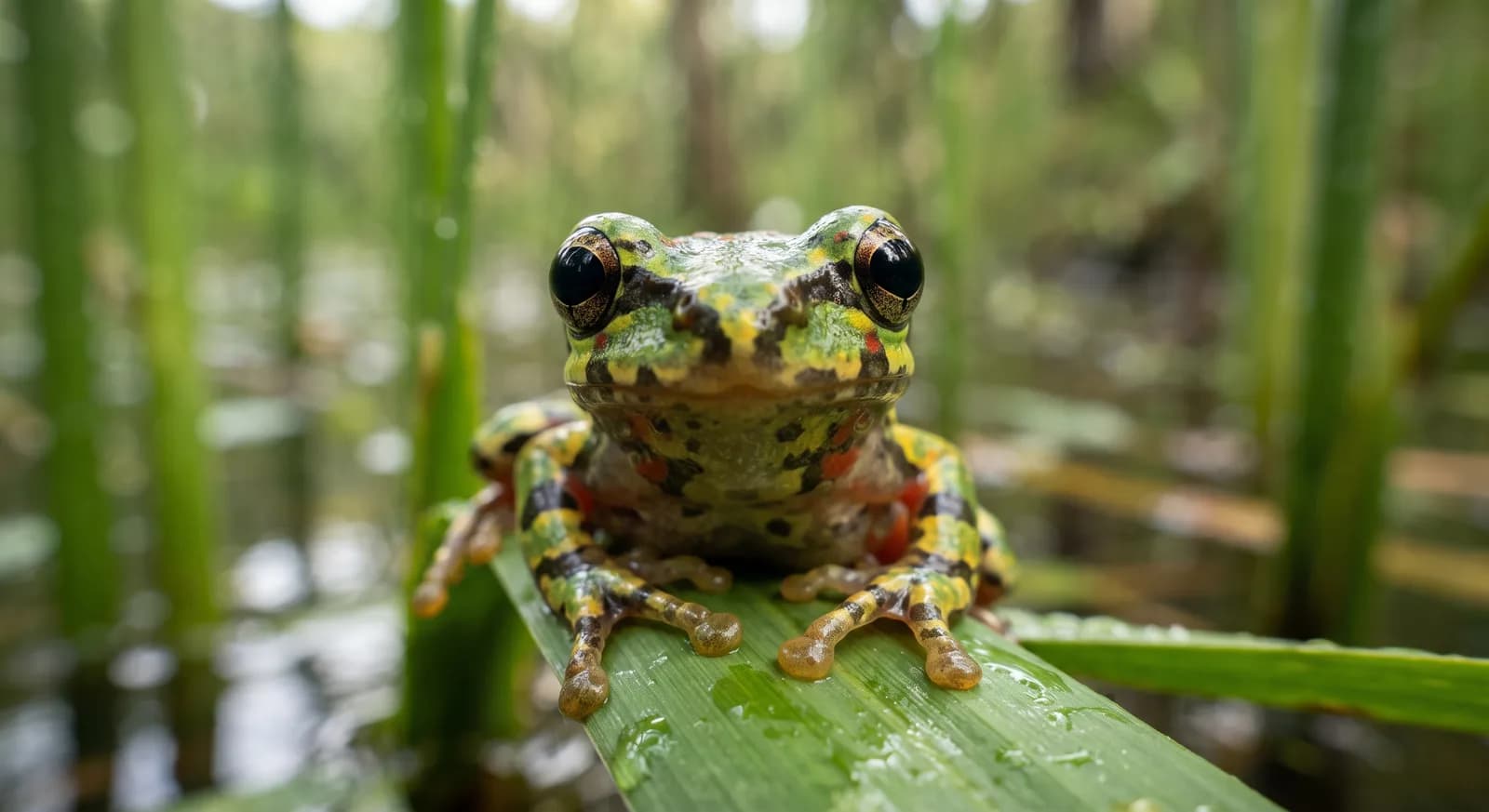
Painted Reed Frog (Hyperolius marmoratus)

Amphibians · Anura · Hyperoliidae

Painted Reed Frog

Hyperolius marmoratus

Least Concern

The species is abundant and widely distributed; it faces no significant short-term risk.

Spotted something wrong?

The painted reed frog is an African reed frog of extraordinarily variable colouring: within a single population there are striped, spotted, green, brown or almost white individuals, so much so that for decades they were described as separate species. The males call in dense choruses from the marsh vegetation.

Size

2 cm – 4 cm

Life expectancy

5 years

Diet

Insectivore

Feeds mainly on insects and other invertebrates.
Activity

Nocturnal

Active mainly at night.

Social structure

Colony

Lives in large concentrations, often for breeding reasons.

Sighting difficulty

Easy

SavannaFreshwaterGrassland
10countries

AI-generated images: illustrations, not photographs.

Fun facts

  • Its colour variability is so extreme that the different forms were described for decades as separate species: striped, spotted, green and whitish frogs can be siblings from the same clutch.
  • The females acquire their final pattern after metamorphosis and it does not change again, while the males stay more uniform: it is one of the few cases of colour dimorphism of this kind among frogs.
  • It reflects ultraviolet light with its skin, which has been linked to protection from radiation in an animal that spends the day exposed on vegetation.
  • Its colour variation is extraordinary: stripes, spots and different background colours coexist in the same population, to the point that for decades they were described as different species.
  • Part of that variation is not genetic but developmental: on reaching maturity, sex hormones trigger a colour change in the females, while the males usually keep the juvenile colouring. Sexual dichromatism is rare among frogs, yet in this genus it is the norm.
  • Protogynous sex change has been documented in the genus: females that switch to functioning as males.
  • It survives the direct sun of the savanna, something exceptional in a frog. It reduces water loss with a highly impermeable skin and iridophores that reflect the radiation, and so it can spend dry days exposed on a reed.
  • Its chorus is deafening: hundreds of males gather at the ponds of the wet season, and females have been shown to exercise genuine choice only when the chorus is small.

Life cycle and biology

Skeleton type
Vertebrate - internal bony skeleton (amphibian)
Habitat and environment
Marsh vegetation of pools, marshes and wetlands of eastern and southern Africa
Sexual maturity
12 months
Gestation / incubation
Larval development in pools and wetlands
Litter / clutch size
400 eggs

Sources consulted: https://www.iucnredlist.org/ | https://animaldiversity.org/ | https://es.wikipedia.org/

Where to find it

Loading map…

Related species

Other species in the catalogue with the most in common with Painted Reed Frog — same habitat, park, country, tags or family.

Related to
Related to
Related to
Related to
Related to
Related to

Keep exploring

Based on what we already know about painted reed frog.

Comments

Share an experience, a fun fact or a tip for seeing the painted reed frog.

Be the first to comment.

See full glossary
This page in other languages: Español · Deutsch · Français · Português · Italiano
See its range on the interactive map→
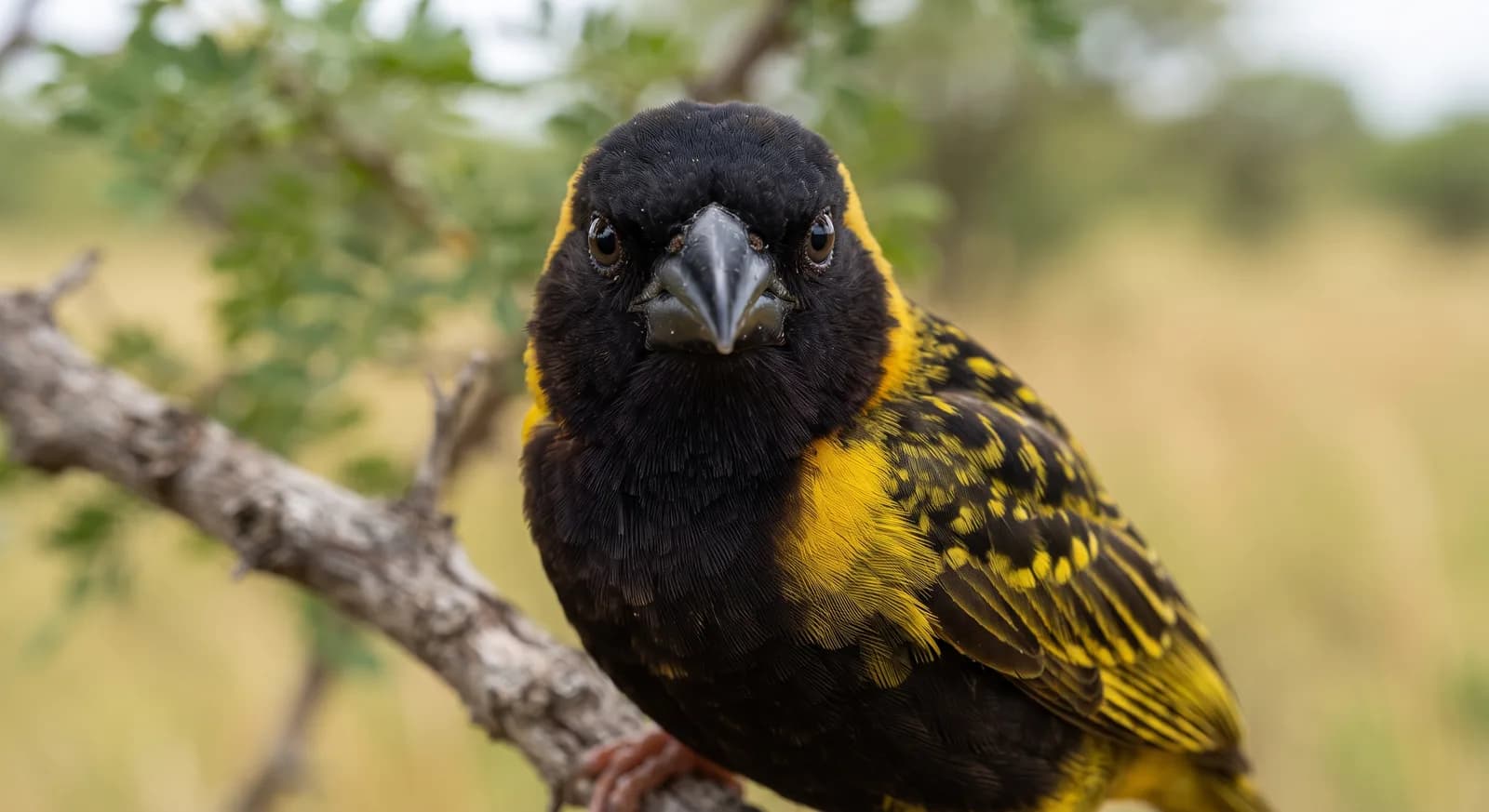
Village WeaverLeast Concern

Village Weaver

Ploceus cucullatus

Least Concern

Dune Squeaker

Arthroleptis stenodactylus

Least Concern

Giant Bullfrog

Pyxicephalus adspersus

Least Concern

Purcell's Ghost Frog

Heleophryne purcelli

Least Concern

Lesser Bull-frog

Pyxicephalus edulis

Snoring Puddle FrogLeast Concern

Snoring Puddle Frog

Phrynobatrachus natalensis

CountriesAngola
TagsInsectivore
Insectivore
Nocturnal
Colonial
Amphibian
Savanna
Freshwater
Grassland
Angola
Botswana
Eswatini
Malawi
Mozambique
Namibia
Angola
Botswana
Eswatini
Malawi
Mozambique
Namibia
South Africa
Tanzania
Zambia
Zimbabwe