One of the 15 lizards on WAnimals
Reptiles · Squamata · Phrynosomatidae
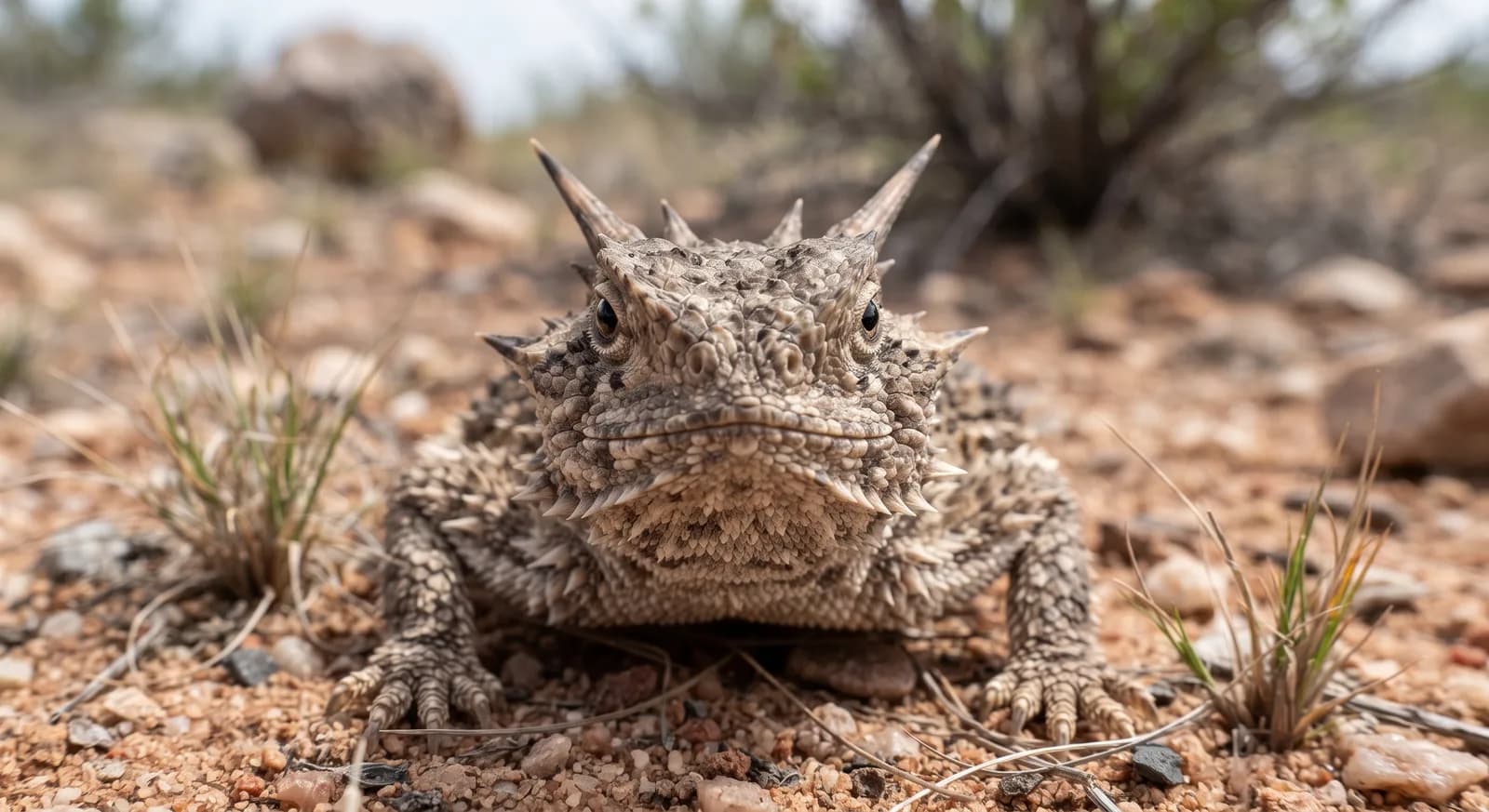
Phrynosoma cornutum
The species is abundant and widely distributed; it faces no significant short-term risk.
It can shoot blood from its eyes as an extreme defence against predators, squirting the fluid under pressure as far as 1.5 metres.
Size
9 cm – 13 cm
Life expectancy
5 years
Diet
Insectivore
Feeds mainly on insects and other invertebrates.
Activity
Diurnal
Active mainly during the day.
Social structure
Solitary
Lives and hunts alone, joining others only to breed.
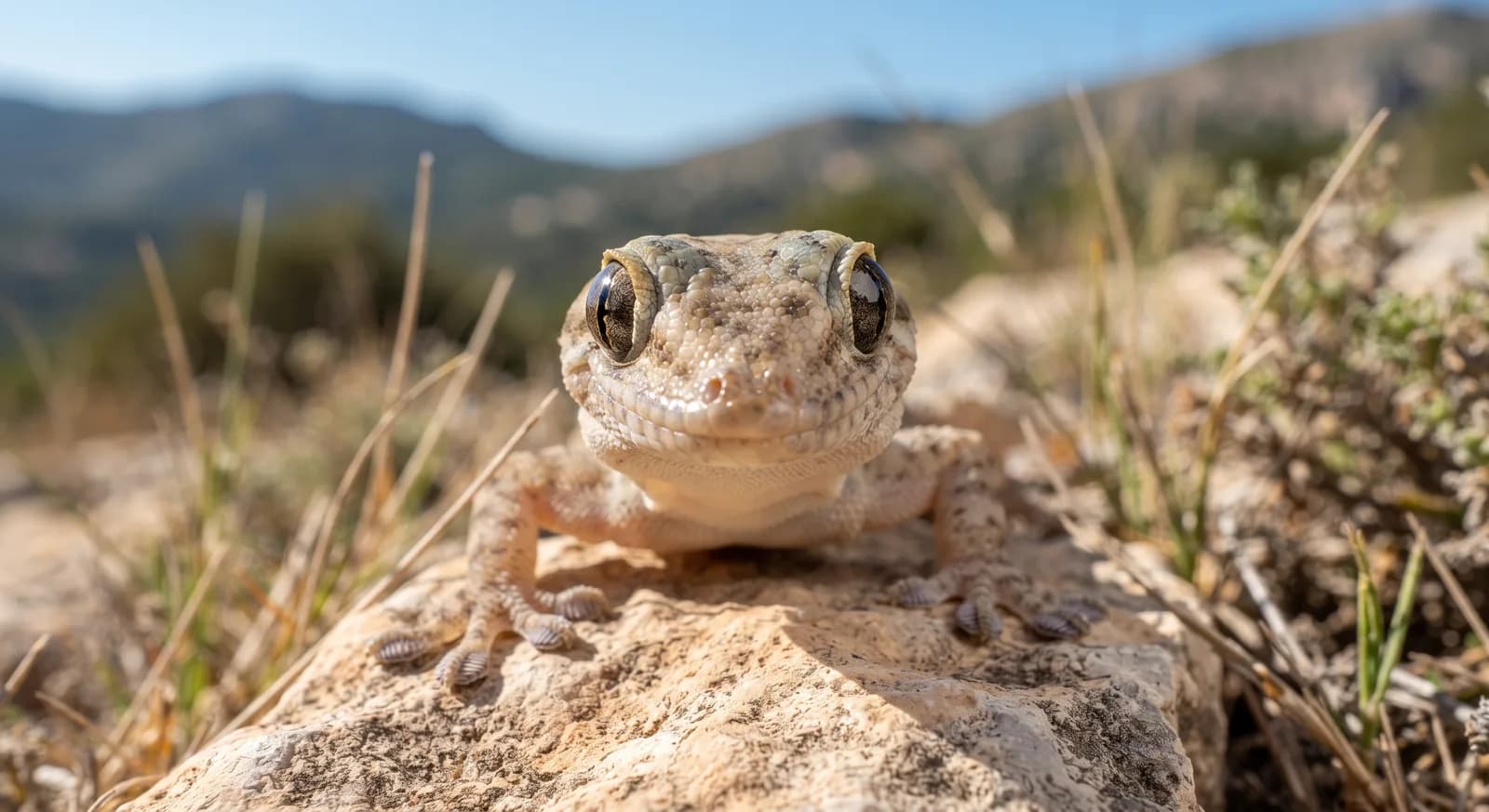
AI-generated images: illustrations, not photographs.
Sources consulted: Animal-pedia.org · Animalia.bio · Herps of NC · EBSCO Research Starters · Animal Diversity Web · bioRxiv (latitudinal life history study) · Great Plains Natural Science Society
Best time: From April to September, in mid-morning, on sandy ground with harvester ant colonies.
The pins mark the parks where its presence is documented.
Parks and dive sites where this species has been documented — showing 10 of 15.
Other species in the catalogue with the most in common with Texas Horned Lizard — same habitat, park, country, tags or family.
Based on what we already know about texas horned lizard.