 Endangered
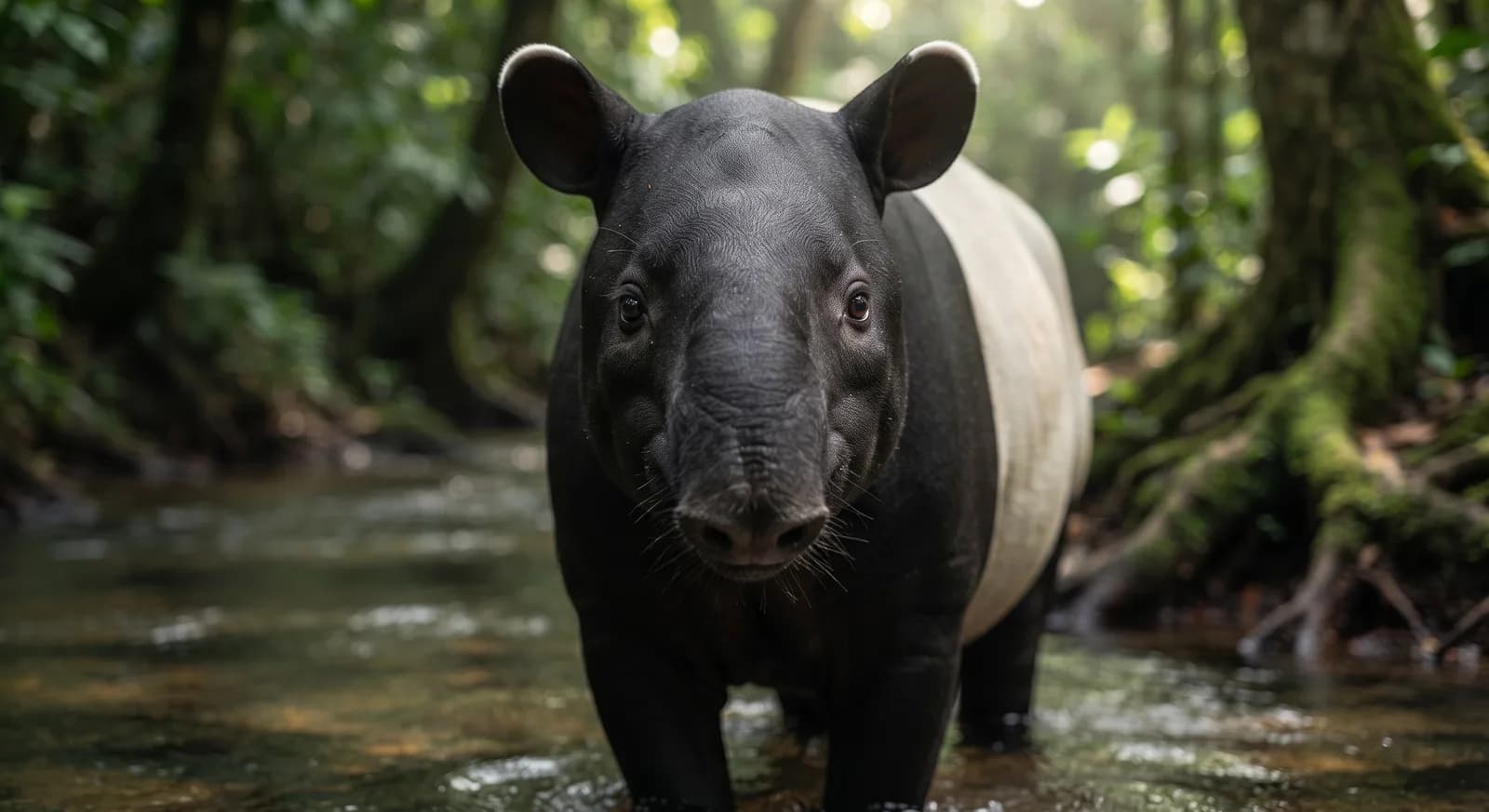
Malayan Tapir
Tapirus indicus
Asia
Vietnam stretches more than one thousand six hundred kilometres along the South China Sea, with two fertile deltas at its ends, the Red River in the north and the Mekong in the south, joined by a narrow strip backed by the Annamite range. That range is one of the most remarkable centres of endemism on the planet and has yielded several mammal species new to science in recent decades. In the north, the karst of Ha Long Bay and Ninh Binh forms thousands of limestone islets and caves, and Phong Nha-Ke Bang holds the largest known underground gallery in the world, with its own forest and its own microclimate inside. The langurs and doucs of the limestone massifs are among the most endangered primates on the planet.
National animal: No official national animal; the water buffalo is the symbolic animal of the country's rural culture
The silver-backed chevrotain, an animal the size of a rabbit with tiny hooves and tusks instead of horns, had not been documented since 1990 and many had given it up for lost. In 2019 a network of camera traps set in a dry forest in the south photographed it again, thirty years on, in one of the most celebrated mammal rediscoveries of the century.
The Cat Ba langur, found only on that island, was reduced to a few dozen animals and is recovering very slowly under permanent watch. Pangolin trafficking, for which Vietnam is a key point on the global route, is one of the country's great conservation problems.
Cat Tien in the dry season for primates and birds. Cuc Phuong year-round, with its primate rescue centre. Tram Chim between December and April for sarus cranes.
272 species found
Based on what we already know about Vietnam.