One of the 5 caecilians on WAnimals
Amphibians · Gymnophiona · Caeciliidae
Bearded Caecilia
Caecilia tentaculata
The species is abundant and widely distributed; it faces no significant short-term risk. See full glossary
The bearded caecilian is one of the largest caecilians in the world: it can exceed eighty centimetres in length. It lives buried in the damp soils of the Amazon rainforest, where it hunts earthworms, termites and other invertebrates. Like the other caecilians it has a compact, reinforced skull adapted to digging by pushing with the head.
Size
40 cm – 90 cm
Lifespan
15 years
Diet
Carnivore
Feeds mainly on other animals.
Activity
Nocturnal
Active mainly at night.
Social structure
Solitary
Lives and hunts alone, joining others only to breed.
Sighting difficulty
Easy
Fun facts
- It is one of the largest caecilians in the world and can exceed eighty centimetres, a size that comes as a surprise in an animal almost nobody sees because it spends its life underground.
- It digs by pushing with its head: its skull is heavily ossified and its jaws close through a muscular system unique among vertebrates, with one muscle working in the opposite direction to the usual.
- It is viviparous and its embryos scrape the nutritive lining of the mother's oviduct with foetal teeth for months, a layer the mother renews continuously.
Life cycle & biology
- Skeleton type
- Vertebrate - internal bony skeleton (amphibian)
- Habitat & environment
- Damp soils of rainforest and riverside forest of the Amazon basin and the Guiana Shield
- Sexual maturity
- 3 years
- Gestation / incubation
- Internal gestation; the young are born fully formed
- Litter / clutch size
- 10 live young
Sources consulted: https://es.wikipedia.org/wiki/Caecilia_tentaculata
Where to find it
See its range on the interactive mapWhere to watch it
Parques y spots de buceo donde se ha documentado esta especie — se muestran 10 de 29 documentados.
Related species
Other species in the catalogue with the most in common with Bearded Caecilia — same habitat, park, country, tags or family.
Water Opossum
Chironectes minimus
Greater Bulldog Bat
Noctilio leporinus
 Least Concern
Ocelot
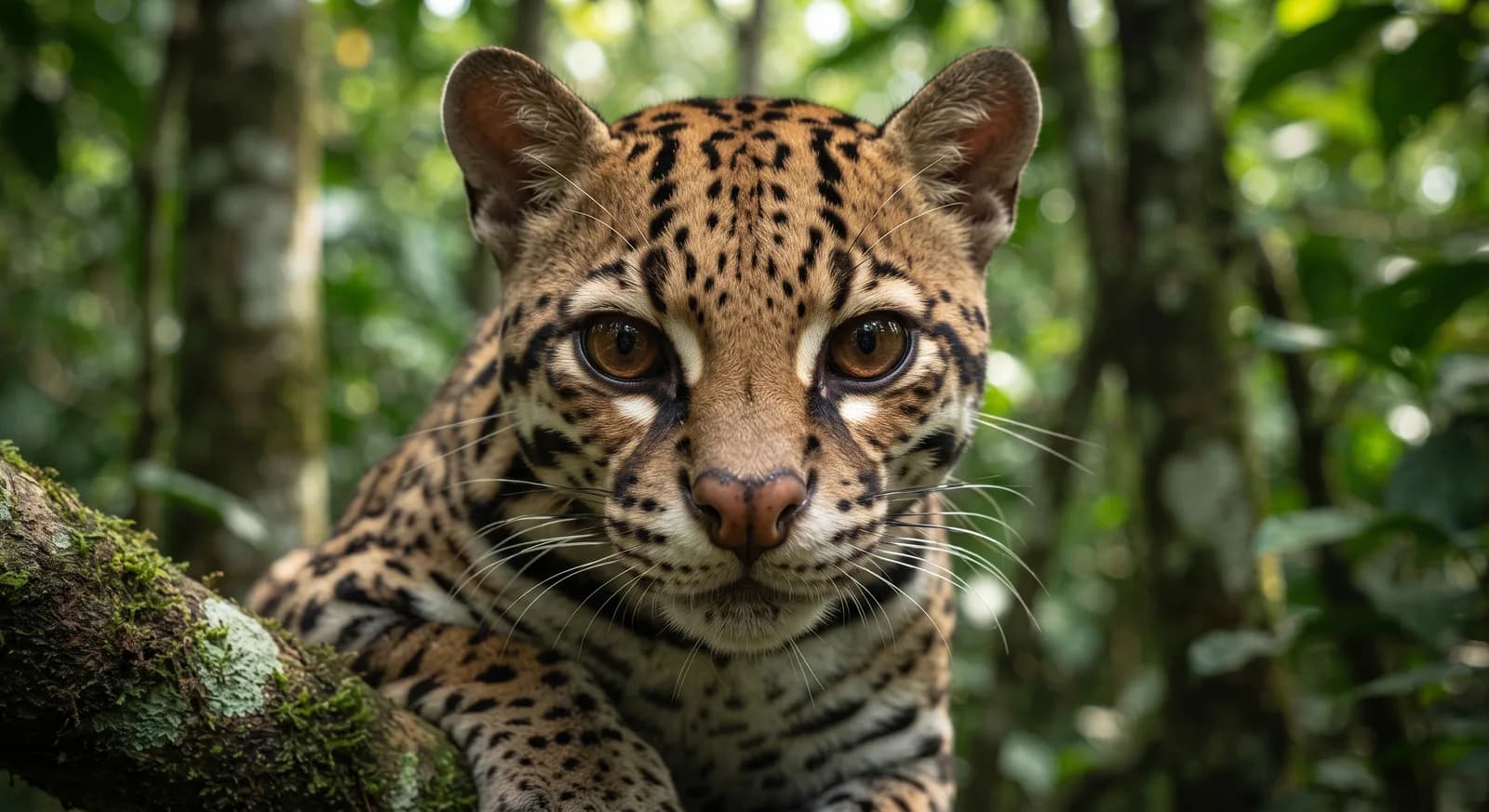
Leopardus pardalis
 Least Concern
Spectacled Caiman
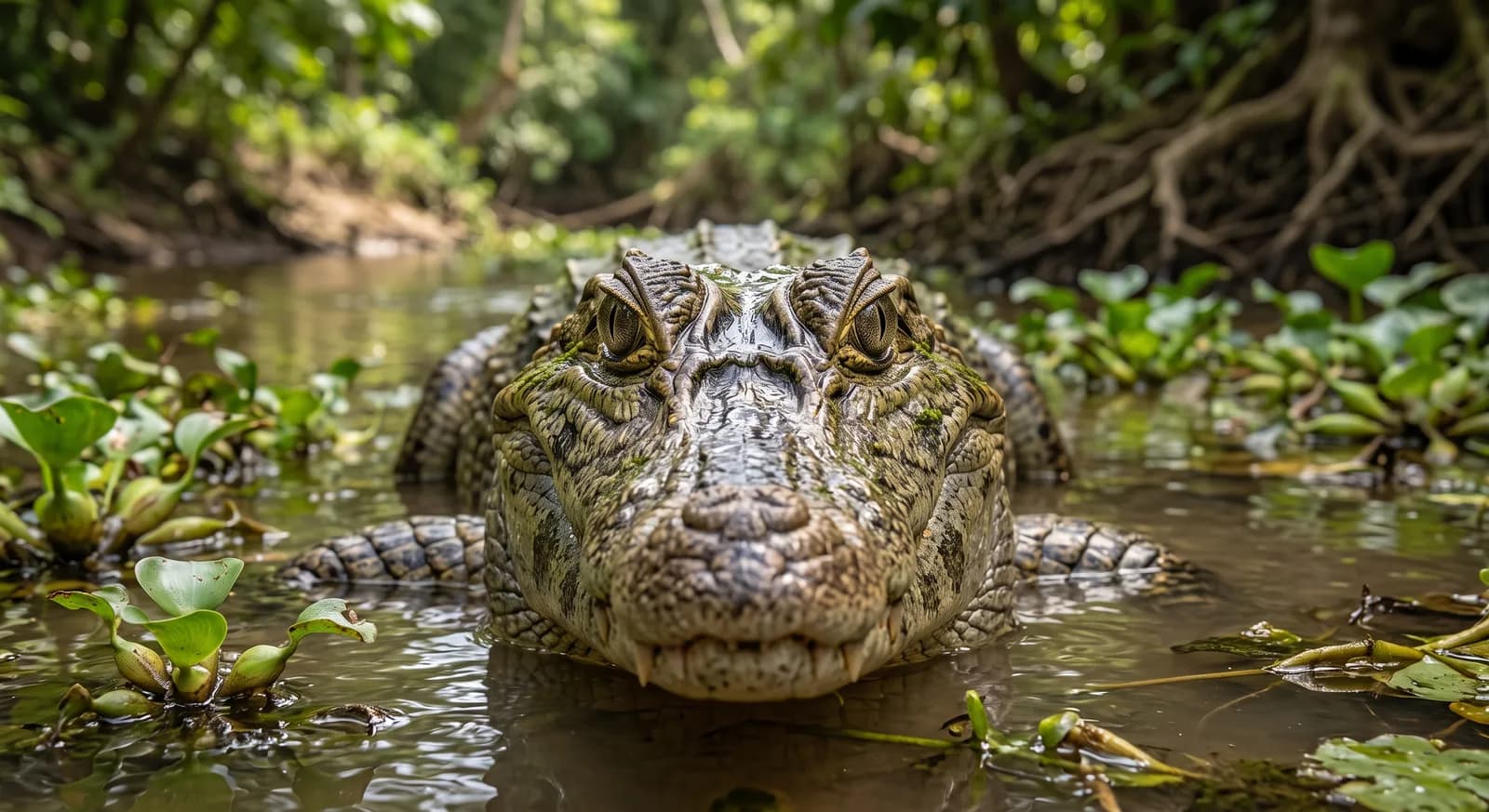
Caiman crocodilus
 Least Concern
Black Caiman
Melanosuchus niger
Dwarf Caiman
Paleosuchus palpebrosus
Keep exploring
Based on what we already know about bearded caecilia.
Comments
Share an experience, a fun fact or a tip for seeing the bearded caecilia.
Be the first to comment.