Birds · Passeriformes · Rhinocryptidae
Chucao Tapaculo
Scelorchilus rubecula
The species is abundant and widely distributed; it faces no significant short-term risk. See full glossary
The chucao tapaculo is a plump, confiding bird of the understorey of the Valdivian forest, with an intensely orange breast and a brown back. It moves along the ground among the quila bamboo and ferns looking for invertebrates, and often approaches walkers rather than fleeing. Its song, powerful and explosive, is one of the most characteristic sounds of the Chilean temperate forest. It is a good indicator of native forest quality: it disappears from small fragments.
Weight
35 g – 45 g
Size
18 cm – 19 cm
Lifespan
8 years
Diet
Insectivore
Feeds mainly on insects and other invertebrates.
Activity
Diurnal
Active mainly during the day.
Social structure
In pairs
Usually lives in pairs, sometimes for life.
Sighting difficulty
Easy
Fun facts
- In Mapuche tradition its call is an omen: depending on which side of the path it comes from and what kind of call it gives, it foretells good or bad luck for the traveller, a belief still alive in southern Chile.
- It is an excellent indicator of the state of the native forest: it needs dense, continuous understorey, and disappears from isolated fragments even where these are still covered in trees.
Life cycle & biology
- Skeleton type
- Vertebrate - internal bony skeleton (bird)
- Habitat & environment
- Dense quila bamboo and fern understorey of the Valdivian temperate rainforest of Chile and Argentina
- Sexual maturity
- 12 months
- Gestation / incubation
- 17 days of incubation
- Litter / clutch size
- 3 eggs
Sources consulted: https://www.iucnredlist.org/ | https://animaldiversity.org/ | https://es.wikipedia.org/
Where to watch it
Parks and dive sites where this species has been documented.
Related species
Other species in the catalogue with the most in common with Chucao Tapaculo — same habitat, park, country, tags or family.
Austral Parakeet
Enicognathus ferrugineus
Crested Caracara
Caracara plancus
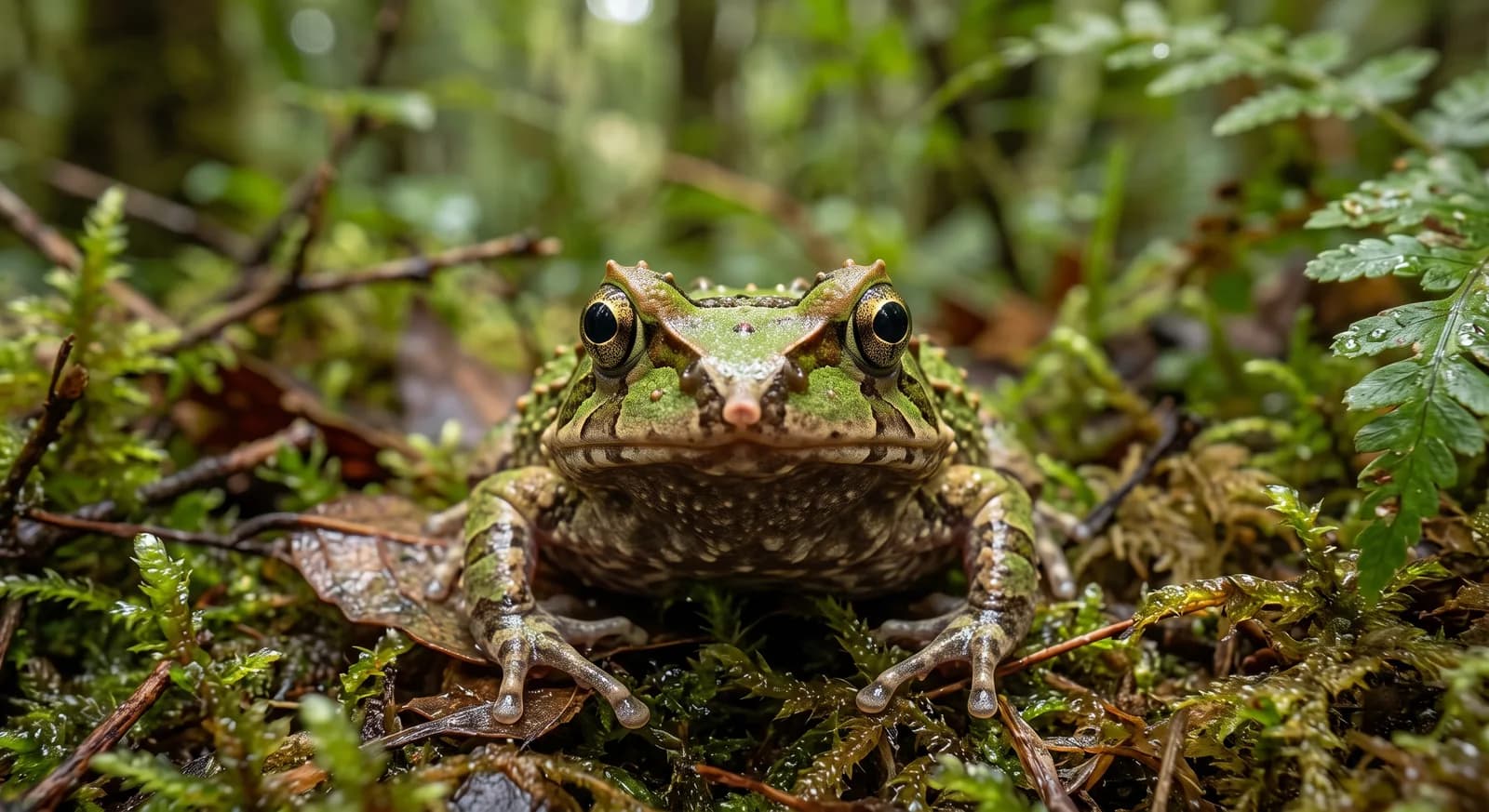 Endangered
Southern Darwin's Frog
Rhinoderma darwinii
Pampas Fox
Lycalopex gymnocercus
Southern Lapwing
Vanellus chilensis
Keep exploring
Based on what we already know about chucao tapaculo.
Comments
Share an experience, a fun fact or a tip for seeing the chucao tapaculo.
Be the first to comment.