Species group · Birds
Gulls
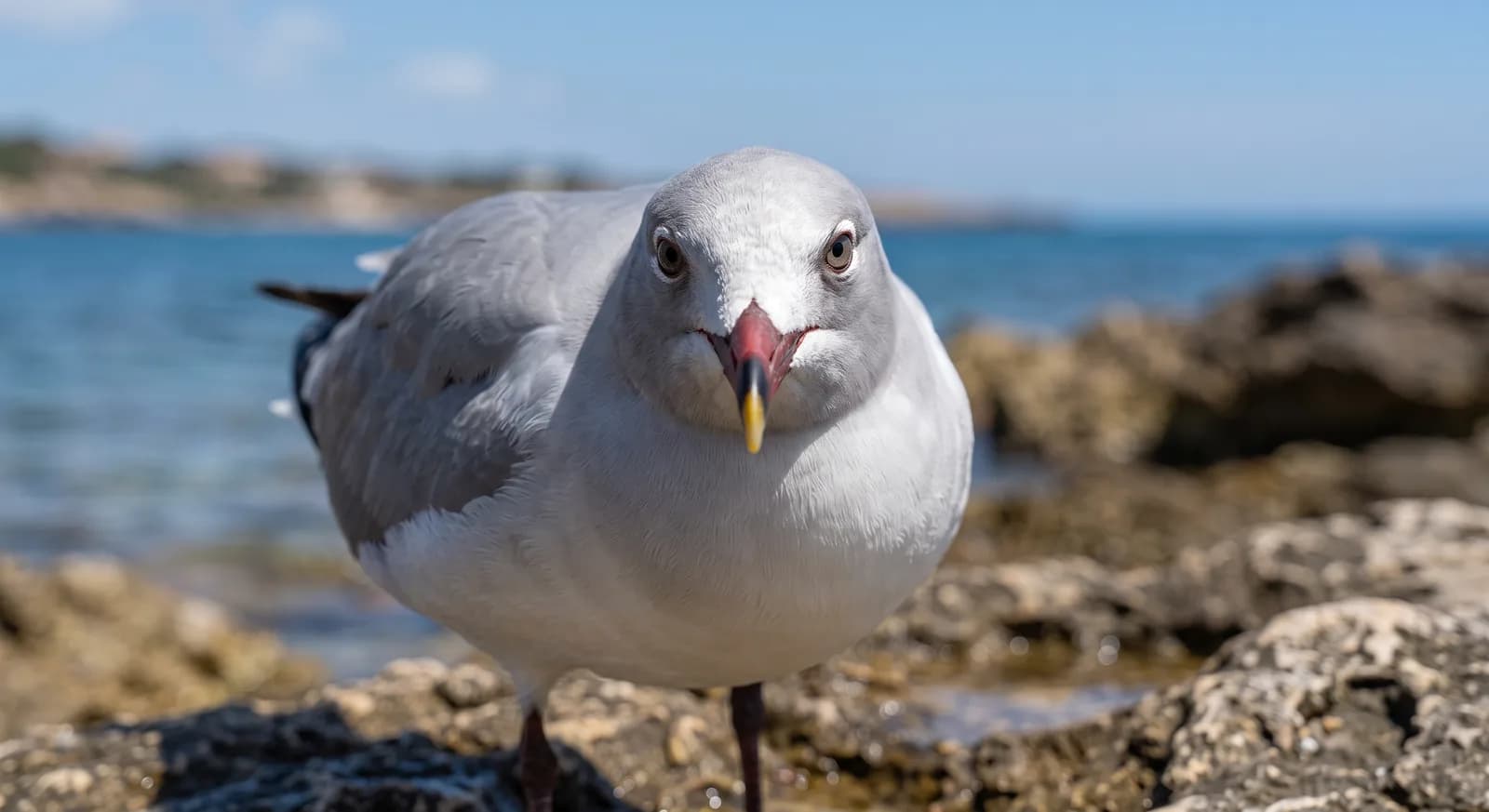
WAnimals has 9 species of gull, all in the family Laridae.
- 9 species
- 1 family
- 95 countries
- 214 parks
- Weight
- 267 g – 1.5 kg
- Length
- 33 cm – 68 cm
- Lifespan
- 15 – 34 years
Ranges calculated from the entries that record the figure, not from all 9.
All 9 species of gulls on WAnimals
Each one has its own full entry. This group does not replace them: it brings them together.
 Least Concern
Audouin's Gull
Ichthyaetus audouinii
Yellow-legged Gull
Larus michahellis
Herring Gull
Larus argentatus
Lesser Black-backed Gull
Larus fuscus
Black-headed Gull
Chroicocephalus ridibundus
Black-legged Kittiwake
Rissa tridactyla
Kelp Gull
Larus dominicanus
Andean Gull
Chroicocephalus serranus
Gray Gull
Leucophaeus modestus
Conservation status
1 especies in this group están en alguna categoría de riesgo real según la UICN.
See the global conservation statusWhere they live
Recorded in 95 countries. The ones with the most species in the group:
Where to see them
- Camargue4 species
- Delta del Ebro4 species
- Islas Cies4 species
- Northumberland4 species
- Ria Formosa4 species
- Albufera de Valencia3 species
- Burren3 species
- Calzada del Gigante3 species
- Costa de Dorset y Devon Oriental3 species
- Mar de Frisia (Dinamarca)3 species
- Oosterschelde3 species
- Parque Nacional de Doñana3 species
- Islas Chafarinasdiving
Did you know…
Almost 90% of the world population breeds in Spain, above all in the Ebro delta.
From Audouin's Gull
It is a gull all but endemic to the Mediterranean, far scarcer than other gulls, and depends heavily on colonies concentrated on a handful of islands and deltas.
From Audouin's Gull
It went from fewer than a thousand pairs in the 1960s to more than twenty thousand, and Spain came to hold 90% of the world population: it is one of the greatest recoveries of a seabird in Europe.
From Audouin's Gull
The commonest large gull on the Spanish coast; it now breeds on the rooftops of many cities.
From Yellow-legged Gull
It is a case of a native species turned problem: its population explosion, fed by landfill sites and fishery discards, has made it a predator threatening colonies of storm petrels, shearwaters and terns on islets throughout the Mediterranean.
From Yellow-legged Gull
It breeds on the rooftops of Spanish coastal cities and defends the nest by attacking residents who come out onto the roof terrace, which causes recurrent conflict in Barcelona, Valencia and Cádiz.
From Yellow-legged Gull
Chicks learn to associate the red spot on an adult's bill with the cue to beg for food, a behaviour extensively studied in ethology.
From Herring Gull
It eats fish, marine invertebrates, eggs, carrion and human refuse.
From Herring Gull