One of the 9 gulls on WAnimals
Birds · Charadriiformes · Laridae
Black-headed Gull
Chroicocephalus ridibundus
The species is abundant and widely distributed; it faces no significant short-term risk. See full glossary
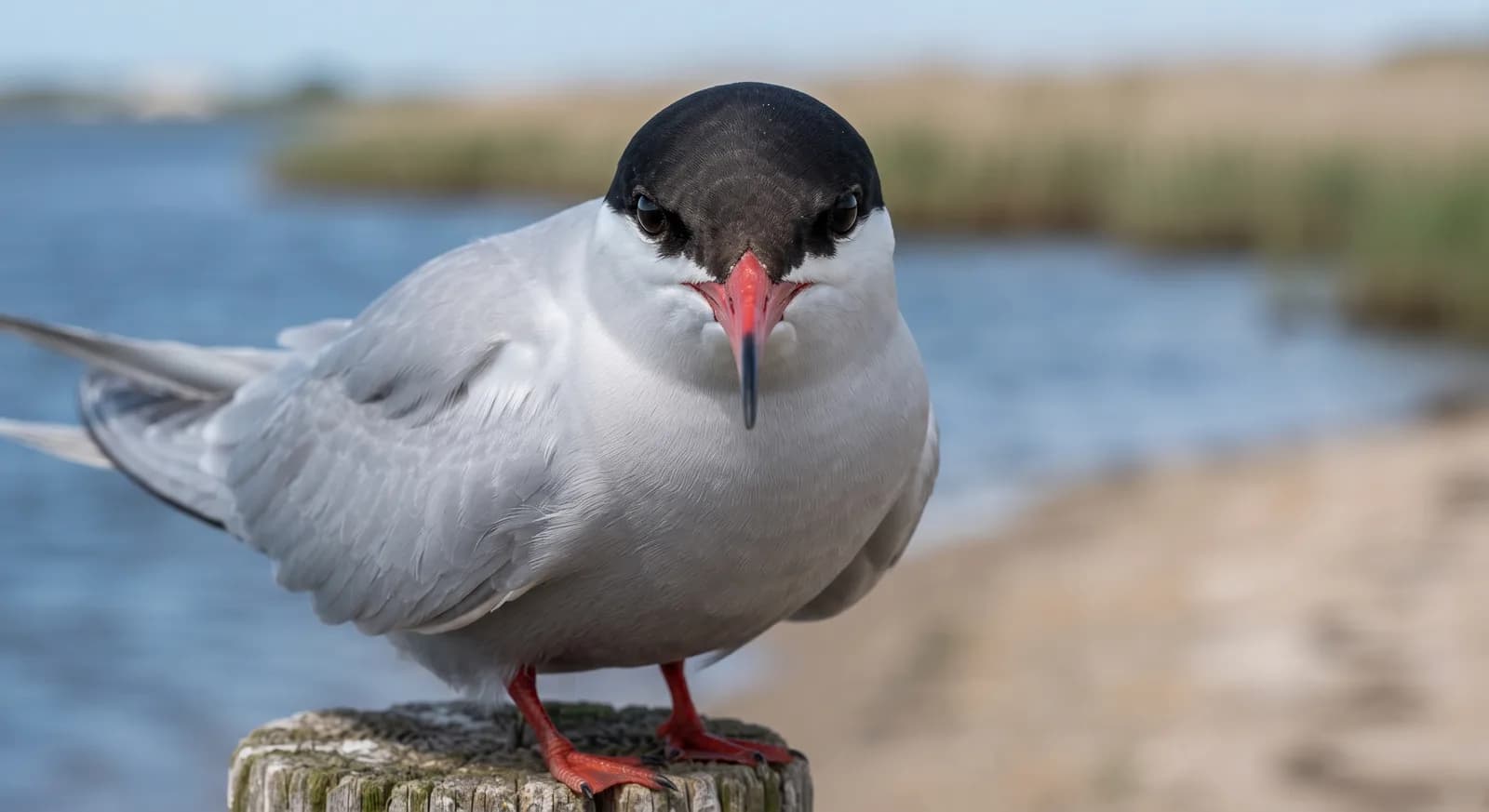
The black-headed gull is the commonest small gull in Europe, recognisable in summer by its chocolate-brown hood and in winter by a simple dark smudge behind the eye. It breeds in colonies in freshwater and brackish wetlands, and outside the breeding season it spreads out across coasts, farmland, reservoirs and cities. It is extraordinarily adaptable and follows tractors during fieldwork to snap up the invertebrates turned out of the soil.
Weight
267 g – 294 g
Size
34 cm – 44 cm
Lifespan
32 years
Diet
Omnivore
Combines animal and plant food depending on availability.
Activity
Diurnal
Active mainly during the day.
Social structure
Colony
Lives in large concentrations, often for breeding reasons.
Sighting difficulty
Easy
Fun facts
- comunicaciónFor all its name, its call is nothing like a laugh but a shrill, repeated shriek used mostly in alarm or in territorial disputes.
- Its hood is not black but chocolate brown, and does not cover the whole head but only reaches the nape: in winter it loses it and only a dark smudge behind the eye remains.
- It was one of the key species in Niko Tinbergen's classic studies of animal behaviour, which won him the Nobel Prize: its colonies served to describe how social signals and responses to predators work.
Life cycle & biology
- Skeleton type
- Vertebrate - internal bony skeleton (bird)
- Habitat & environment
- Marshes, lagoons, deltas, reservoirs, harbours and farmland of Eurasia
- Sexual maturity
- 2 years
- Gestation / incubation
- 22 days
- Litter / clutch size
- 3
Sources consulted: https://es.wikipedia.org/wiki/Chroicocephalus_ridibundus
Where to find it
See its range on the interactive mapWhere to watch it
Parques y spots de buceo donde se ha documentado esta especie — se muestran 10 de 53 documentados.
Related species
Other species in the catalogue with the most in common with Black-headed Gull — same habitat, park, country, tags or family.
Great Black-backed Gull
Larus marinus
Yellow-legged Gull
Larus michahellis
Herring Gull
Larus argentatus
Sandwich Tern
Thalasseus sandvicensis
Whiskered Tern
Chlidonias hybrida
 Least Concern
Common Tern
Sterna hirundo
Keep exploring
Based on what we already know about black-headed gull.
Comments
Share an experience, a fun fact or a tip for seeing the black-headed gull.
Be the first to comment.