Species group · Birds
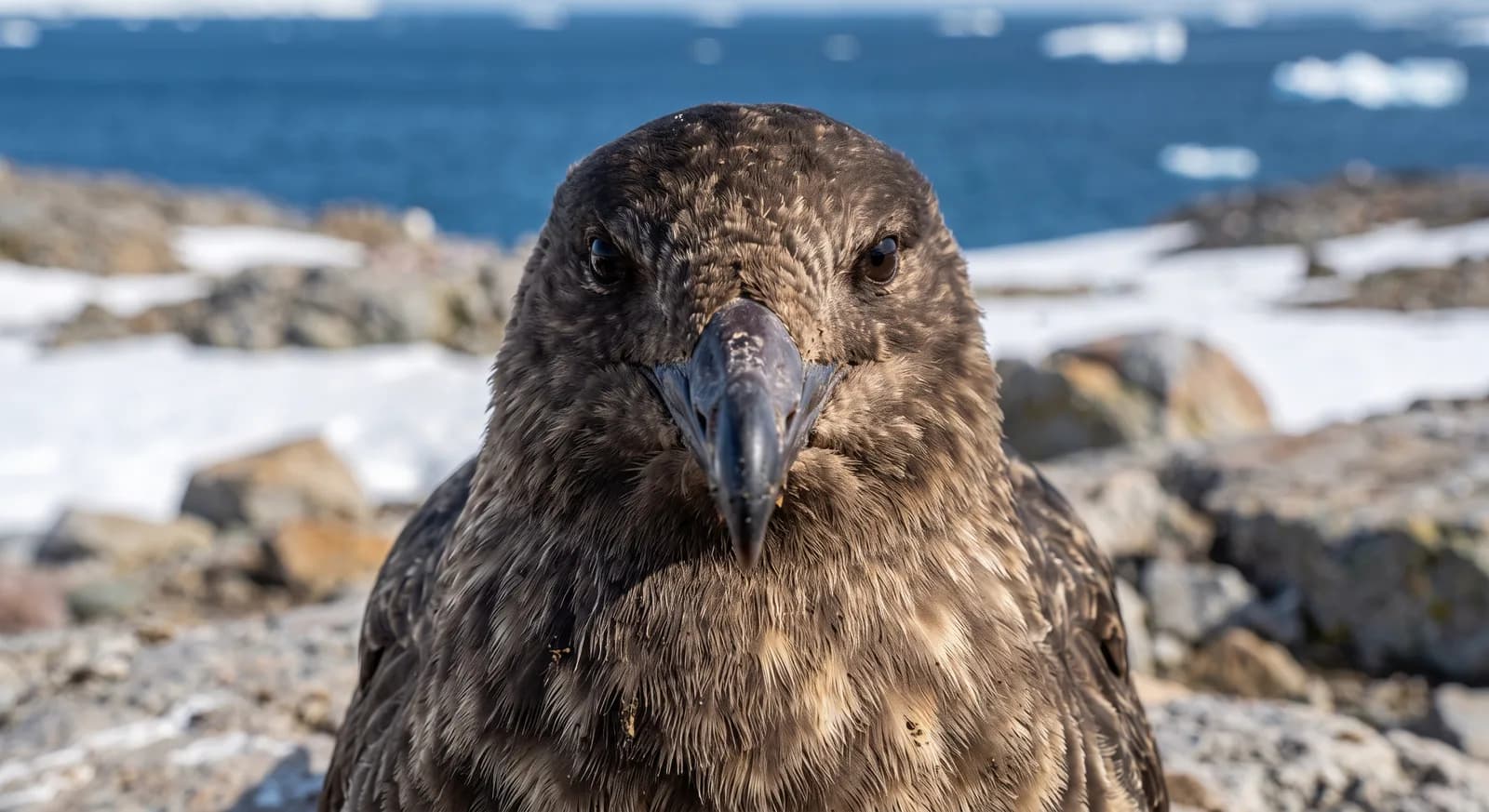
Skuas
WAnimals has 3 species of skua, all in the family Stercorariidae.
- 3 species
- 1 family
- 29 countries
- 50 parks
- Weight
- 300 g – 1.9 kg
- Length
- 41 cm – 58 cm
- Lifespan
- 25 – 30 years
Ranges calculated from the entries that record the figure, not from all 3.
All 3 species of skuas on WAnimals
Each one has its own full entry. This group does not replace them: it brings them together.
Conservation status
No species documented in this group is genuinely at risk according to the IUCN, with the data available today.
See the global conservation statusWhere they live
Recorded in 29 countries. The ones with the most species in the group:
Where to see them
Did you know…
It is one of the very few birds observed at the geographic South Pole, and it also migrates in the austral winter as far as the waters of Greenland and Alaska: few species in the world cover such an enormous span of latitude.
From South Polar Skua
Of its two eggs both chicks rarely survive: the elder usually attacks the younger systematically until it is gone, an obligate siblicide common in several seabirds.
From South Polar Skua
It is a specialist kleptoparasite: it chases terns and gulls with extraordinary agility, matching every turn of its victim until it drops its catch, and takes it in mid-air before it hits the water.
From Parasitic Jaeger
Two colour morphs, pale and dark, occur in the same population, and their proportions vary with latitude: dark birds predominate in the south and pale ones in the high Arctic.
From Parasitic Jaeger
In the Arctic it defends its nest by diving at foxes, reindeer and people, striking the intruder's head with its feet.
From Parasitic Jaeger
It is a professional pirate: it chases a gannet far larger than itself, grabs it by the wing or the tail and harries it until it regurgitates its fish, which the skua then catches in mid-air.
From Great Skua
It dive-bombs anyone who approaches its nest, human beings included, and in Iceland and Scotland walkers are advised to hold a stick above their head during the breeding season.
From Great Skua