One of the 8 pelicans on WAnimals
Birds · Pelecaniformes · Pelecanidae
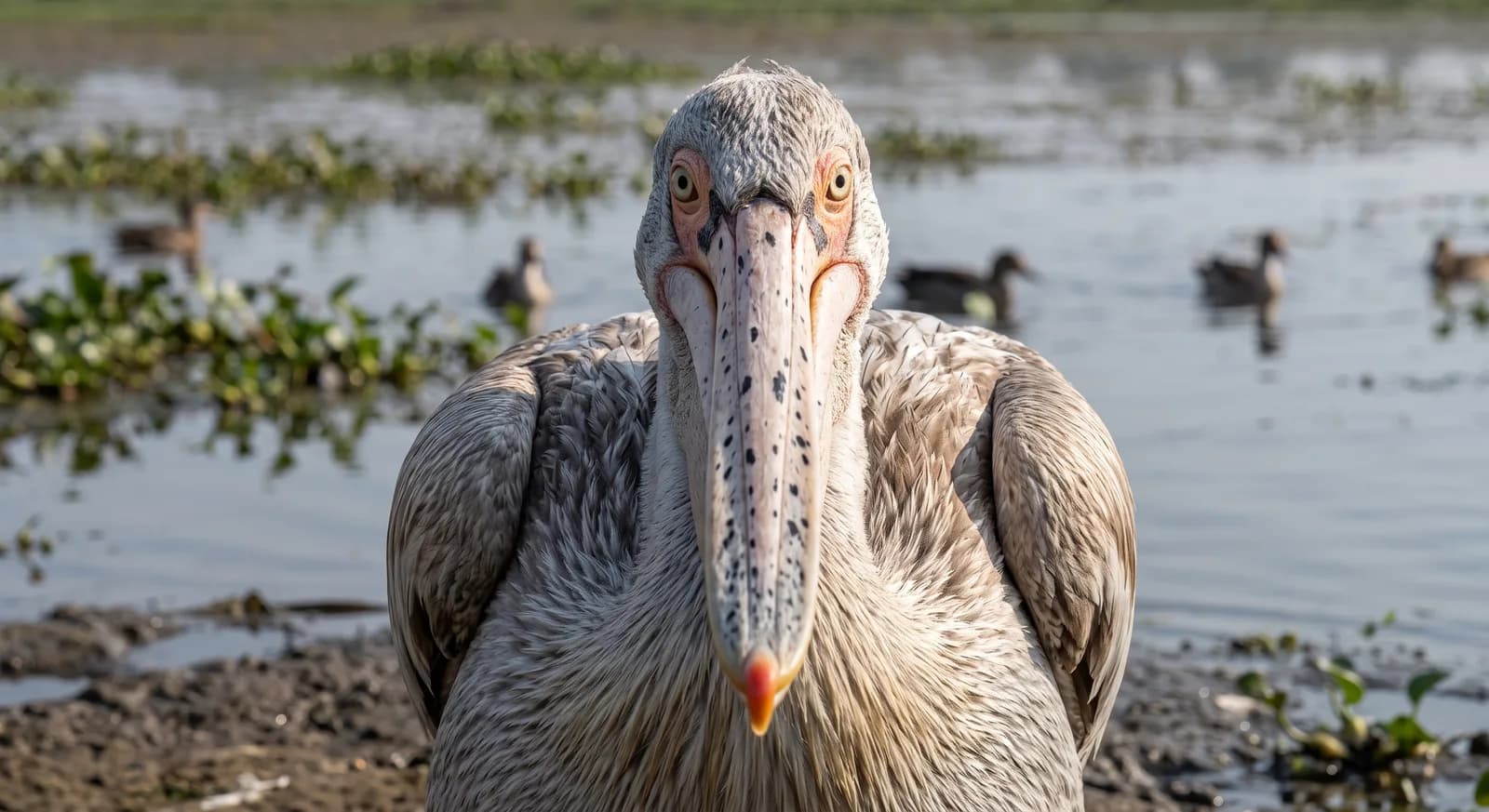
Spot-billed Pelican
Pelecanus philippensis
It could become endangered in the near future if current threats go unchecked. See full glossary
A medium-sized pelican within the genus, smaller and greyer than its congeners, and without bright colours. Its diagnostic feature is the dark spotting on the upper mandible, which gives it its name. At a distance it is hard to separate from the other pelicans of the region; only close up are the spotted bill and the overall greyish tone apparent.
Weight
4 kg – 6 kg
Diet
Piscivore
Feeds mainly on fish.
Activity
Diurnal
Active mainly during the day.
Social structure
Colony
Lives in large concentrations, often for breeding reasons.
Sighting difficulty
Moderate
Estimated population
Its range covers between 129,000 and 181,000 km²; the largest remaining populations are in India, Sri Lanka, southern Cambodia and Sumatra
Fun facts
- Its breeding is now confined to Sri Lanka, parts of south-eastern India and Cambodia, though historically it was seen in Java, Pakistan, Nepal, Turkey, Laos, China, Vietnam and the Philippines.
- Pelicans appear in Christian tradition as a symbol of maternal love and, in Islamic tradition, are said to have helped build the Kaaba in Mecca.
- It was described by Gmelin in 1789 from a specimen collected on the island of Luzon, in the Philippines, from which its epithet comes.
Life cycle & biology
- Skeleton type
- Vertebrate - internal bony skeleton (bird)
- Habitat & environment
- Lowland freshwater, brackish and marine wetlands of South-East Asia, mainly near open water and large shallow lakes. It submerges only slightly below the surface, never to any depth. In the breeding season it needs large trees, preferring bare or dead ones; in some areas it nests in large colonies close to human settlements
- Gestation / incubation
- 30 - 36 days
- Litter / clutch size
- 1-3 oval, white, rough-textured eggs, exceptionally up to 6. Incubation lasts 30-36 days. Hatching success in undisturbed pairs can reach 95%, but through sibling competition or cainism only one chick usually survives the first weeks in the wild; in this species the chicks survive longer than in the rest of the genus. Both parents feed them by regurgitation and, after a week, the chicks already put their heads into the adults' gular pouch to feed themselves
Sources consulted: IUCN Red List; BirdLife DataZone; Animal Diversity Web (McCubbrey, Kalamazoo College); Wikipedia (Spot-billed pelican); Brisson 1760; Gmelin 1789
Where to find it
See its range on the interactive mapBest time: All year round on the great lakes and wetlands of southern Asia
Where to watch it
Parks and dive sites where this species has been documented.
Related species
Other species in the catalogue with the most in common with Spot-billed Pelican — same habitat, park, country, tags or family.
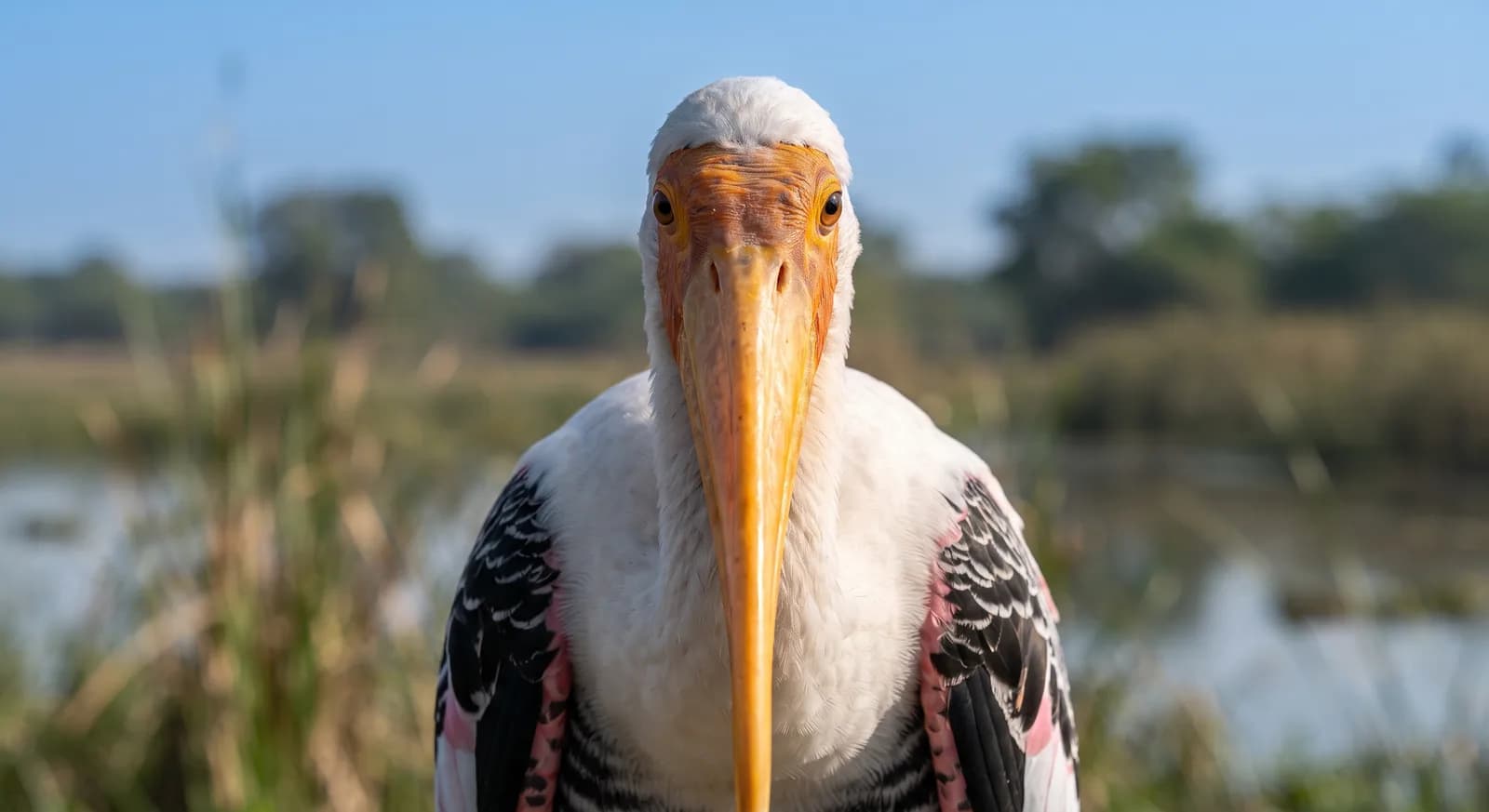 Near Threatened
Painted Stork
Mycteria leucocephala
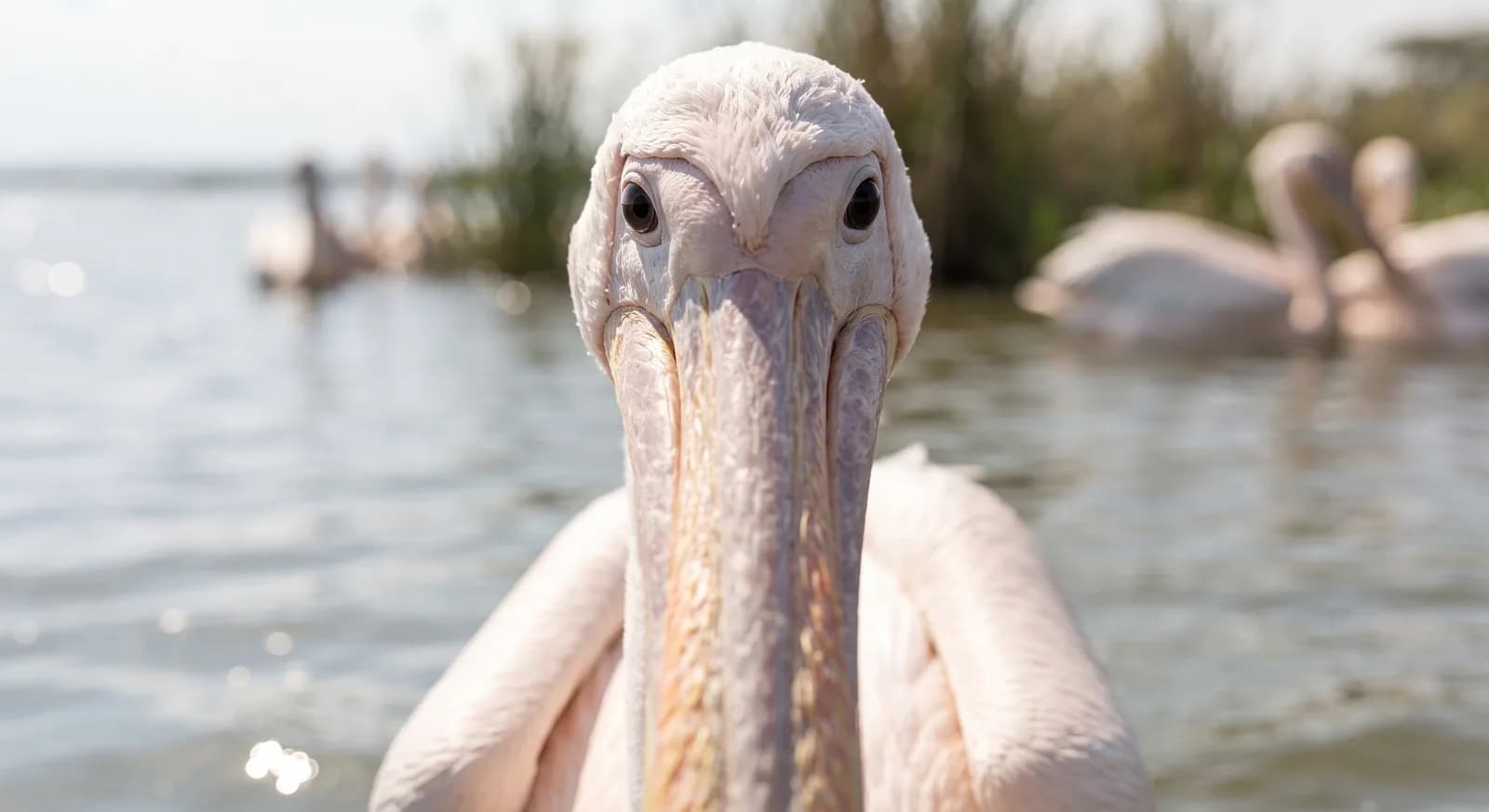 Least Concern
Great White Pelican
Pelecanus onocrotalus
Ferruginous Duck
Aythya nyroca
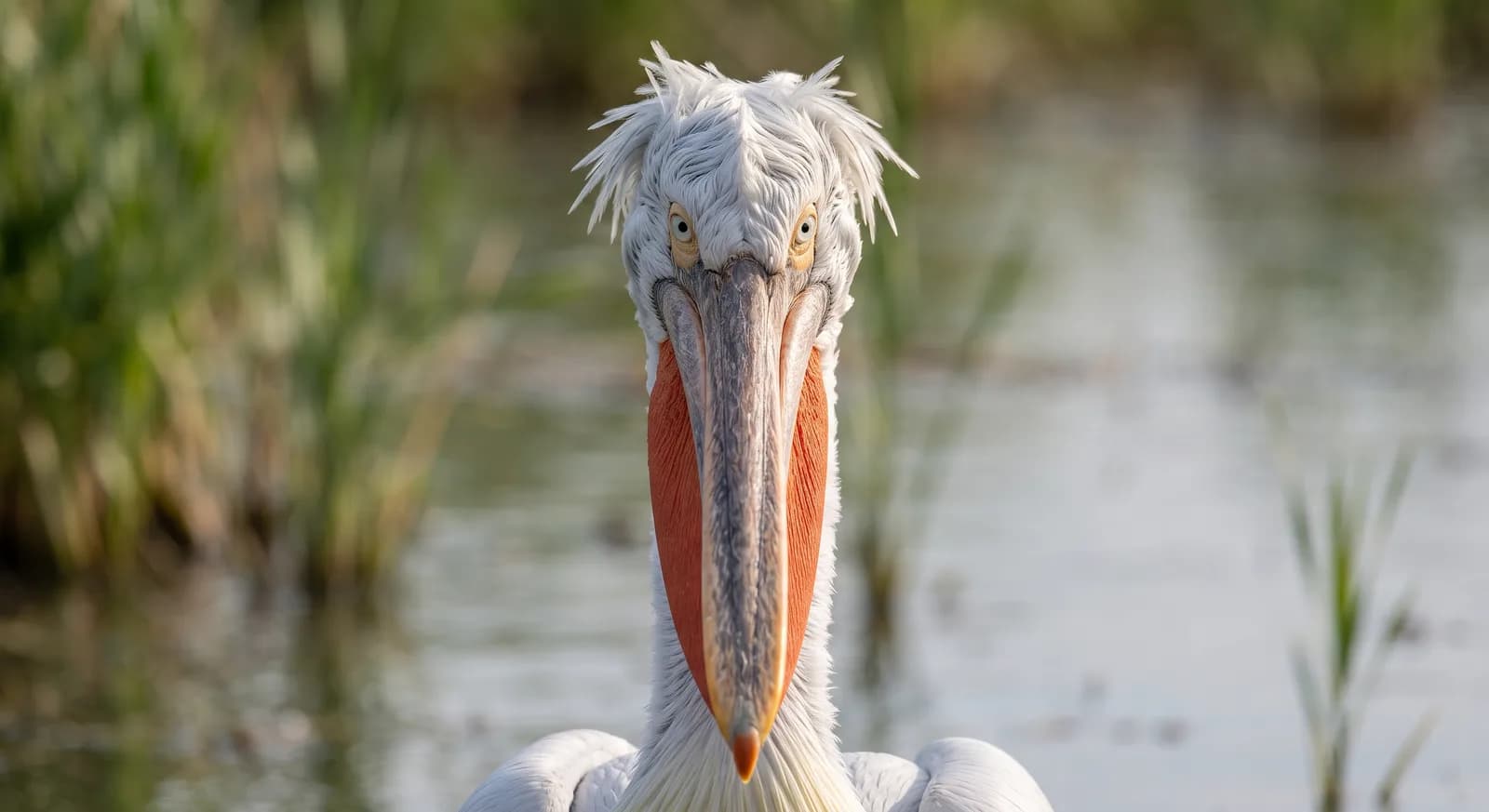 Near Threatened
Dalmatian Pelican
Pelecanus crispus
Peruvian Pelican
Pelecanus thagus
Cattle Egret
Bubulcus ibis
Keep exploring
Based on what we already know about spot-billed pelican.
Comments
Share an experience, a fun fact or a tip for seeing the spot-billed pelican.
Be the first to comment.