One of the 4 diving ducks on WAnimals
Birds · Anseriformes · Anatidae
Ferruginous Duck
Aythya nyroca
It could become endangered in the near future if current threats go unchecked. See full glossary
A medium-sized diving duck. The breeding male is a deep dark chestnut on the head, breast and flanks, with pure white undertail coverts that contrast sharply. In flight the white belly and a white wing bar show. Females are duller and browner. The male has a yellow or whitish eye, which gives the species its English name of white-eyed pochard; the female's is dark.
Weight
400 g – 750 g
Size
38 cm – 42 cm
Lifespan
12 years
Diet
Omnivore
Combines animal and plant food depending on availability.
Activity
Diurnal
Active mainly during the day.
Sighting difficulty
Moderate
Estimated population
Almost extinct as a breeder in Spain
Fun facts
- Its decline in the Spanish wetlands began in the middle of the last century with the conversion of lagoons and floodplains, especially the Guadalquivir marshes, though it was probably never very common here.
- Its scientific name combines the Greek aithuia, a seabird mentioned by Aristotle and Hesychius, with the Russian nyrok, meaning pochard.
- Its conservation in Spain now depends more on what happens in other countries than on what is done here.
- In Spain it is listed as in danger of extinction and its population is counted in dozens of pairs: it is one of the most threatened waterbirds in the country.
- It is extremely unobtrusive: it keeps to the marsh vegetation rather than open water, and detecting it in surveys requires dedicated searching.
- Wetland restoration projects in Valencia and Andalusia have brought it back to breed on lagoons from which it had been absent for decades.
Life cycle & biology
- Skeleton type
- Vertebrate - internal bony skeleton (bird)
- Habitat & environment
- Shallow fresh water with abundant submerged and floating vegetation and dense belts of emergent vegetation at the margins. In some areas it uses brackish pools. On passage and in winter it also frequents coastal waters, inland seas and large open lagoons
- Sexual maturity
- 12 months
- Gestation / incubation
- 26 days of incubation
- Litter / clutch size
- 9 eggs
Sources consulted: IUCN Red List; SEO/BirdLife (ficha); Threatened Waterfowl Specialist Group; Güldenstädt 1770; BWP (Birds of the Western Palearctic)
Where to find it
See its range on the interactive mapBest time: Very hard to see in Spain given how rare it now is
Where to watch it
Parques y spots de buceo donde se ha documentado esta especie — se muestran 10 de 15 documentados.
Related species
Other species in the catalogue with the most in common with Ferruginous Duck — same habitat, park, country, tags or family.
Northern Shoveler
Spatula clypeata
Tufted Duck
Aythya fuligula
 Least Concern
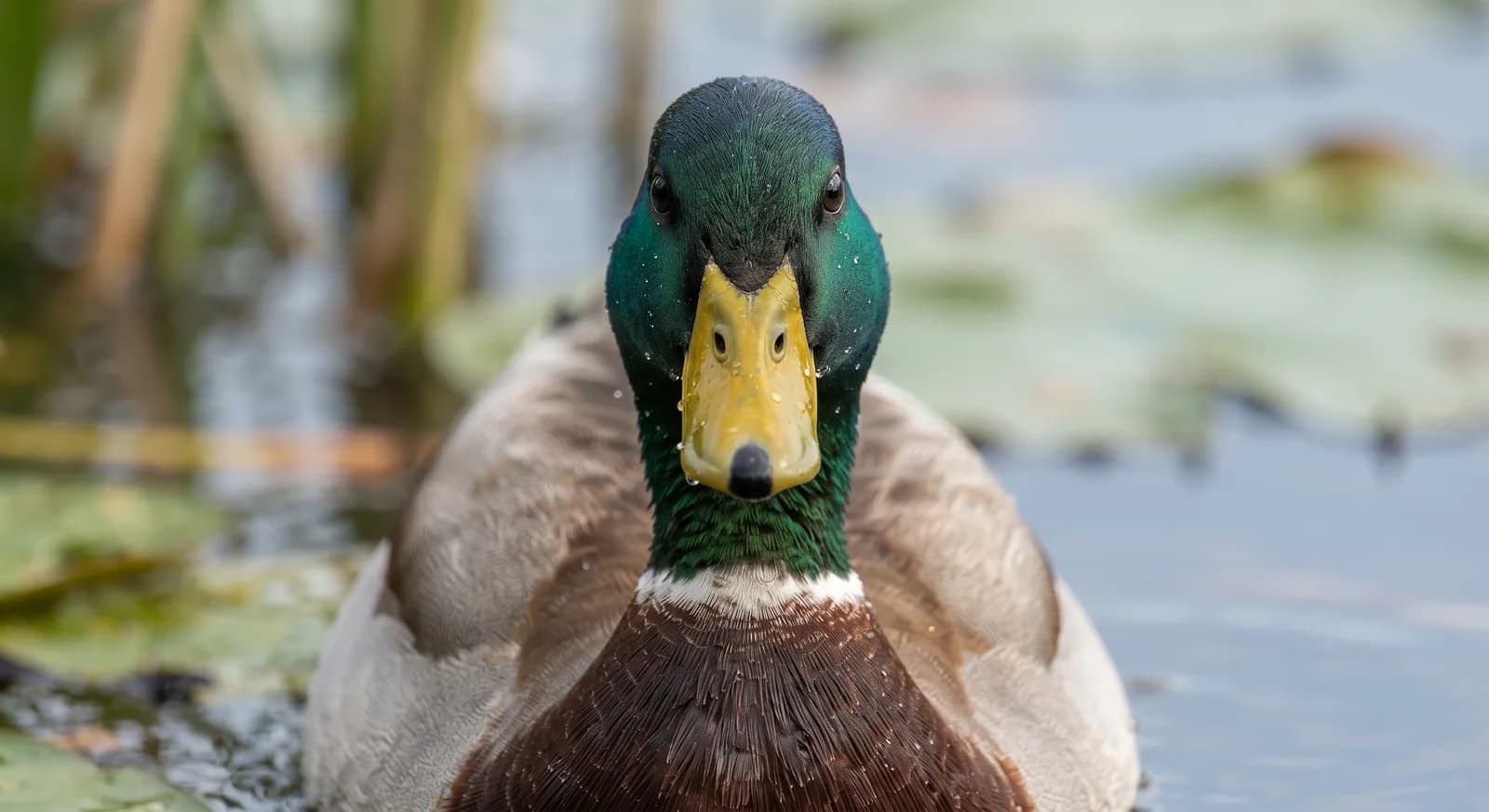
Mallard
Anas platyrhynchos
Ruddy Shelduck
Tadorna ferruginea
Common Shelduck
Tadorna tadorna
Common Pochard
Aythya ferina
Keep exploring
Based on what we already know about ferruginous duck.
Comments
Share an experience, a fun fact or a tip for seeing the ferruginous duck.
Be the first to comment.