One of the 4 diving ducks on WAnimals
Birds · Anseriformes · Anatidae
Common Pochard
Aythya ferina
It faces a high risk of extinction in the wild over the medium term. See full glossary
A typical diving duck of compact build, with a short tail, strong legs and a whirring flight, which swims with its body low in the water and its tail down. The breeding male has a reddish-chestnut head and neck, a greyish back and flanks and a black breast and stern. The bill is dark with a greyish band across it, and the eye is red. The head has a characteristic triangular outline.
Weight
823 g on average
Size
42 cm – 49 cm
Lifespan
6 years
Diet
Omnivore
Combines animal and plant food depending on availability.
Activity
Diurnal
Active mainly during the day.
Social structure
In pairs
Usually lives in pairs, sometimes for life.
Sighting difficulty
Moderate
Estimated population
In Spain it is abundant but localised; it is the commonest and most widespread diving duck in the country
Fun facts
- GeneralA diving duck that feeds on submerged plants 2-3 m down.
- It went from Least Concern to Vulnerable in 2015 because of rapid declines across its range: it is a clear case of a common species collapsing without anyone noticing.
- The causes of its decline in Russia are a revealing mosaic: steppe droughts, the abandonment of fish farms that served it as habitat, the hypereutrophication of lakes, the loss of black-headed gull colonies in its wetlands, and the spread of the invasive American mink and raccoon dog.
- It is considered a potential vector of highly pathogenic avian influenza, and its genetic structure has been studied for that reason.
Life cycle & biology
- Skeleton type
- Vertebrate - internal bony skeleton (bird)
- Habitat & environment
- Deep lagoons, reservoirs and gravel pits
- Birth weight
- Precocial: born covered in down and leaves the nest within a few hours
- Size at birth
- Precocial: born covered in down and leaves the nest within a few hours
- Sexual maturity
- 12 months
- Gestation / incubation
- 24-26 days of incubation
- Litter / clutch size
- 6-11 eggs per clutch
Sources consulted: IUCN Red List (reclasificado en 2015); EUNIS - Agencia Europea de Medio Ambiente; SEO/BirdLife; Fox et al. 2020, Avian Research 11 (revisión del estatus en Rusia); Liu, Keller y Heckel 2011, Ecology and Evolution; Directiva Aves; Linnaeus 1758; Boie 1822
Where to find it
See its range on the interactive mapBest time: Mainly in winter, when the Spanish wetlands receive contingents from other latitudes
Where to watch it
Parques y spots de buceo donde se ha documentado esta especie — se muestran 10 de 108 documentados.
Related species
Other species in the catalogue with the most in common with Common Pochard — same habitat, park, country, tags or family.
Northern Shoveler
Spatula clypeata
Whooper Swan
Cygnus cygnus
Tufted Duck
Aythya fuligula
Goosander
Mergus merganser
 Least Concern
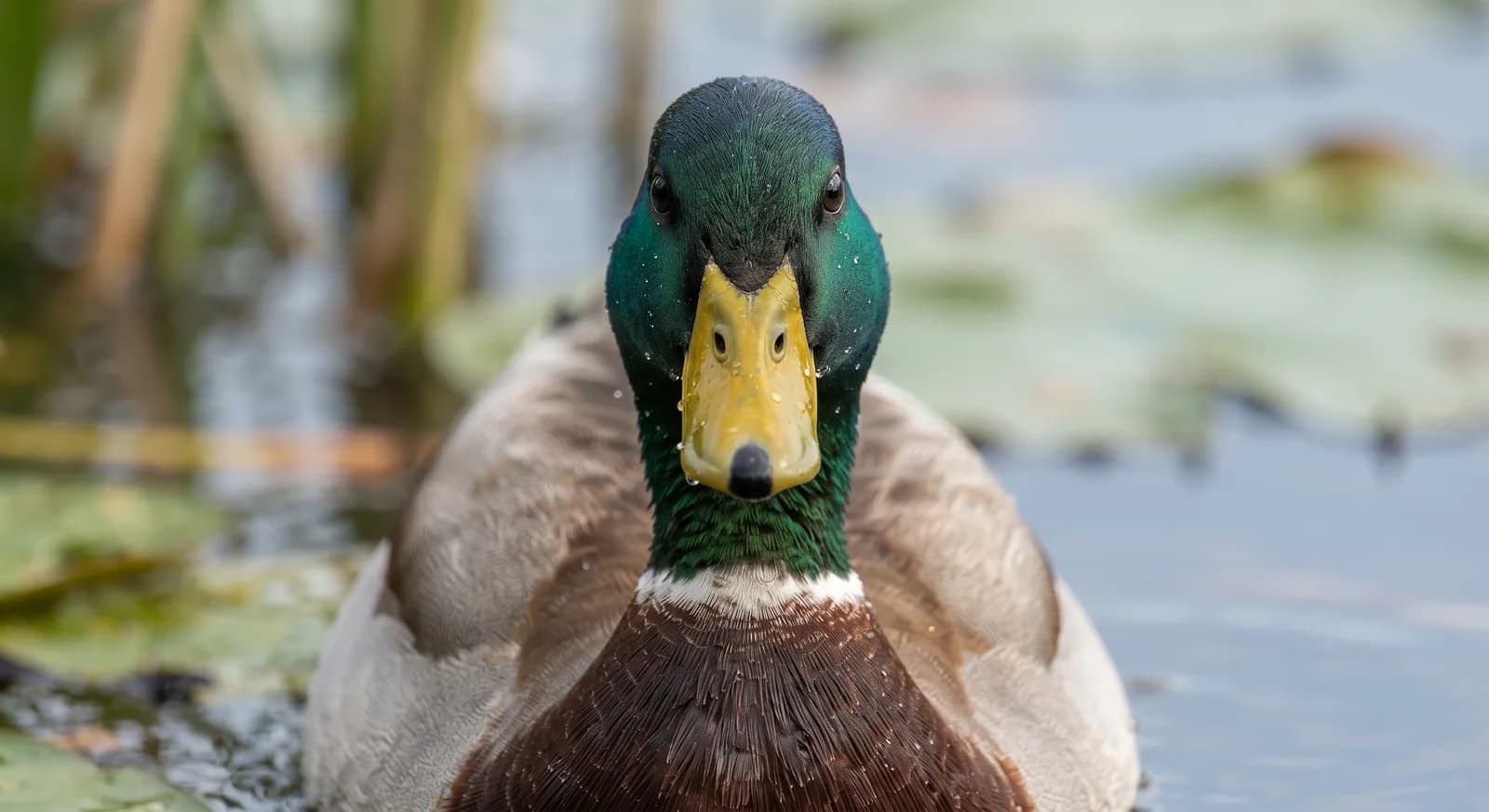
Mallard
Anas platyrhynchos
Ruddy Shelduck
Tadorna ferruginea
How to help
The common pochard is classified as vulnerable. Organizations such as UICN, WWF y Wildlife Conservation Society work specifically on its conservation and that of its habitat; looking into their programs is a good starting point if you want to get involved.
It's documented in 10 real protected areas — part of why protecting these places matters for its conservation.
Keep exploring
Based on what we already know about common pochard.
Comments
Share an experience, a fun fact or a tip for seeing the common pochard.
Be the first to comment.