One of the 4 storks on WAnimals
Birds · Ciconiiformes · Ciconiidae
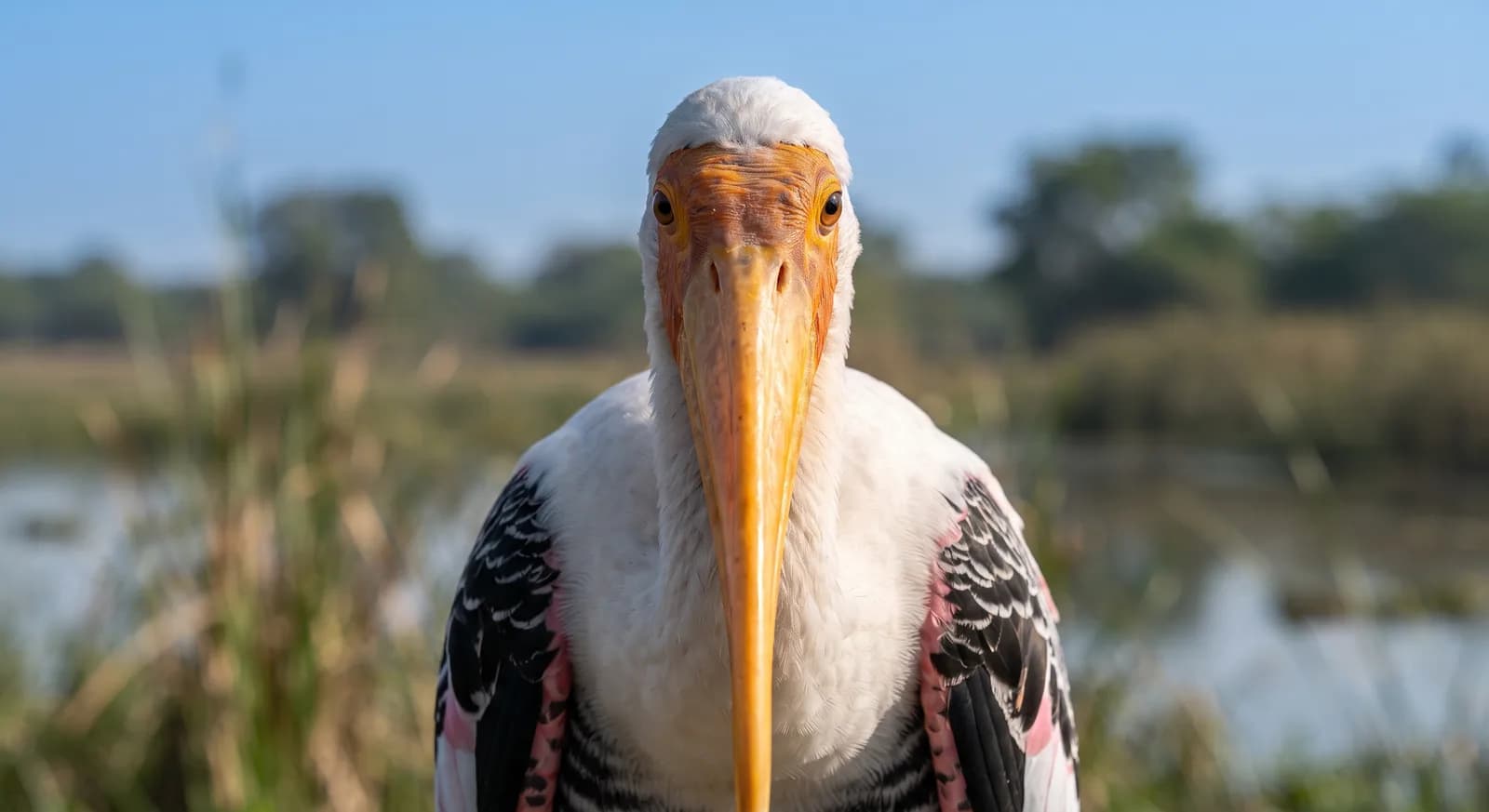
Painted Stork
Mycteria leucocephala
It could become endangered in the near future if current threats go unchecked. See full glossary
A large white wader with bare skin on the face of an intense reddish orange, reddish legs and a heavy, downcurved yellow bill recalling an ibis's. Its long tertials, tipped with pink, spread over its back at rest and give it its name. It has a black breast band with white scalloping.
Weight
2 kg – 5 kg
Size
93 cm – 1 m
Diet
Piscivore
Feeds mainly on fish.
Activity
Diurnal
Active mainly during the day.
Social structure
Colony
Lives in large concentrations, often for breeding reasons.
Sighting difficulty
Moderate
Fun facts
- It hunts by touch, not by sight: it puts its half-open bill into the murky water and sweeps it from side to side until it brushes a fish, a technique known as tactolocation.
- As it wades it waggles one foot back and forth and suddenly opens the wing on that same side to flush hidden fish.
- It is the only member of the genus Mycteria with a black breast band.
Life cycle & biology
- Skeleton type
- Vertebrate - internal bony skeleton (bird)
- Habitat & environment
- Lowland wetlands of tropical Asia, south of the Himalaya, from the Indian subcontinent to South-East Asia. It nests in trees, in colonies that may gather several thousand pairs and are often shared with other waterbirds
- Birth weight
- Altricial: born blind, naked or with sparse down and entirely dependent
- Size at birth
- The chicks hatch altricial, featherless and with their eyes closed
- Gestation / incubation
- About 30 days, with both sexes incubating
- Litter / clutch size
- 3-4 eggs, one clutch a year. The chicks fledge at 60 days
- Lifespan in captivity
- Up to 28 years
Sources consulted: IUCN Red List (BirdLife International 2023); Animal Diversity Web (Universidad de Michigan); Urfi 1993, Colonial Waterbirds 16; Urfi y Kalam 2006, Waterbirds 29(4); Rasmussen y Anderson 2005, Birds of South Asia
Where to find it
See its range on the interactive mapBest time: It breeds from August to October in northern India and from November to March in the south
Where to watch it
Parks and dive sites where this species has been documented.
Related species
Other species in the catalogue with the most in common with Painted Stork — same habitat, park, country, tags or family.
Ferruginous Duck
Aythya nyroca
Oriental Stork
Ciconia boyciana
 Least Concern
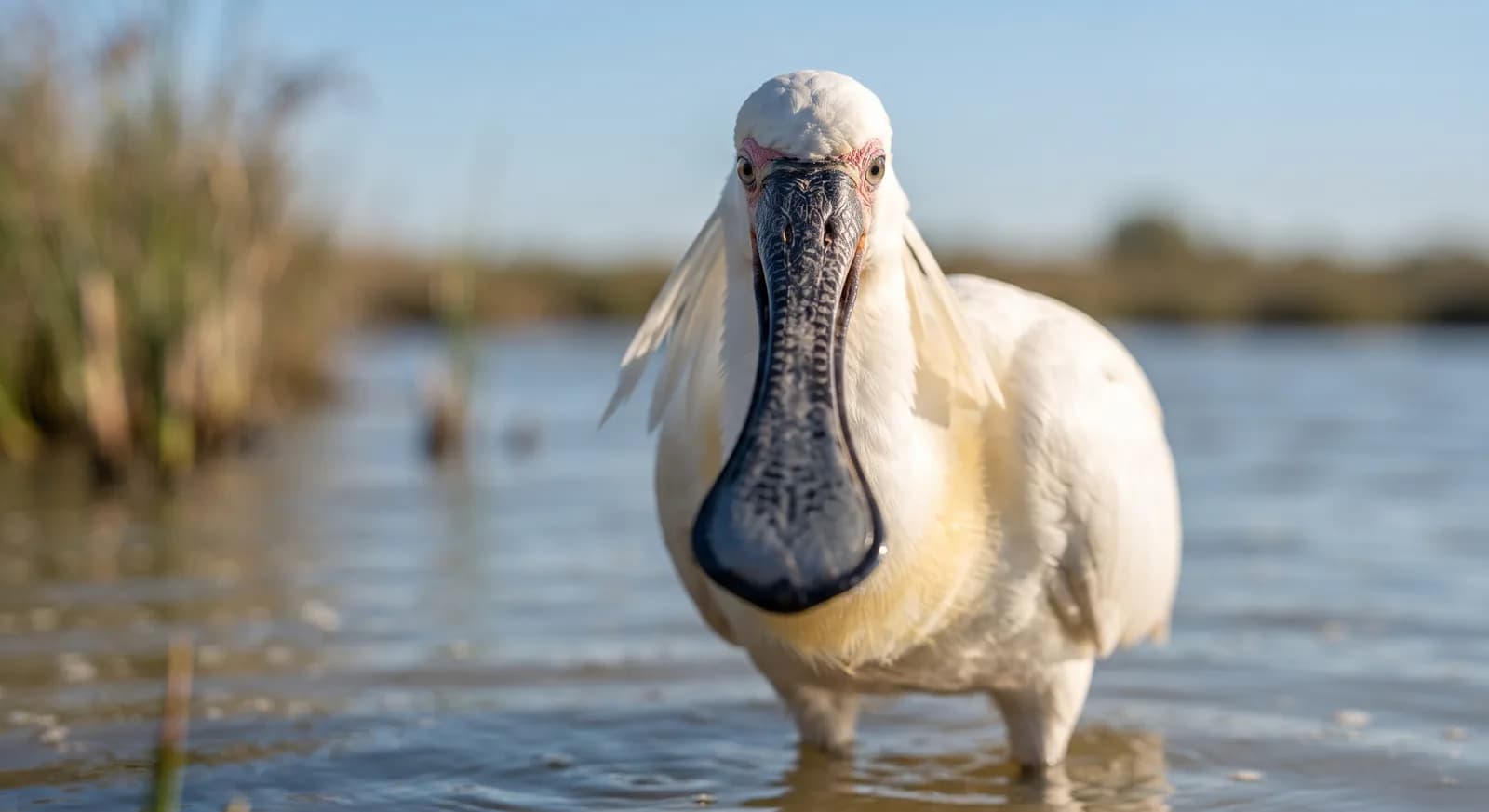
Eurasian Spoonbill
Platalea leucorodia
Bar-Headed Goose
Anser indicus
 Near Threatened
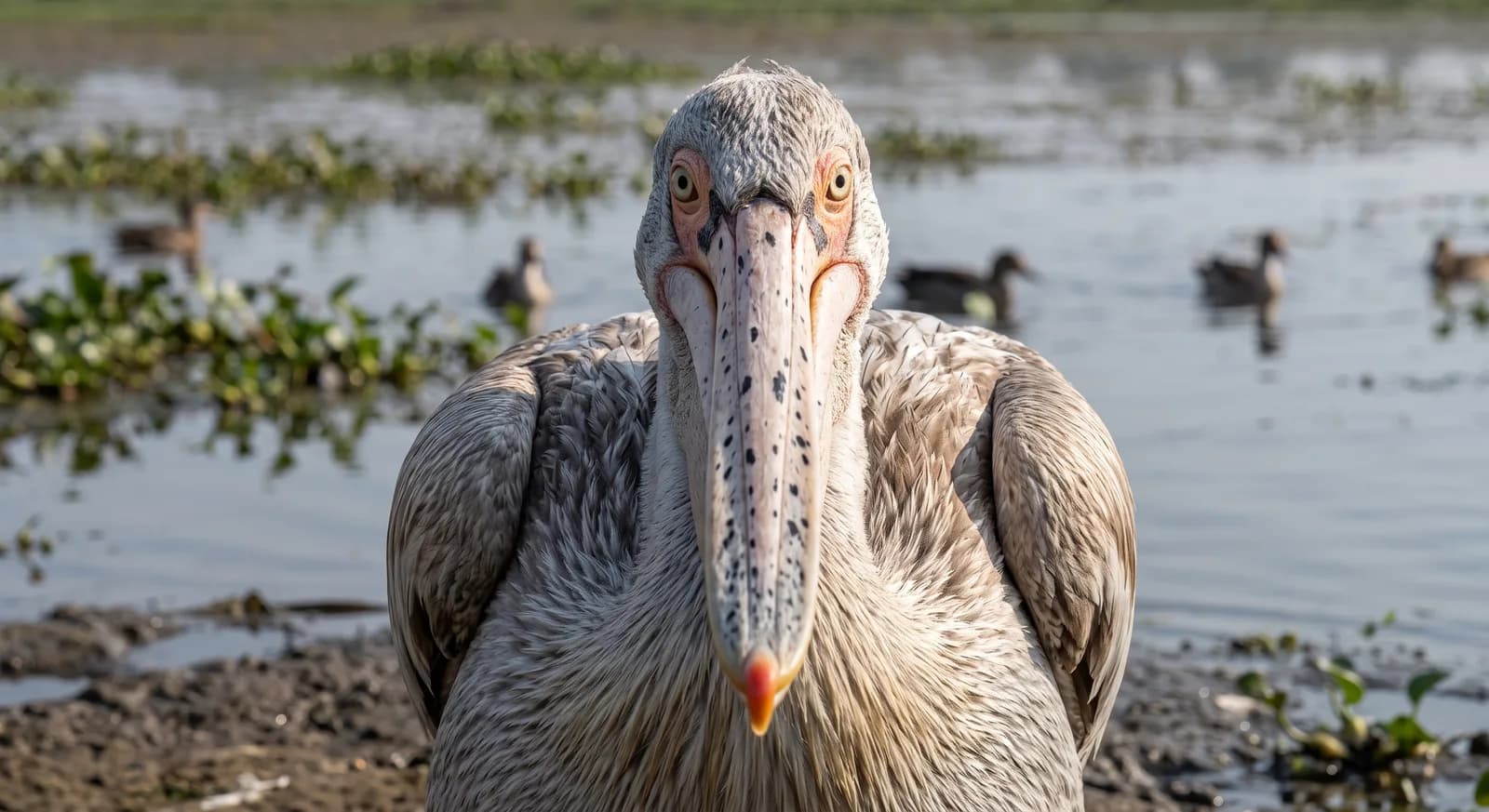
Spot-billed Pelican
Pelecanus philippensis
Brown Fish-Owl
Ketupa zeylonensis
Keep exploring
Based on what we already know about painted stork.
Comments
Share an experience, a fun fact or a tip for seeing the painted stork.
Be the first to comment.