Birds · Trogoniformes · Trogonidae
Cuban Trogon
Priotelus temnurus
The species is abundant and widely distributed; it faces no significant short-term risk. See full glossary
The Cuban trogon is the national bird of Cuba and a trogon endemic to the island. Its plumage carries exactly the colours of the Cuban flag: blue on the head and back, white on the breast and intense red on the belly. It nests in tree holes and in abandoned woodpecker holes, and eats fruit, flowers and insects. Its Spanish name comes from its call, a repeated to-co-to-co heard throughout the Cuban woods.
Weight
50 g – 75 g
Size
25 cm – 28 cm
Lifespan
10 years
Diet
Omnivore
Combines animal and plant food depending on availability.
Activity
Diurnal
Active mainly during the day.
Social structure
In pairs
Usually lives in pairs, sometimes for life.
Sighting difficulty
Easy
Fun facts
- historia culturalIts colours — green, white, blue and red — match those of the Cuban flag, which is why it is regarded as the country's national bird.
- It is the national bird of Cuba for two reasons: it carries the colours of the flag in its plumage and, according to popular belief, it does not survive in captivity, which made it a symbol of the love of freedom.
- Its Spanish name is onomatopoeic: the to-co-to-co call it repeats from inside the woods is one of the most recognisable sounds of the Cuban countryside.
Life cycle & biology
- Skeleton type
- Vertebrate - internal bony skeleton (bird)
- Habitat & environment
- Moist and dry forest, limestone hills, shaded coffee plantations and wooded areas throughout Cuba
- Sexual maturity
- 12 months
- Gestation / incubation
- 18 days of incubation
- Litter / clutch size
- 3 eggs
Sources consulted: https://es.wikipedia.org/wiki/Priotelus_temnurus
Where to watch it
Parks and dive sites where this species has been documented.
Related species
Other species in the catalogue with the most in common with Cuban Trogon — same habitat, park, country, tags or family.
Cuban Brown Anole
Anolis sagrei
Desmarest's Hutia
Capromys pilorides
Cuban Emerald
Chlorostilbon ricordii
Smooth-billed Ani
Crotophaga ani
Cuban Treefrog
Osteopilus septentrionalis
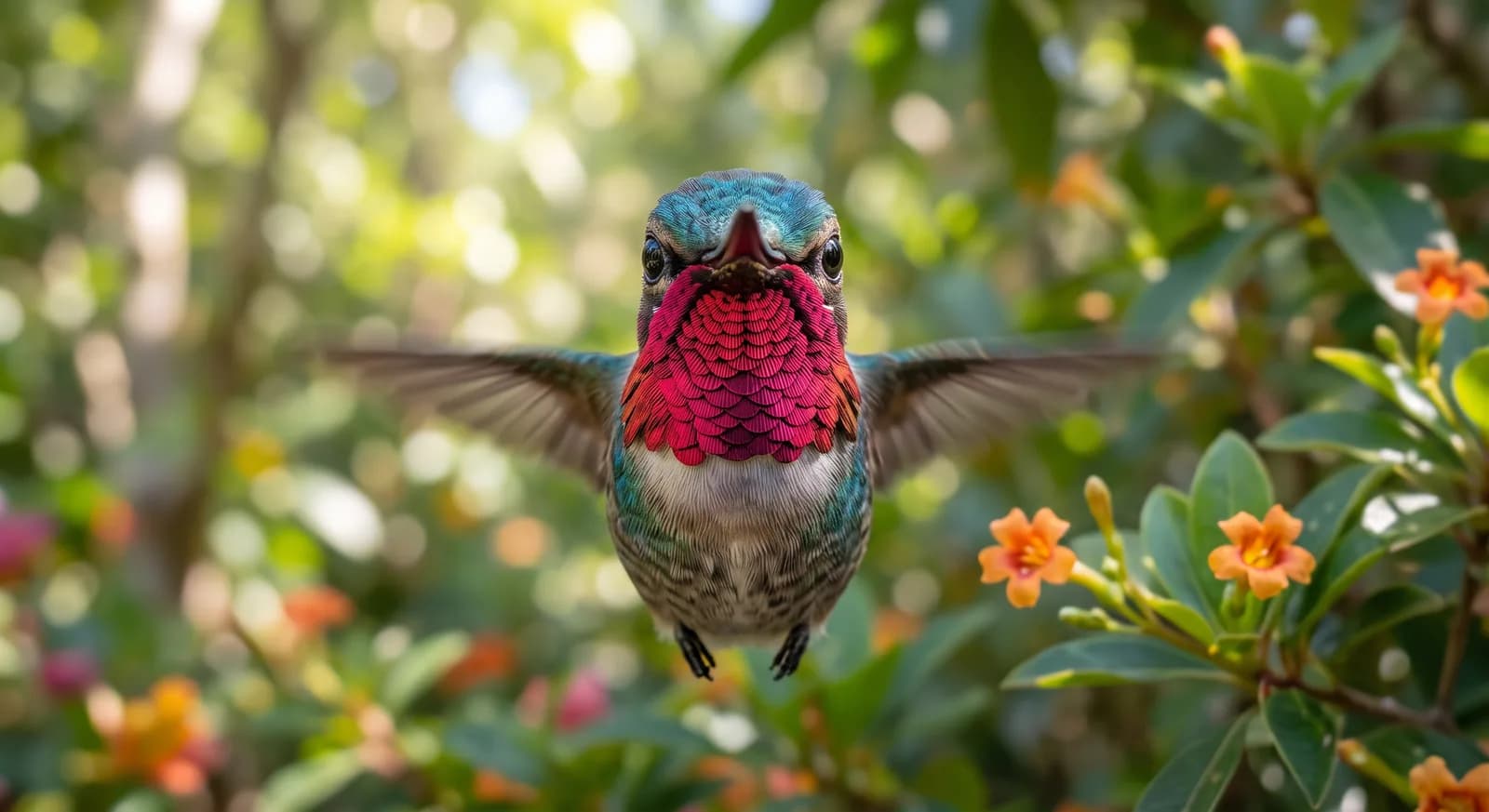 Near Threatened
Bee Hummingbird
Mellisuga helenae
Keep exploring
Based on what we already know about cuban trogon.
Comments
Share an experience, a fun fact or a tip for seeing the cuban trogon.
Be the first to comment.