One of the 12 vipers on WAnimals
Reptiles · Squamata · Viperidae
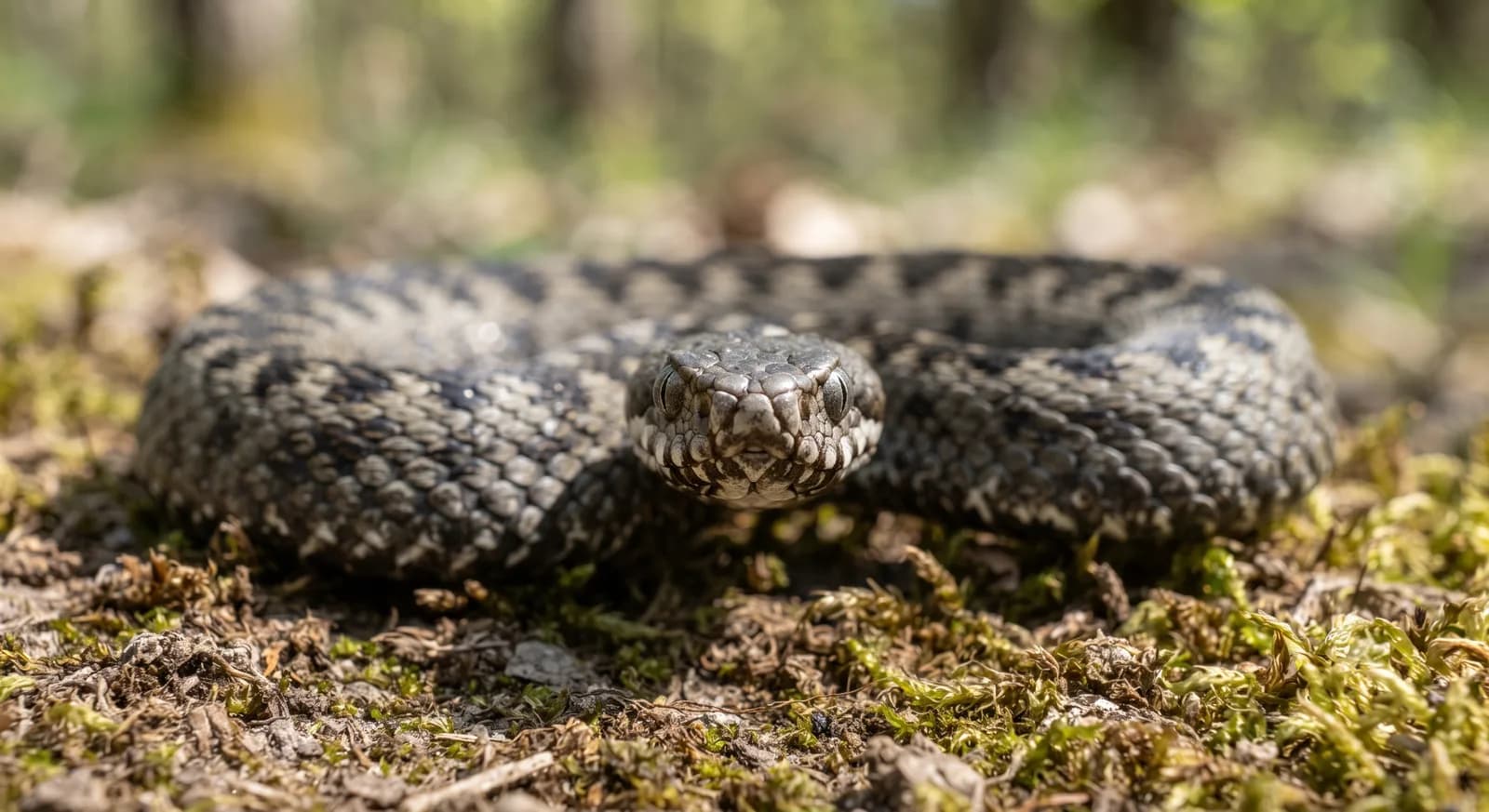
Asp Viper
Vipera aspis
The species is abundant and widely distributed; it faces no significant short-term risk. See full glossary
It has traditionally been linked to the death of the Egyptian queen Cleopatra in the account of the Roman historian Velleius Paterculus, though the historical evidence for how she actually died remains disputed.
Weight
up to 400 g
Size
60 cm – 85 cm
Lifespan
20 years
Diet
Carnivore
Feeds mainly on other animals.
Activity
Diurnal
Active mainly during the day.
Social structure
Solitary
Lives and hunts alone, joining others only to breed.
Sighting difficulty
Easy
Fun facts
- It is venomous, and its bite can cause serious envenoming in people.
- It eats small mammals such as rodents, and occasionally birds and lizards.
- It lives in mountain clearings, scrub, open woodland and stone quarries of western Europe.
Life cycle & biology
- Skeleton type
- Vertebrate - internal bony skeleton (reptile)
- Habitat & environment
- Mountain clearings, scrub, open woodland and stone quarries of western Europe
- Birth weight
- Born fully developed and able to feed within a few days of birth
- Size at birth
- Born fully developed
- Sexual maturity
- 2-4 years (later in the wild than in captivity)
- Gestation / incubation
- 3-4 months
- Litter / clutch size
- 5 to 12 live young per litter (an ovoviviparous species)
- Lifespan in captivity
- A documented record of up to 10 years in a laboratory study
Sources consulted: Critter Science; The Snake Guide; AnAge (genomics.senescence.info); SnakeEstate; PMC (envenomation Marseille poison centre study)
Where to find it
See its range on the interactive mapBest time: From March to October, in mid-morning, when it basks on scree, field edges and walls in northern Iberia, the Pyrenees and the Alps.
Where to watch it
Parques y spots de buceo donde se ha documentado esta especie — se muestran 10 de 28 documentados.
Related species
Other species in the catalogue with the most in common with Asp Viper — same habitat, park, country, tags or family.
Seoane's Viper
Vipera seoanei
Lataste's Viper
Vipera latastei
 Least Concern
Adder
Vipera berus
Nose-horned Viper
Vipera ammodytes
Western Capercaillie
Tetrao urogallus
Common Buzzard
Buteo buteo
Keep exploring
Based on what we already know about asp viper.
Comments
Share an experience, a fun fact or a tip for seeing the asp viper.
Be the first to comment.